Showing posts with label photos. Show all posts

Friday, May 4, 2012

Friday 5: Black widows, the actual best spiders

I said some time ago that I was going to write a response to The Dragonfly Woman's post, Why Jumping Spiders Will Always Be My Favorite Spiders. Sure, they're cute. And hilarious dancers. And ridiculously photogenic. She picked a good family. However, my loyalties lie elsewhere. I'm sure you already know what's coming.

Five reasons black widows are actually the best spiders


You have to seek them out
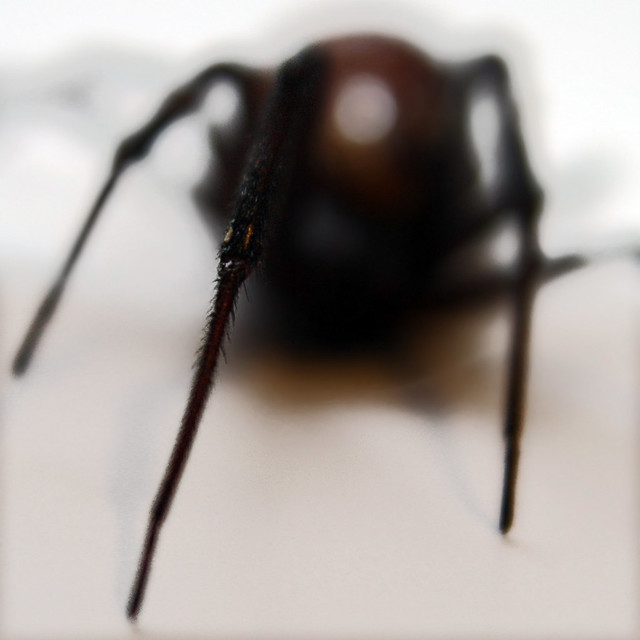
Black widows won't come after you. This might be good news if you're, well, normal, but if you're a spider lover -- or just that rare breed of bug-loving, camera-toting nut that really isn't so rare in this crowd -- it might be vexing. Black widows aren't out during the day. They build webs in corners. They vanish into little hidey holes when they sense the slightest movement, and then they won't come out for hours, sometimes. (I know. I've waited.)

Somehow, this hard-to-get routine makes them that much more appealing. Like those CDs that used to be so hard to open, or a dish that takes a while to cook. (I assume. I spend more time with the spiders than in the kitchen.) I've spent more hours than I should probably admit, poised by the corner of our patio or next to the broken pipe that houses a big female every year. I genuinely get excited when those first legs tiptoe out of the gloom. 

You have to look closely
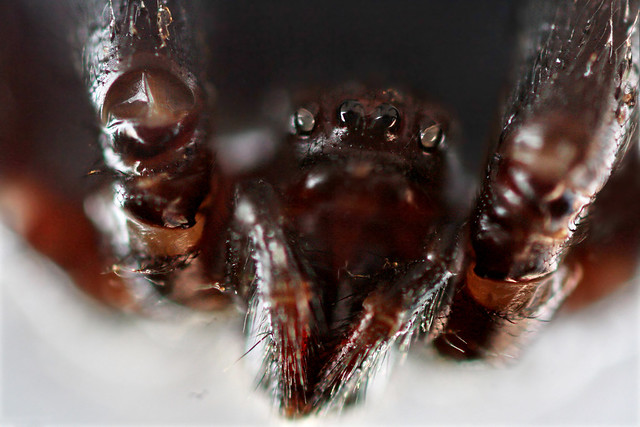
Gimme a kiss!
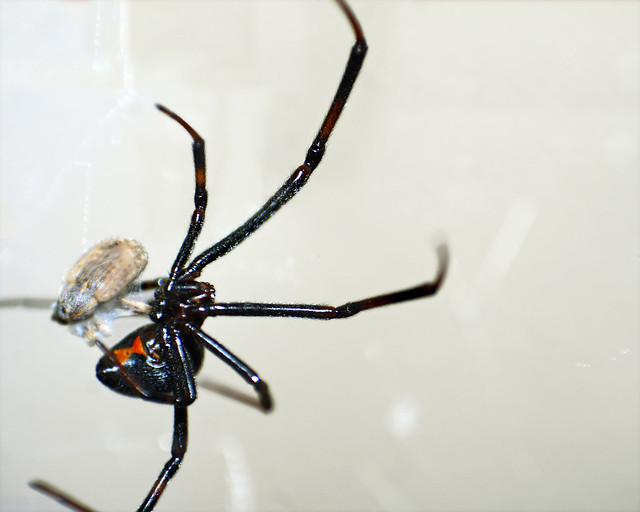
Not everyone I run into knows or has looked carefully enough to note the shape of the red or orange abdomen marking on a black widow (it's an hourglass, sometimes two disconnected triangles). But there's much more; and unlike some big-eyed, fancy-dancing, well-coiffed spiders who shall remain nameless; black widows play it a bit closer to the chest (or cephalothorax). Have you ever really seen a black widow's eyes? They're smaller than a jumping spider's, but kind of endearingly buggy. Do you know the exact sheen on an adult female's abdomen, and the dimples that invariably form? Have you ever caught the pinprick glisten on a widow's fangs as she eats a moth? Either most people are missing out, or I really need a life. OK, it's probably a little of both.

They're sexy

Come on. Even if you don't think the two terms belong within a mile of each other, think "spider" and "sexy." What's the general shape in your mind? It's a black widow, isn't it?

Apparently, Google agrees. Over the course of the past few years, I've had reason to search for "black widow" and "black widow female" several times. Here's what usually happens:


Now, there's plenty to be annoyed about -- the feminist in me and the "No, I meant the spider!" in me both take issue with the results. But you've got to admit, this is a spider with presence. A spider people want to be. Just imagine people trying to emulate any other spider. Try to imagine a Marvel hero named "Salticidae" or "Orb weaver." (OK, so there are a few "Tarantulas" in Marvel and DC, but they're all super lame.) The jet-black color, the curves, the long, slender legs. And yes, the venom and (mostly apocryphal) mate eating. The black widow spider is iconic. If jumping spiders are great ambassadors because they're adorable puppy-dog "gateway" spiders, then black widows are the conversation starters. They're the quintessential spider spiders.

Their webs are awesome

I know, there are prettier webs, larger webs, and a few stronger webs. But black widow webs remain my favorites. The thread is shockingly strong. And although the web looks like a disorganized mess, it functions like a three-dimensional pulley system and sensory grid. It's a machine. And it's fascinating to watch the operators at work. Black widows are a little like penguins or seals in one way -- on the ground, they're awkward and clumsy, toddling and wobbling about, but in their environment (their web, rather than water), they're full of sinuous, remarkable, swift grace. They run through the web instinctively, throwing silk loops around prey moments after it becomes entangled.

No one expects it

For black widows to be my favorite, that is. (Also, the Spanish Inquisition.)

They're venomous! I have pets and a kid! They traumatized me! And they're venomous! I know a friend of a friend of a friend of etc. that could have died once from what was almost kind of certainly maybe a black widow bite!

First, they're not as dangerous as all that. Yes, they have potent venom; but they bite people so rarely, and only when directly threatened, and even then the person is usually fine; as to make actively fearing them make about as much sense as fearing cars. (Actually, you're in much more danger around a car, probably.) Just be careful. And let the venom and danger prompt you to learn more. Also, I love adorable jumping spiders and their ability to bring more people into the spider loving fold. But if we can love these spiders too -- the most venomous spiders around, the ones who get such a bad rap for mate eating, the ones with freaking danger signs on their abdomens -- then maybe we can love them all. And by extension, all critters. Look closely. Be amazed.

Monday, November 28, 2011

Monday goodies: Cactus wrens

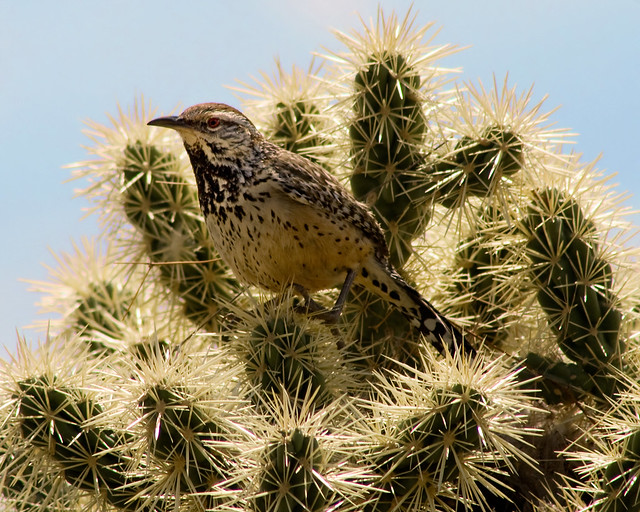
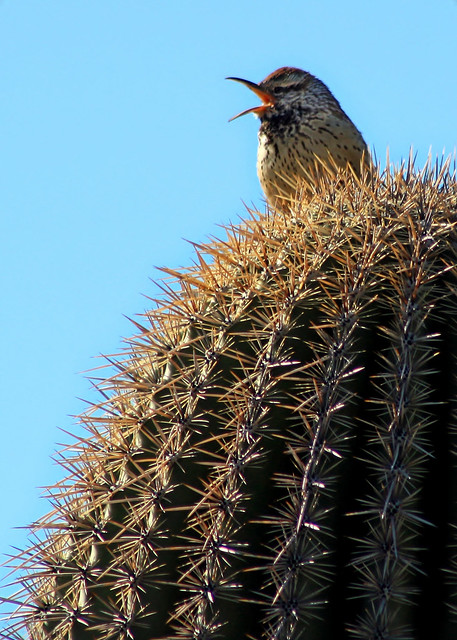
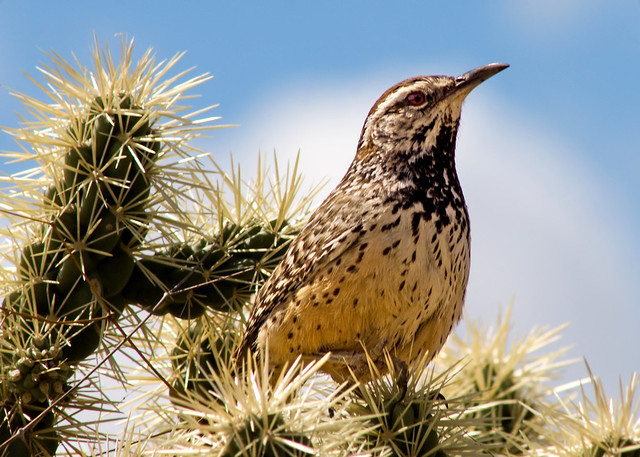
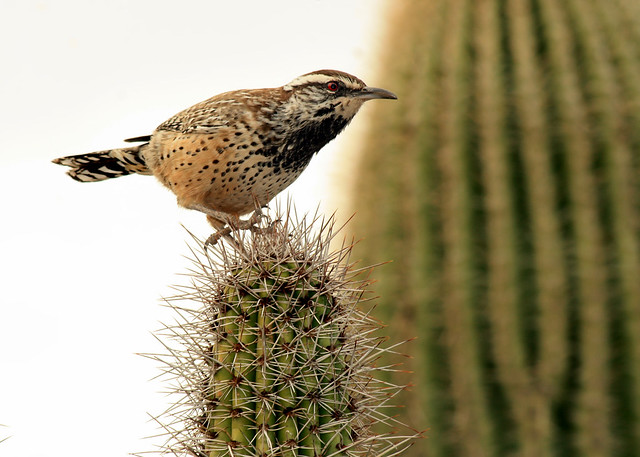
I've never understood why cactus wrens don't get more love. Just the other day, I overheard someone pompously telling her friends that the roadrunner was the state bird of Arizona. Um, no. New Mexico has the roadrunner. Our state bird -- like our people -- is loud, feisty, and a resourceful survivor. We get the cactus wren. Other state symbols include, embarrassingly, the bolo tie as state neckwear and, sadly, the Colt revolver as state gun; so I'm happy we at least got some super-cool animals to represent us. These little birds take the prickliest and most uncomfortable of homes, and make it look appealing. Could there be a better spokesbird for this state?

Cactus wrens (Campylorhynchus brunneicapillus) mostly eat insects, but their diet, like any good Arizona diet, consists of a diverse blend -- wasps, grasshoppers, and beetles supplemented by the occasional fruit, seed, or even frog or reptile. They're larger than our house and canyon wrens by a few inches, but their personalities (birdonalities?) are what really distinguish them -- excitable temper, a call like a car engine, a sort of obnoxious charm. Yep. They're Arizonans.

Enjoy some more cactus wrens. I actually had to cull quite a bit so as not to give you hundreds. Apparently I like them even more than I'd realized. Happy Monday, everyone. Spiders or sparrows next, I think.


Friday, November 18, 2011

Friday 5: Adorable arthropods

I have insect and spider shots that are better than some of these. But these are the cutest. Yes, cutest. Even people who aren't me, my son, or my buggy friends have awwwed at a few bugs now and then.

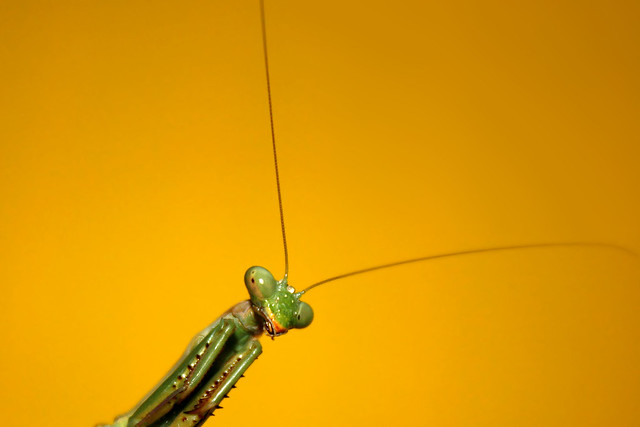
Praying mantis


Hey there! Be my friend? And feed me live flies?


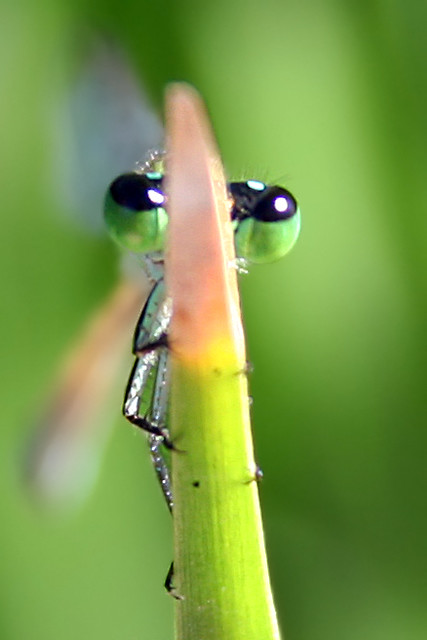
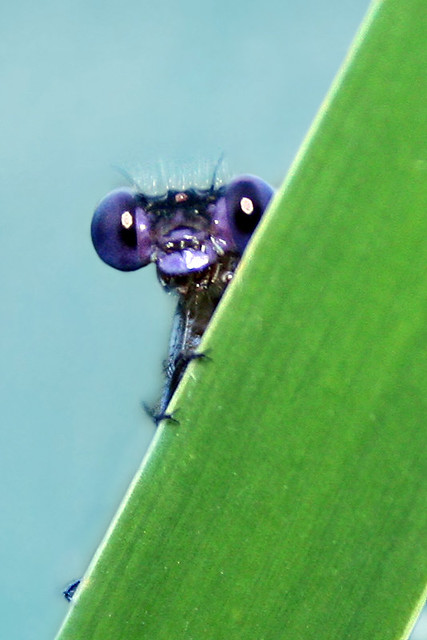
Damselfly


He probably sucks at hide and seek.


Fiery skipper


Seriously, don't you just want to pet him?


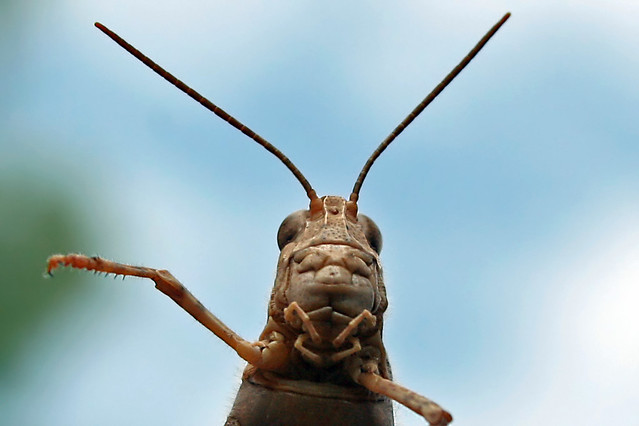
Pallid-winged grasshopper


Grouchily adorable.


Jumping spider


If I didn't kind of hate the word, I'd squee here. Tiny cute spider! It was my writing muse for an afternoon.

Back to regularly scheduled intelligent nature blogging this evening. Oooh, and a bonus peekaboo damselfly:

Monday, November 14, 2011

Monday goodies: Black-crowned night heron

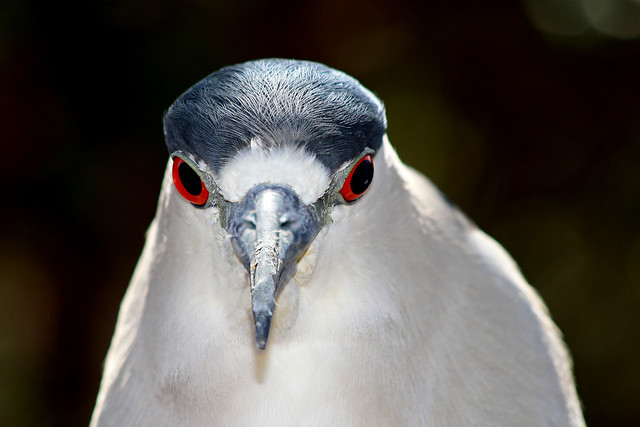
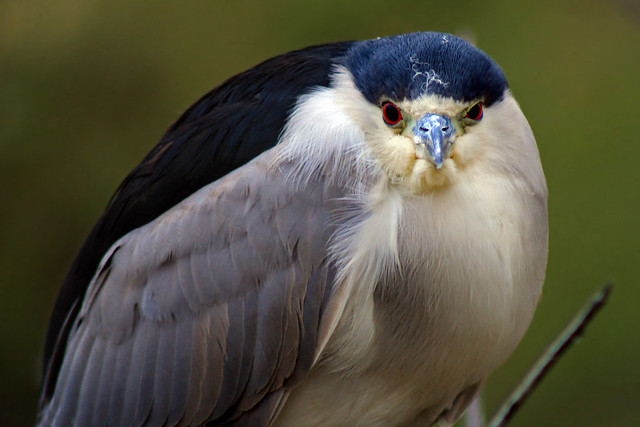
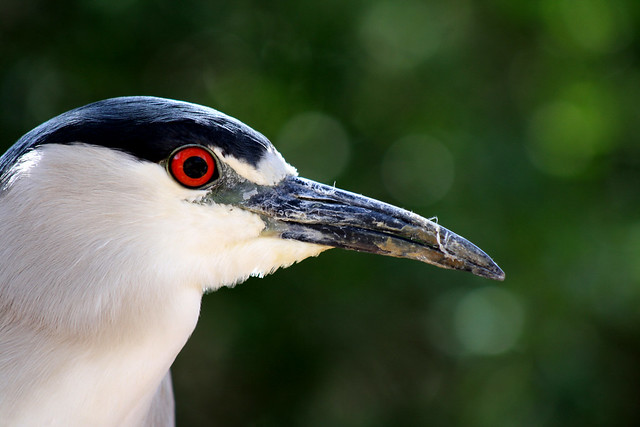
Monday goodies is a perfect excuse to share some black-crowned night herons. I've already shared quite a few shots of the birds, in entries like this Species a Day post, but I've got a whole folder full of "spares." I thought these deserved a showing.

Black-crowned night herons' scientific name is Nycticorax, for "night raven," since they like to hunt at dusk or night, and have a harsh crow-like call. They bark. It even sounds like the word "bark." Watch for them in late evening or early morning around the water's edge, or roosting grumpily during the day in tree branches. If you can manage to get close without irking one too much, it's worth it.


Hope everyone had a good weekend! Happy Monday.

Friday, November 11, 2011

Friday 5: Mealtime

I'm a big, nature-loving softie. Still, predation is pretty cool. It's part of nature, after all. I've mentioned it here and included it in sets like this or this. Here are five more scenes I found gorgeous rather than grisly. (Your mileage, as always, will vary. My husband says if you're not me, you'll probably lean toward grisly. But he thinks I'm weird to eat during medical dramas too.)

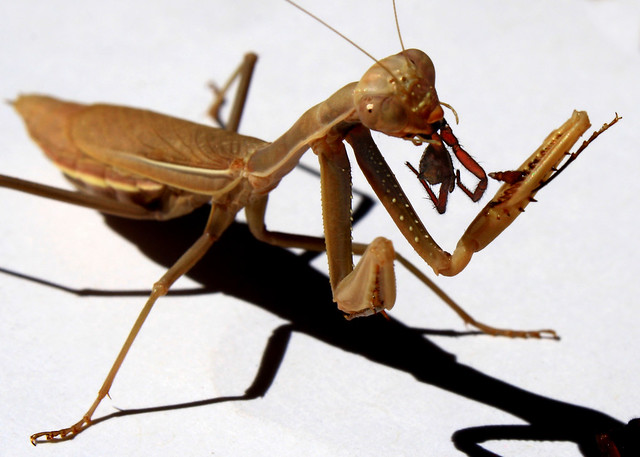
Mantis on spider:


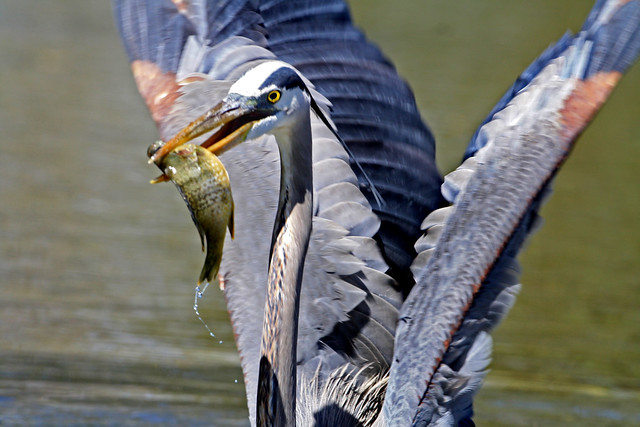
Heron on fish:


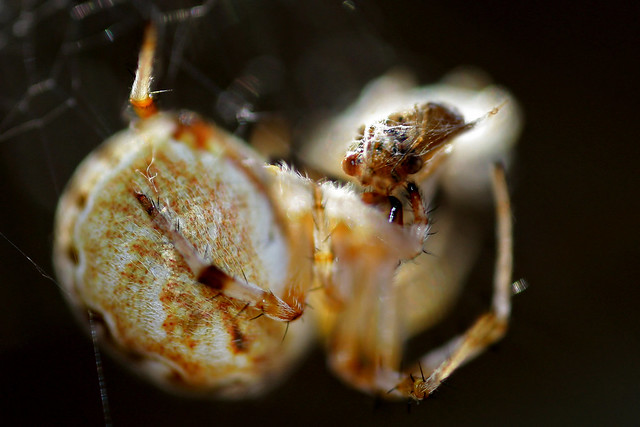
Orb weaver on cicada:


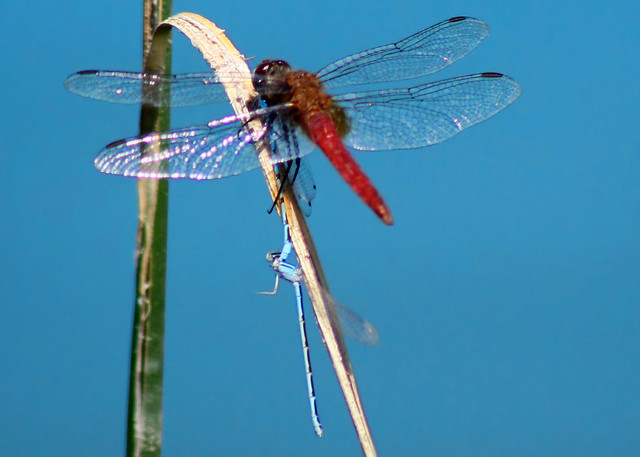
Red-tailed pennant dragonfly on mating damselflies (twin-wrapped snack pack?):


Milkweed bugs on cockroach:


Now then ... Who's hungry?

Tuesday, November 8, 2011

Travel Tuesday: Rooster Cogburn Ostrich Ranch

The following review appears in this month's Times Publications.

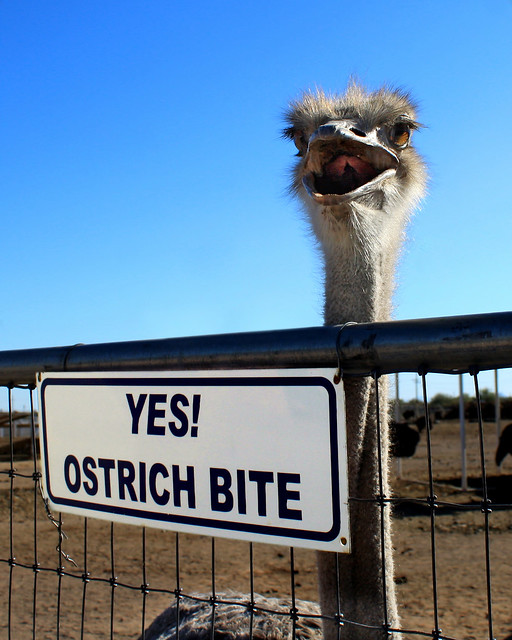
"Ostrich bite." *

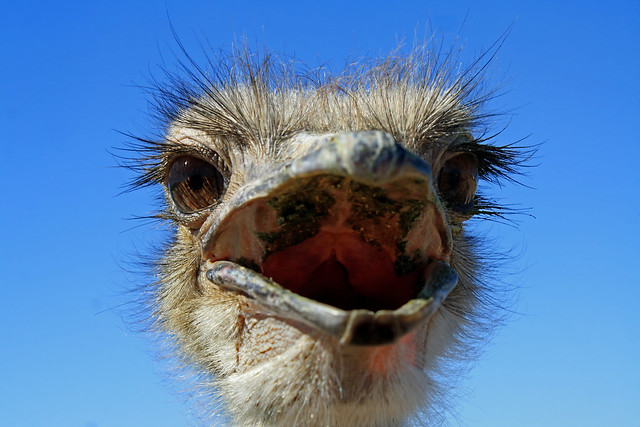
Truth in advertising at its best. Among things that were bitten at Rooster Cogburn Ostrich Ranch last weekend: My hand, my camera, my shirt, my hair, and my son.

We’re going back as soon as we can.

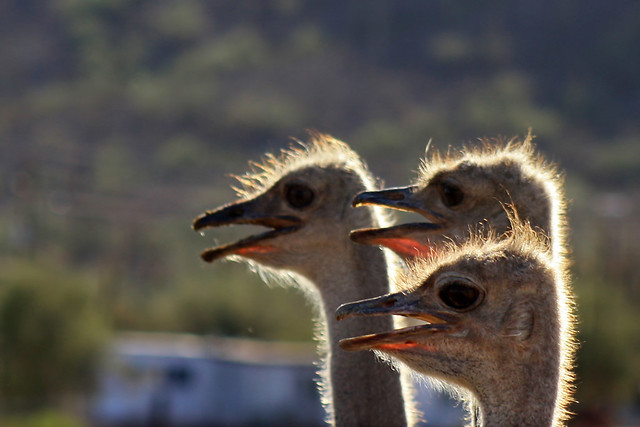
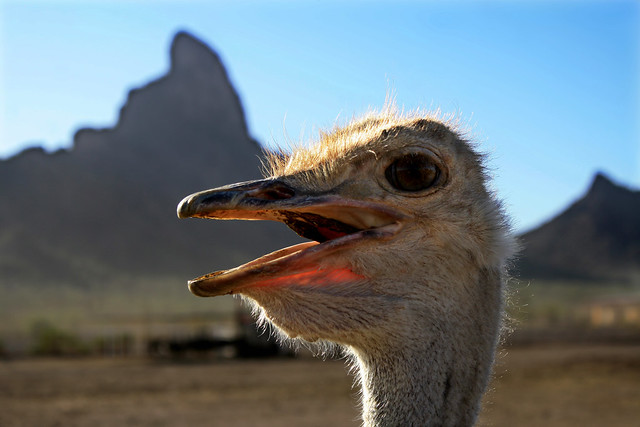
If you're not heading to Picacho Peak, you might not even slow down enough to see the farm, off Exit #219 on Interstate 10, but you should. Nestled at the base of historic Picacho Peak Mountain, it's the largest ostrich ranch in the country. Over a thousand black South African ostrich hens live at the ranch, laying eggs and roaming its 600 acres.

Visitors can buy ostrich eggs (fresh, hollow, or painted), ostrich jerky, ostrich feather dusters (the owners insist they're the only kind that pick up dust), several other products at the entrance gift shop. But the real draw is participation.

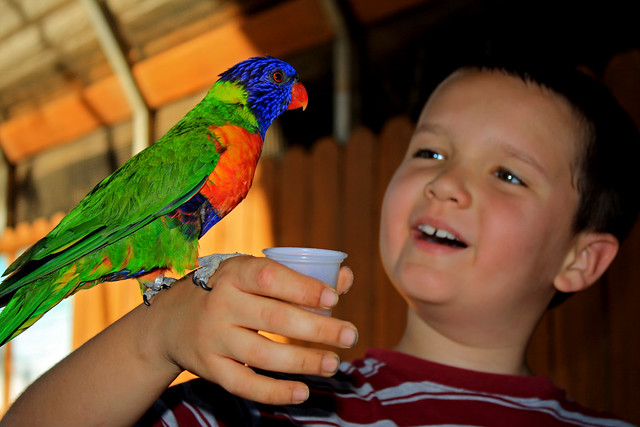
Entrance is $5 for “kids 6 to 106,” and this includes a huge cup of pellet feed for the ostriches; as well as deer, goats, and donkeys; which can also be hand fed. The fee also includes a cup of nectar, which visitors can feed to rainbow lorikeets in an enclosed forest.

The products offered were fine, but I don’t think my son, David, has ever bypassed a gift shop so quickly. This should be a compliment, though -- he simply couldn’t wait to get to the animals. As we parked, a pair of ostriches peered over the fence at us. He was hooked.
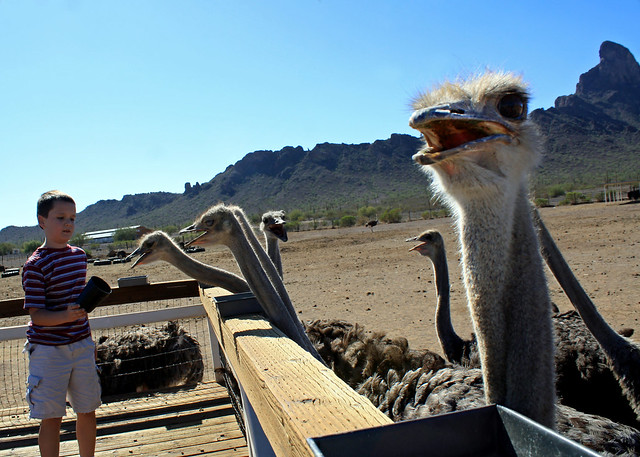
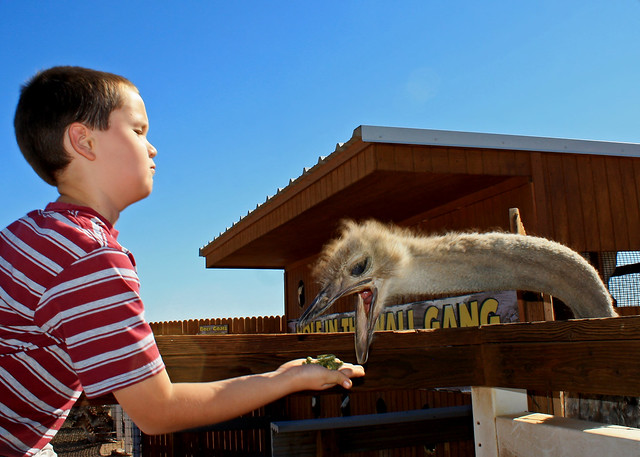
Owner Rooster Cogburn (his given name’s D.C. Cogburn, but he took on "Rooster" in Oklahoma), sensitive to the fact that most people aren’t used to birds topping out 350 to 400 pounds, provides three levels of ostrich feeding. To stay unpecked, you can pour feed into chutes through the fence, where the ostriches will come and eat, safely on their own side. If you're feeling brave, walk up a wooden ramp and place the food in pans. If you’re insane, or are my son (OK, or me), you go immediately for the “ultimate ostrich interaction,” and invite the ostriches to eat from your hand. David was up the ramp, hand outstretched, in about 30 seconds.
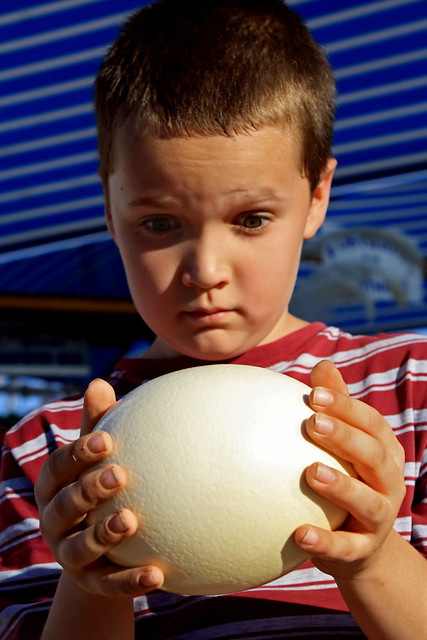
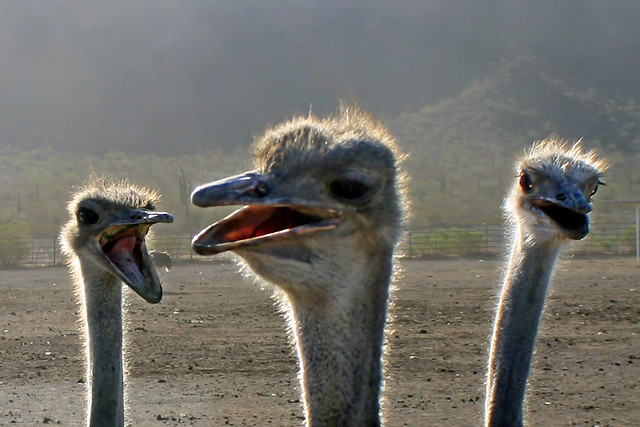
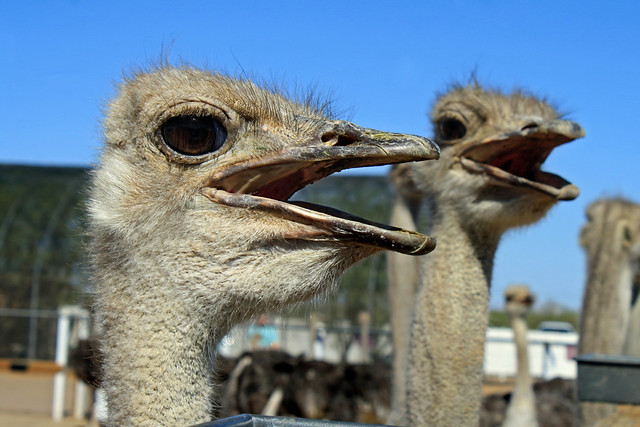
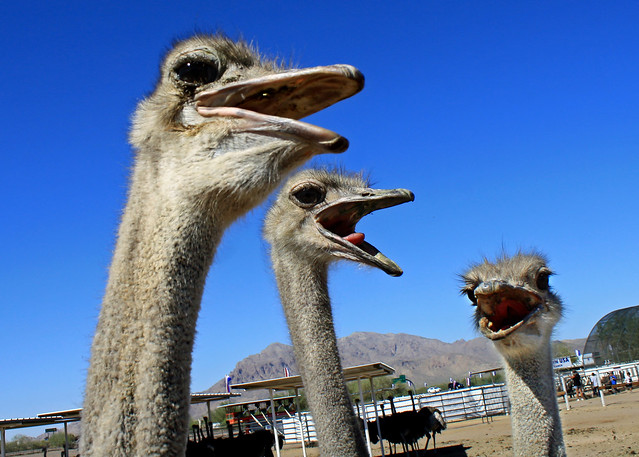
Here's the thing: Ostriches are huge. You think you realize that, but it's a whole other thing to stand beneath a herd (“flock” doesn’t cut it) of giant, panting birds. These modern-day dinosaurs have presence. They towered over us at seven or eight feet, their enormous clawed, two-toed feet kicked up dust, and they breathed heavily, beaks wide open, waiting for food. Occasionally they’d get impatient and launch their heads over the fence in search of stray food. Unwary photographers focusing in the distance, leaning against the fence, are also ripe for enthusiastic pecking (something I learned firsthand).

With hundreds of ostriches wandering around the enclosure, you’re ensured a stampede of panting visitors. The humans learn the drill too -- hold your hand flat, down low, raise it slowly, and don’t curl up a stray finger. No leaning against the fence. Start small if you’re nervous. Feed the birds through the chutes first, and work your way up.

All of this makes the experience sound harrowing, and it was. But mostly it was ridiculously fun. It’s like the animal-feeding equivalent of riding a roller coaster -- everyone approaches it with a sense of foreboding and false bravado, a few folks scream or laugh, and as everyone walks away laughing and bragging, several people get right back in line.

After the ostriches, we took our nectar cups to the Rainbow Lorikeet Forest. The lorikeets are Australian parrots, and are absurdly beautiful, hence their name. They’re loud, playful, and inquisitive. David and I made our way to the back of the 5,000 square-foot enclosure, opened our nectar cups, and held out our arms. We were swiftly covered in a cacophonous blur of green, blue, orange, and yellow, as the lorikeets perched on our arms and sipped the nectar with their specially adapted tongues.

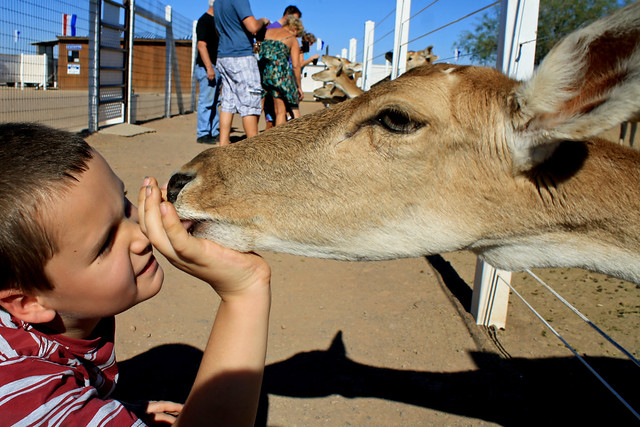
Many travelers make the ranch a quick stop on their way to Phoenix or Tucson, but there is plenty to occupy visitors. After the lorikeets, we refilled our pellets and fed the fallow deer (soft, adorable, and gentle enough for toddlers), the donkeys (frisky, and there are usually babies), and goats (from our lips -- you've got to try it). The ranch even runs 40-minute monster truck tours through the ranch and desert on weekends, for an extra behind-the-scenes look.

So, yes. Ostrich bite. But don't let that scare you off.

*In the printed version, you'll notice it's been amended to "Ostriches bite," which is quite correct. In fact, my son and I immediately noticed the sign's wording, but were a little distracted by the ostriches, well, biting. I imagine if you're warning someone, efficiency is more important than grammar.


Monday, November 7, 2011

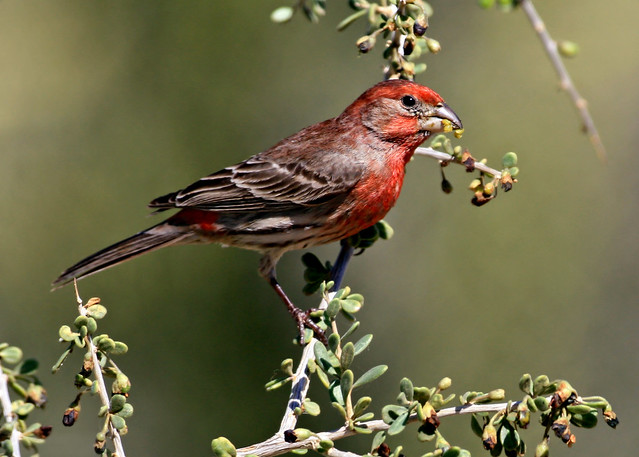
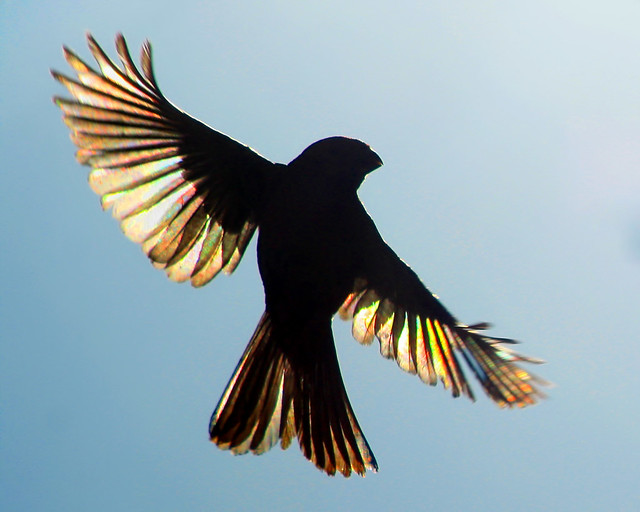
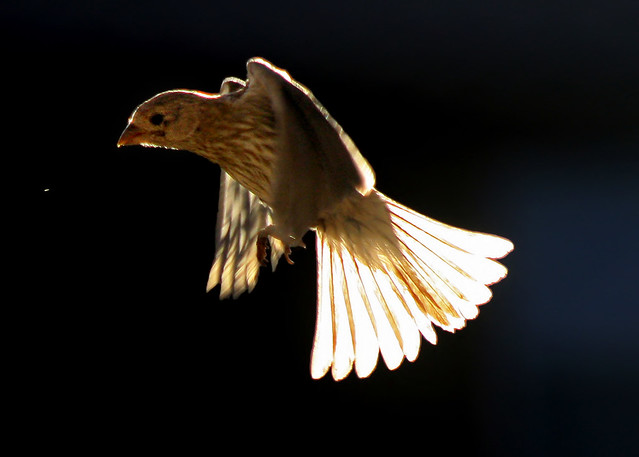
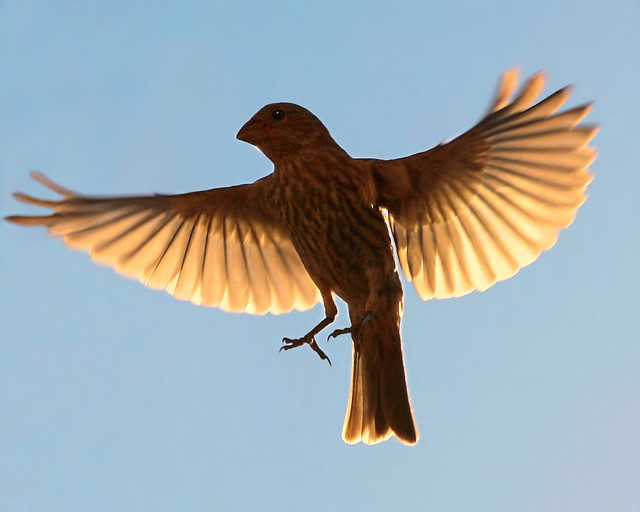
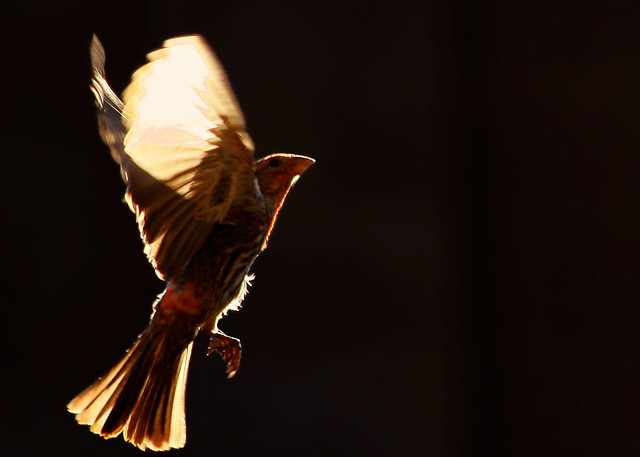
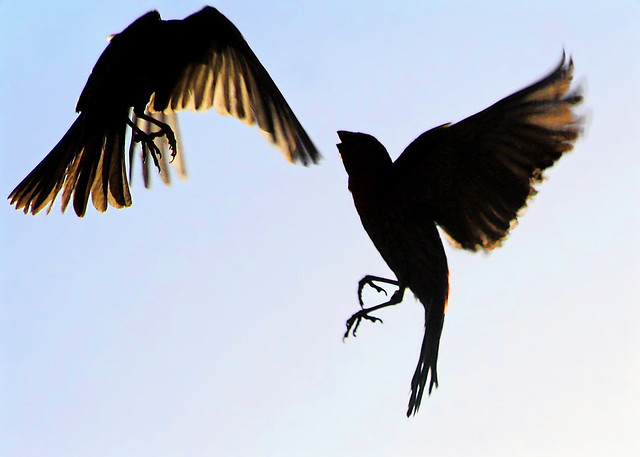
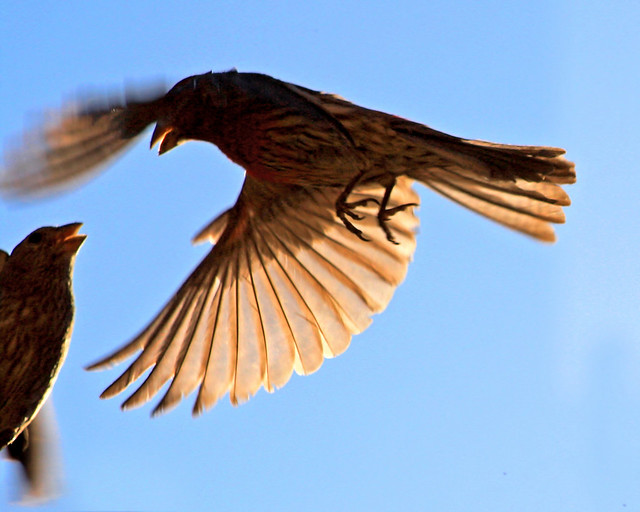
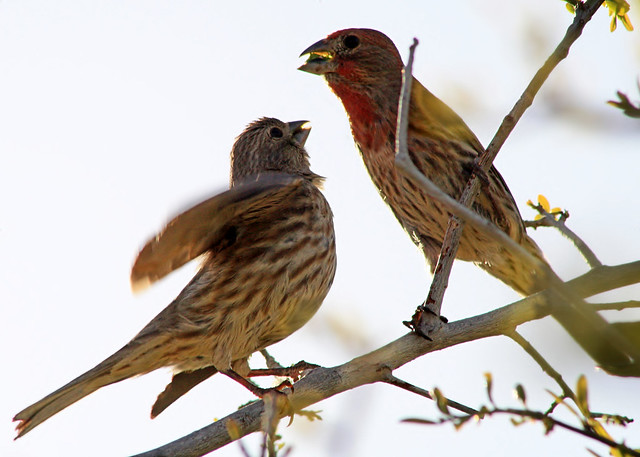
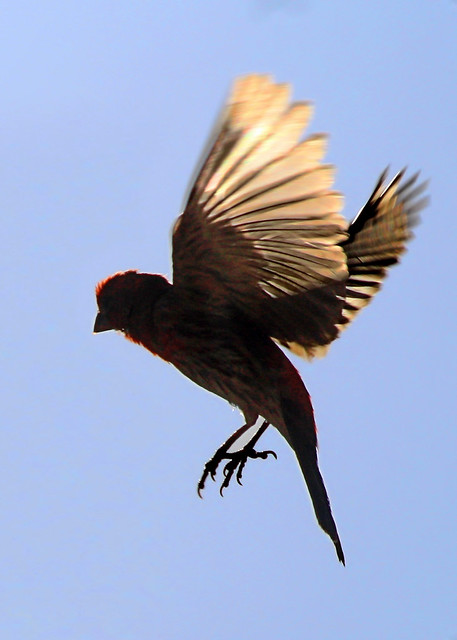
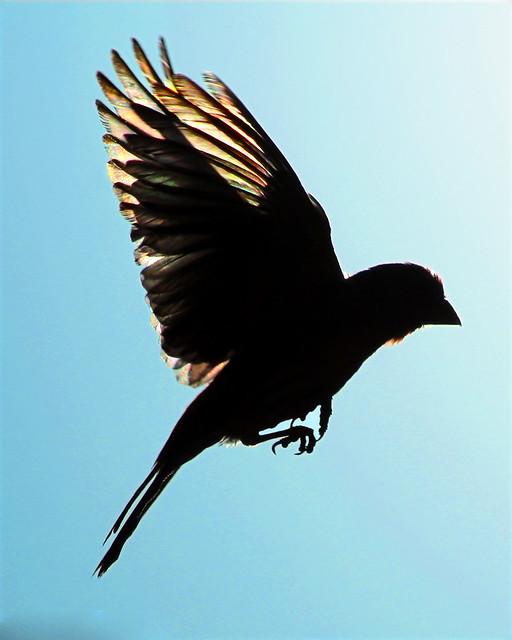
Monday goodies: Finches

Why finches? Well, for one, I have tons of images of them. They're here every day, carpeting our yard, dancing in the air, bickering, chirping. They're fun.

For another, they're pretty cool birds. They started as residents of Mexico and the Southwestern United States, but have been introduced throughout the rest of the country over the years. They're common, sure, but they're adaptable. And feisty.

Have some finchy goodness. And happy Monday.