Showing posts with label animals. Show all posts

Tuesday, December 31, 2013

Best of 2013: Favorite spots, favorite critters and my favorite kid

2013 was a weird and busy year, and though I spent as much of it as possible at my favorite nature spots, life conspired to keep me from going out as often--or sharing as many photos--as I would like. Still, no matter what life throws at me and my family, being out in nature is our medicine. And sharing it with you all has made me more awesome friends than I deserve. I love it.

One of those excellent people, the inimitable Alex Wild, issued his annual call for the best science and nature photos of 2013. I'm coming in a little late, as is my wont, and these are just the best of the ones I've managed to go through. There are thousands yet to be processed. But here are mine, all taken this past year, winners in the categories you'd probably expect from me. Happy New Year, everyone.

Best spider:
Of course it's a black widow. Did you expect anything else?

We have a lot of other arachnid goodness--giant fuzzy tarantulas, jumping spiders in fabulous colors, giant crab spiders, wolfies, lynx spiders, you name it. But black widows have a special place in my heart (as long as they stay in my figurative heart and out of my literal hair and clothes).
Western black widow spider (Latrodectus hesperus), our house (don't tell my husband).

Best Combination of my Favorite Things:
A roseate skimmer dragonfly (Orthemis ferruginea) during sunset at the Gilbert Riparian Preserve. One of my favorite insects, at one of my favorite places, during my favorite time of day? Yes, please! One of my favorite people (my son) was just out of frame, and later we got to have chocolate ice cream and watch Star Wars. A good day.
Roseate skimmer dragonfly at Gilbert Riparian Preserve.

Best Dragonfly:
Or, you know, one of them. I can't spend all night choosing. At the moment, I love this red saddlebags dragonfly (Tramea onusta), captured at Veterans Oasis Park in Chandler. I especially like the wings, as well as the fact that a few years ago, this shot wouldn't have happened--not because I didn't have the gear, but because I would've given up. I was chasing this dragonfly, and he insisted on perching way out of reach, directly above me and against a blown-out sky. I didn't get the closeup I was after, but I like what I got even better. And that's the great thing about my nature photography journey. Learning to use my gear? Please. Boring. But make the effort again and again and again (and again and again), and you start to learn a few things about focus and exposure in spite of yourself.
Red saddlebags dragonfly, Veterans Oasis Park.

Best Damselfly:
Not quite as flashy as the dragonflies, but they're just as gorgeous. This year was a great year for blue-ringed dancers (Argia sedula), and I got quite a few "mealtime" shots like this one, captured at the Gilbert Riparian Preserve.
A blue-ringed dancer (Argia sedula) munches a fly at the Gilbert Riparian Preserve.

Best Little Bird, Closeup:
If I'm not chasing insects and spiders, I'm probably watching birds. Here's an Anna's hummingbird (Calypte anna), one of my favorites, at the Demonstration Garden at Boyce Thompson Arboretum.
Anna's hummingbird (Calypte anna), Boyce Thompson Arboretum Demonstration Garden.

Best Little Bird, Full Body:
Mostly because I wanted an excuse to show off the broad-billed hummingbird as well. Also captured at Boyce Thompson Arboretum, which you totally need to visit if you're in the area.
Broad-billed Hummingbird (Cynanthus latirostris), Boyce Thompson Arboretum.

Best Big Bird:
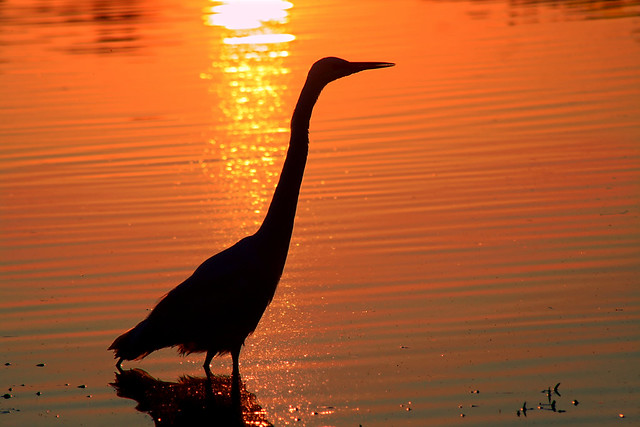
Not the giant yellow alphabet lover. More like the giant grouchy fish stalker. A great blue heron (Ardea herodias) in early evening light at the Gilbert Riparian Preserve.
Great blue heron (Ardea herodias), Gilbert Riparian Preserve.

Best Bird That Everyone Thinks is Our State Bird:
The cactus wren, not the roadrunner, is the Arizona state bird (New Mexico gets the roadrunner). It's a local treasure nonetheless, and 2013 was a fantastic year for roadrunners in our neck of the desert. (Sorry, cactus wrens. You'll get play again when I restart Species a Day.) I liked this one because it showed off the insanely gorgeous iridescence in the bird's tail.
Greater roadrunner (Geococcyx californianus), Veterans Oasis Park.

Best Animal I Usually Suck at Capturing:
I don't know what it is about snowy egrets. I see them semi-regularly, and every single time I mess up the shot. The image is overexposed, or blurry, or I scare the bird away, or it's nothing but tail and legs. I think I've invented new ways of missing a snowy egret shot. So I was happy when this one came out kind of nicely (though it doesn't make up for the fact that my 11-year-old has more keepers of the bird than I do).
Snowy egret (Egretta thula), Gilbert Riparian Preserve.

Best Look Everyone; I Can Photograph Mammals Too!:
It's not all bugs and birds (it's just mostly birds and bugs). This young male elk (Cervus canadensis) watched us as we were surrounded by half a dozen of "his" females coming out of Bear Canyon Lake after a camping trip this year. It was the most wonderful thing--another young family, with a 3- or 4-year-old girl, was there as well. We were afraid she'd scare them away, but she learned from her parents, who were splendid examples. Everyone was still and quiet, and the elk knew we weren't a threat. That's how to appreciate nature.


Best Scenery:
Snow on the Superstitions this past winter. Also a runner-up for Best Shot I Ran Out to Take Even Though I Should Have Been Doing Other Things. Rare snowfall, followed by a short-lived break in the clouds for some afternoon sunlight, all topped off with our iconic saguaros. I took a detour just to take the shot. I don't remember what my excuse was for being late to my actual appointment, but I think it was worth it.
Snow on Superstiton Mountain, February 2013.
Best Water and Best Sunset:
I'll probably share entire posts on both sunsets and water soon, but this shot as the sun set at Veterans Oasis Park in Chandler captured the goodness of both at once. The great thing is, this is just a 15-minute drive from our house. The nature opportunities around here are pretty awesome.
Sunset reflected in the pond at Veterans Oasis Park, Chandler.

Best Kid Holding Insect(s):
We attended the grand opening of Butterfly Wonderland, the largest butterfly atrium in North America. Many people just slowly but constantly made their way through and around the huge enclosure. Not my kid. He sat for ages in humid corners, gazing at the huge insects. At one point this mating pair of blue morpho butterflies fluttered from a shaken branch to his finger. He quickly made a more comfortable perch for them, sat down, and hosted the pair (and fascinated bipedal onlookers) for several minutes. Never have I seen someone so thrilled at a designation like "the boy with the mating pair on his hands."
My son holding a pair of blue morpho butterflies (Morpho peleides) at Butterfly Wonderland.

Best Kid Not Having Much Choice About Holding Insect:
Silence of the kid? Actually, it was, and you have no idea how rare that is. This yellow-edged giant owl butterfly decided to perch on his nose for ages. He was quite thrilled, even though it was surprisingly heavy and its legs plucked and pulled at his skin, and the butterfly showed no sign of wanting to move. He might still be there if we hadn't coaxed it onto a nearby bush.
Yellow-edged giant owl butterfly (Caligo atreus) and a happy kid. 

Best Kid Holding Arachnid:
It's not an insect, so I totally get to share this too. We went to the University of Arizona's annual Arizona Insect Festival in September, and this was a favorite of both of ours. My favorite thing as my son held this giant vinegaroon (Mastigoproctus giganteus) was that his face doesn't say "Ew, gross!" or even "OMG; there's a monster on my hand!" but rather something like affection. Indeed, he said he found the docile creature "adorable." What's that they say about apples and the trees from which they fall?
Giant vinegaroon (Mastigoproctus giganteus) and very happy boy (Homo sapiens), Arizona Insect Festival, University of Arizona.
Best Macro:
I didn't have the stellar macros that I was able to get last year when I rented the heavy-hitting MP-E 65 mm lens. Still, even a kit lens and a cooperative widow skimmer dragonfly do well to show off some of those 30,000 facets.
Female widow skimmer dragonfly (Libellula luctuosa), Gilbert Riparian Preserve.
Best "Secret" Spot:
One of my son's favorite spots on the planet. At the riparian preserve, if you veer slightly off-trail at a spot he is insisting I keep quiet, there are some really inhospitable bushes. If you tunnel through them--after picking stickers out of some very uncomfortable places--you come to a shoreline clearing that doesn't disrupt a single animal, but is beneath a huge tree full of egrets. We sat there for a hour the first evening, watching them soar in and listening to their barks and belches. It's not all that secret, but it's secluded, and it's nature, and it's special to us. The best kind.
Great egrets (Ardea alba), Gilbert Riparian Preserve.

I hope everyone had a wonderful year, or at least some wonderful parts of it. Happy New Year, and happy nature watching.

Monday, April 16, 2012

Spider Sunday 4-15-12

I'm a little late getting this week's Spider Sunday up, but I did have a very spidery Sunday! Black widows in my backyard and garage (pics later, though hopefully no shirtless episodes), jumping spiders on our nature walk, and a spider lowering itself onto my head as I drove (I hope you parachuted to safety, car spider). To top it all off, on the way to the jumping spider hike, my son reached the point in his current book where the main character gets attacked by thousands of robot ... spider ... things. He wishes fervently they were real, and ours.

As always, check out the gorgeous images at Spider Sunday on G+, and here are some more spidery goings-on!


Spiders in Borneo
Link
If you're into spiders, or biology, or evolution, or super-cool stories, you need to read this blog series at Scientific American. Wayne Maddison is a spider guy. Scratch that. He's kind of like the Indiana Jones of jumping spider scientists. He treks about in off-the-map jungles, finding jumping spiders no one knows about yet. In other words, he does my absolute dream job, only fittingly, and unlike me, he's supremely qualified for the task. Start at the introduction and read through to his latest post, cataloging the specimens after some of the coolest field work ever.


I'm sure how you use it matters too

It's a crucial organ. Hardness, stiffness, shape, and ability to penetrate are all of utmost importance.

I'm talking about spider fangs, of course. What did it sound like I was talking about?

If you're a spider, fangs are pretty important, for defense as well as hunting. Many spiders subsist mainly on insects, whose exoskeletons are made of chitin, roughly the same material that makes up spider fangs. So how do the spiders penetrate the chemically similar exoskeletons of their prey? By injecting venom with fangs made of composite material, basically chitin layered with a fancy protein matrix, and tipped not with chitin, but with high amounts of zinc and chlorine. Explained with a higher knowledge of biomaterials and also a higher level of eloquence here. (Notice use of the word "venom" rather than "poison." Please, please notice this, any newspeople who fire off an article on the study.)

Spider venom for the cure?

I've been withholding judgment on the handful of articles I've seen recently about using spider venom to fight breast cancer, mainly because I didn't have time to really read up on it and both spiders and cancer are rife with silly claims. However, this study at James Cook University seems to be legitimate, and we'll see where it goes. Heck, certain fish have been studied for kidney disease and skin cancer research and Gila monsters have given saliva for diabetes research, so why not? (However, word to the wise: Don't search online too long about animal-derived cures unless you have an abnormally high tolerance for bullshit, fake medicine, and animal cruelty.)

Can I just use them for fun?

One possible use for Google Glasses? Spiders everywhere!

This augmented reality application is supposed to be a next-gen treatment for arachnophobes. Check out the video at the bottom. My favorite part: The spiders' personalities are programmable. So we really are one step closer to artificial arachnid intelligence. My son will be thrilled.

Tuesday, January 17, 2012

Monday Goodies: Tarantulas

Well, darn. Yesterday was a day off from school, which in my brain made it not Monday. So, I wrote up the Monday Goodies really late, uploaded the pictures, and then fell asleep without posting them. My comeback is not off to a great start. Bear with me.

I thought I'd start this week with some spiders. While we're on the topic, are you on Google+ yet? If so, add me! Also, every Sunday I curate a group of really awesome spider photos with two other Google+ friends, Kjetil Greger Pedersen and Chris Mallory. If you like my spider pictures, come check out a bunch more good ones on the Spider Sunday page. And join in next Sunday!

So this week's spider ... That big spider you had in your house was probably not a tarantula, especially not this time of the year.

I say this because, about once a month (last week was the most recent one), someone will send me a photo or tell me a story about a "HUGE spider," ask me what I think it was, and then cut me off to tell me never mind, it was probably a tarantula. Usually, it's a wolf spider, maybe a giant crab spider, or just a house spider and a really scared homeowner who swears "It must have at least been a baby tarantula."

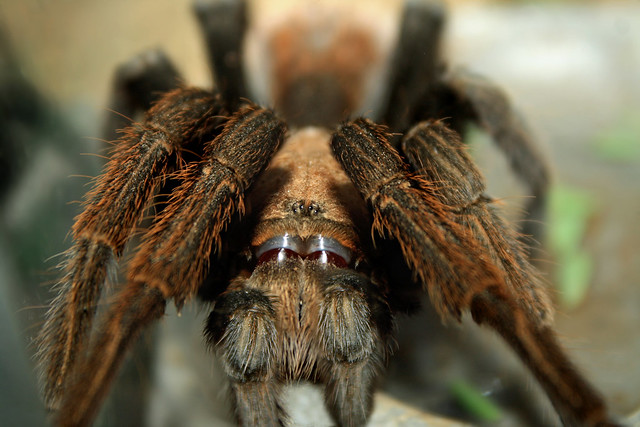
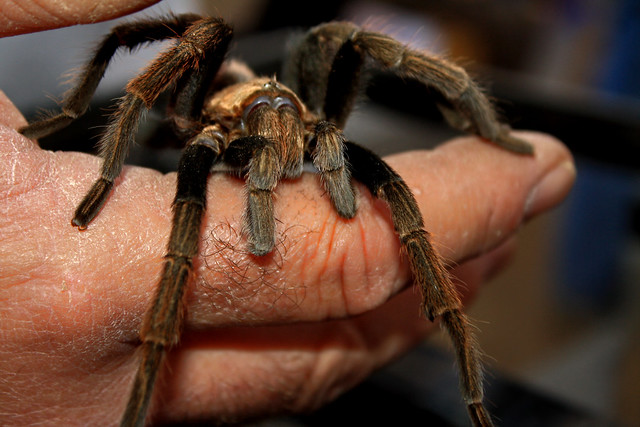
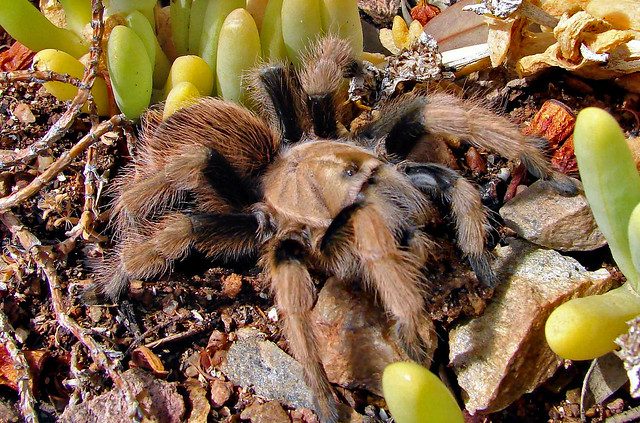
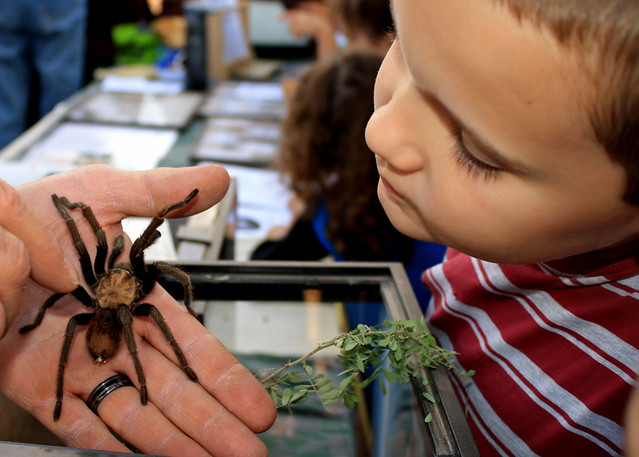
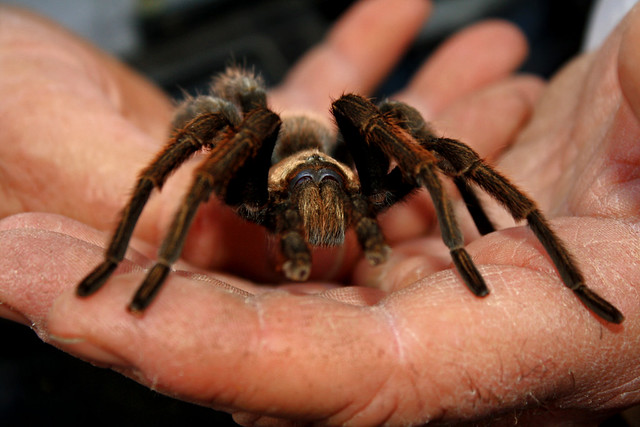
That's not a tarantula. This is a tarantula.

Once you've seen a few tarantulas, you won't make the mistake again. Adult tarantulas are all-over bulky, not just long-legged. And they're hairy. To use a Dave Barry quote, they're more like “spiders so large they appear to be wearing the pelts of small mammals.”

Of course, Mr. Barry also asserts that menfolk are the spider killers, and women the spider haters. Which of course gets both me and my husband dead wrong. The point is, we know our spiders. (He, so he can run the other way; and me, so I can get closeup photos and be a know-it-all online.)


Our local tarantula is the Arizona blond; also called the western desert, Mexican blond, and probably a few names I haven't heard before. They tend to be in 1- to 2-inch burrows anywhere where saguaros and other desert flora abound. As you can see in the photo below, they blend in surprisingly well, until Agh! When did that get here?! The stocky females, which reach sexual maturity around seven to 10 years old, are a uniform brown color. The slightly lankier males, which are the ones most commonly encountered, have copper-colored bodies and black legs.


Also, if you're my son, you think they're absolutely adorable.


More on the Arizona blond tarantula soon, because it's also in my Species a Day, which is getting a big boost as soon as I catch up. As soon as Monday: The Sequel (known to more responsible individuals as Tuesday) gives me a breather. Happy week, everyone.

Friday, November 11, 2011

Friday 5: Mealtime

I'm a big, nature-loving softie. Still, predation is pretty cool. It's part of nature, after all. I've mentioned it here and included it in sets like this or this. Here are five more scenes I found gorgeous rather than grisly. (Your mileage, as always, will vary. My husband says if you're not me, you'll probably lean toward grisly. But he thinks I'm weird to eat during medical dramas too.)

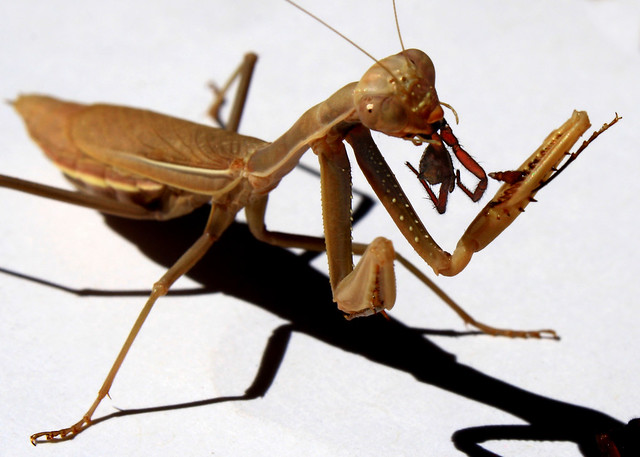
Mantis on spider:


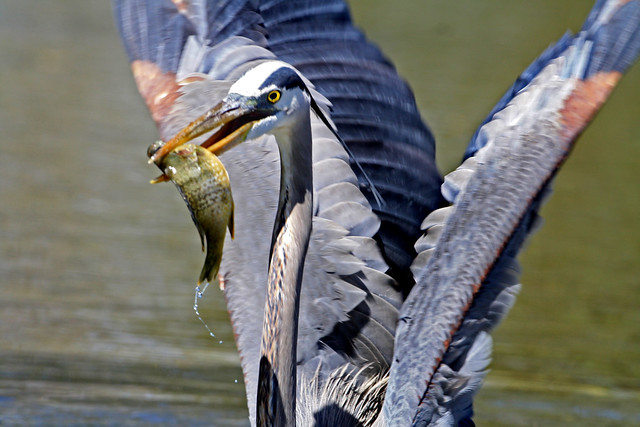
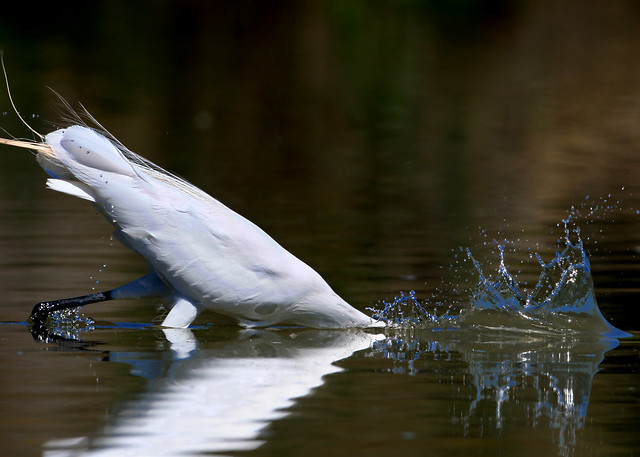
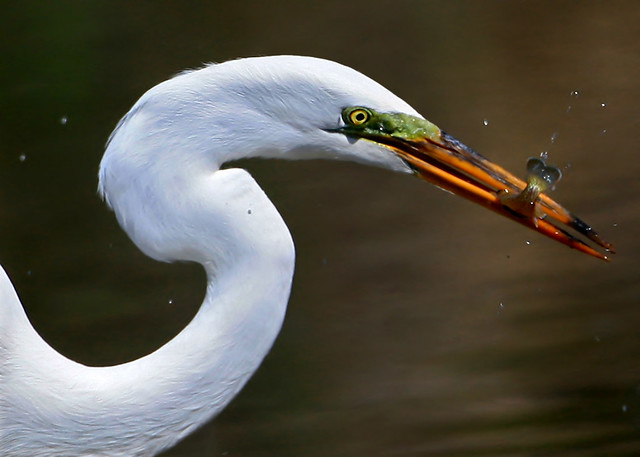
Heron on fish:


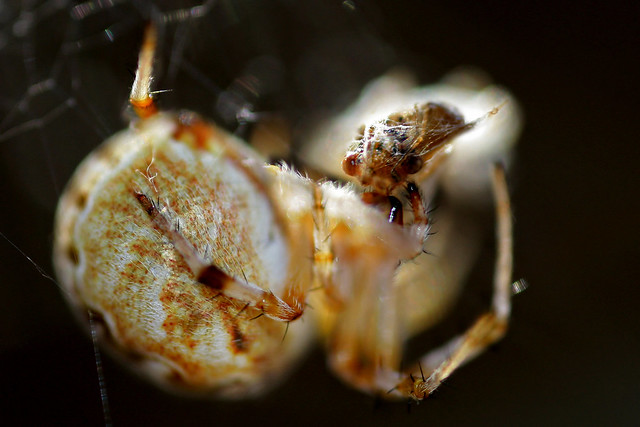
Orb weaver on cicada:


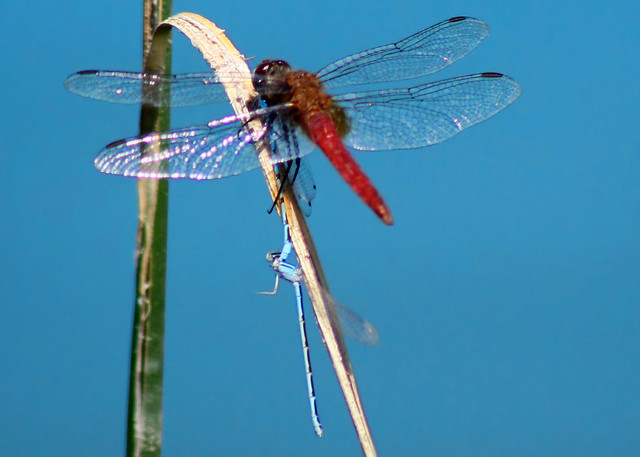
Red-tailed pennant dragonfly on mating damselflies (twin-wrapped snack pack?):


Milkweed bugs on cockroach:


Now then ... Who's hungry?

Wednesday, October 26, 2011

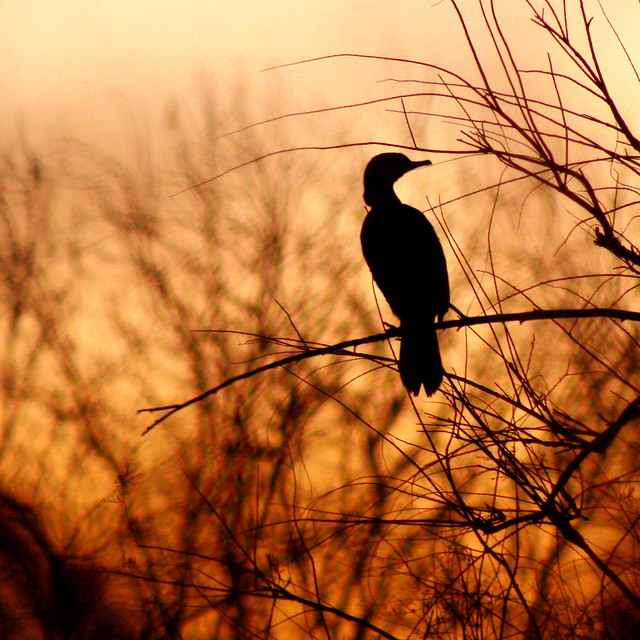
Monday goodies/Wildlife wednesday: Cormorants

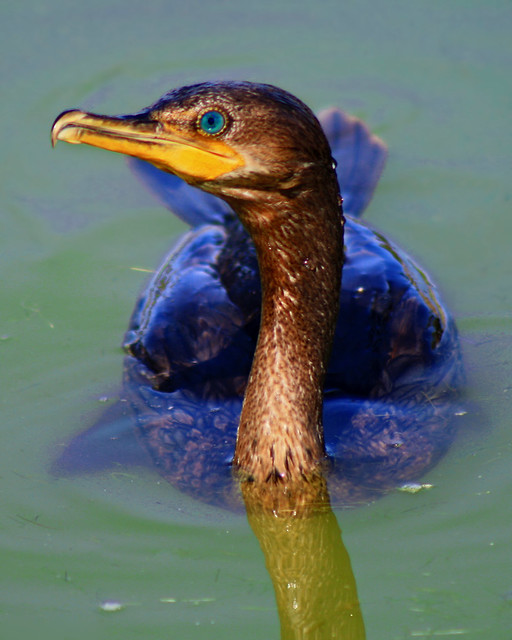
After my last Monday post, Thérèse asked for cormorants. I've got cormorants. I've got cormorants to spare.

Cormorant-human relations can be a tricky thing. In some areas, they're considered pests because of their droppings, stealing fish from anglers, or just sheer numbers. In China, however, anglers have actually used cormorants for thousands of years to help them fish. Kind of like feathered, swimming, really goofy-looking hunting dogs.
For us, they're just a blast to watch. I don't know if any of you are Dr. Seuss fans, but one of my son's favorites used to be On Beyond Zebra. One of the pages talks about "nutches," which guard their perches thusly:


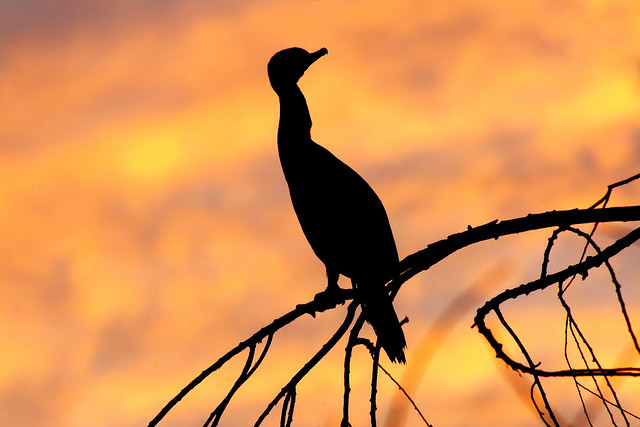
It always reminds me of this:


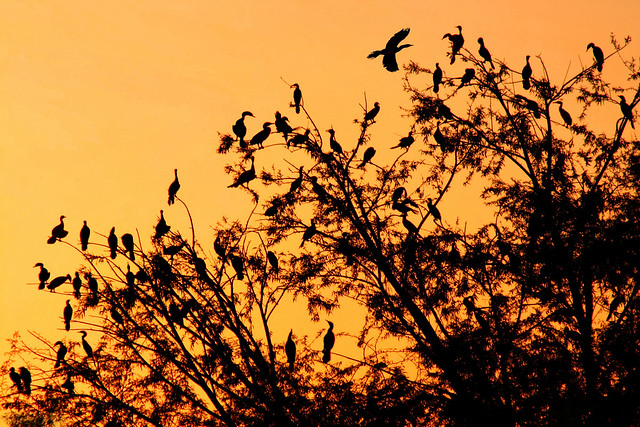
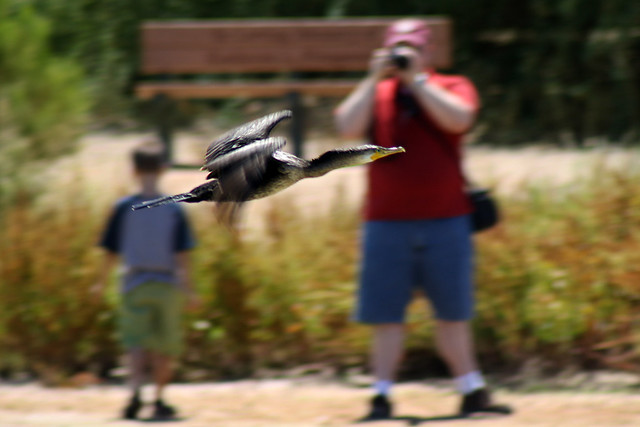
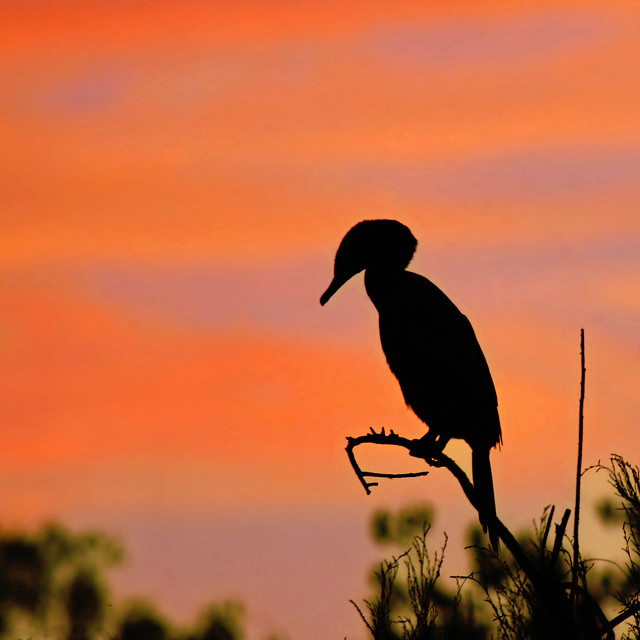
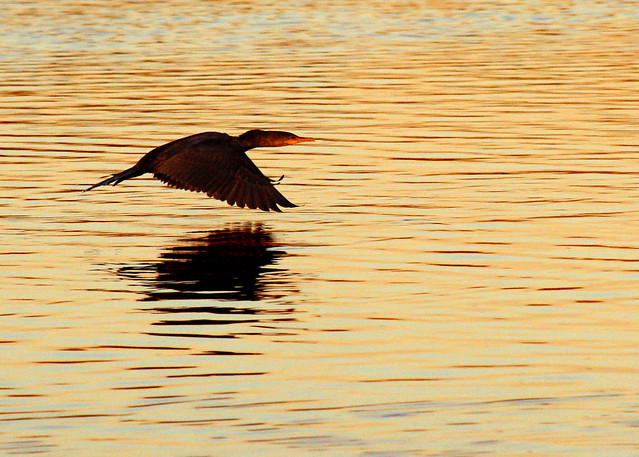
They act like it too -- that one cormorant is in flight because no one will let it on its perch. Also, their call sounds a lot like a belch. Add to that the fact that when one does get dislodged from its branch, it bumps off the next one, and that one careens into two or three more, and so on, and they all call out when disturbed; and you have a fluttering, silhouetted symphony of burps every evening. Best nature walk ever if you have a kid; trust me.
Here, have a few more:


Hooray for cormorants. And see, I do requests! Ask away.

Happy beginning/mid week.

Tuesday, October 11, 2011

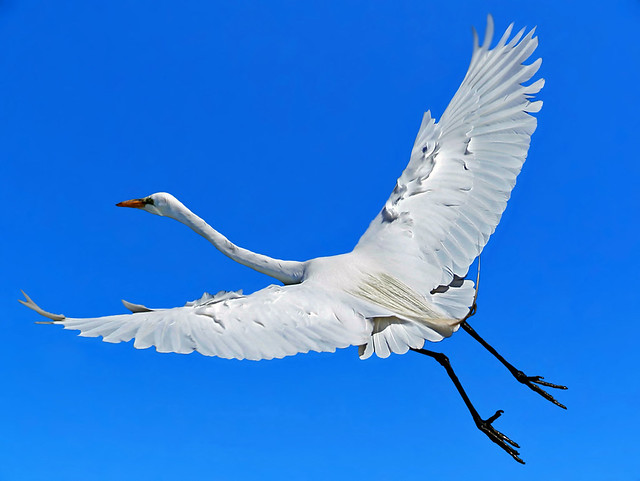
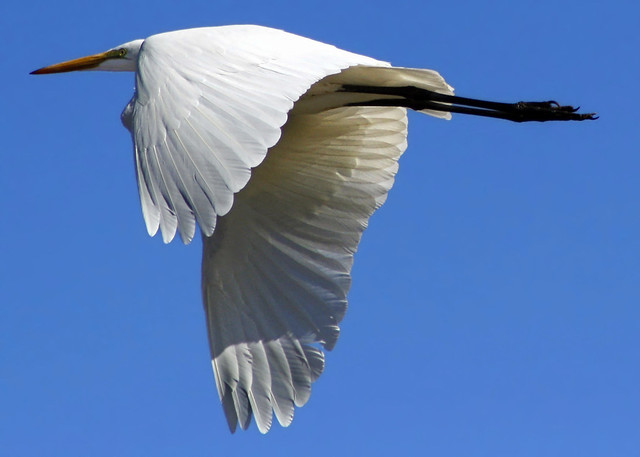
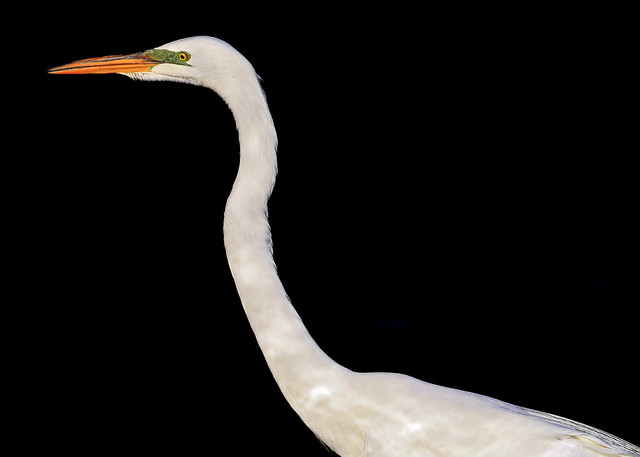
Monday goodies/Wildlife Wednesday: Great egrets

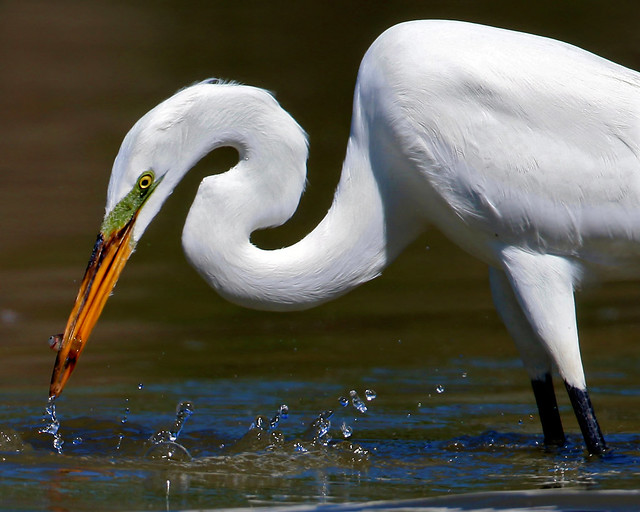
Great egrets. Fierce. Graceful. Eaters of insects, fish, baby gators, snakes, frogs, small birds, and really just about anything.

Not eaters of people, and so great fun to watch.

I already did great blue herons, so I figured a Monday with great egrets was in order.

I had this all ready, but Blogger didn't want to do anything but throw my computer into a "Not responding" fit for two days. So now it's a combo Monday goodies and Wildlife Wednesday. Egrets are good for all occasions, no?


Hope you're all having a good week! What animal/pretty stuff/cool thing should I do next? Also, Species a Day write-ups and funny-kid posts coming.