Wednesday, January 23, 2013

Day at the Museum

This is an expanded version of this month's column in Times Publications. 

This month, my son and I went back in time billions of years. Then we went on a few archeological expeditions, took a trip to a modern photo gallery, and finally, I put him in jail.

Standard punishment for bothering Mom while she's working.
 We went, of course, to the Arizona Museum of Natural History. During a visit there, you and your family can learn about anthropology, archaeology, history, Native American civilizations, and many fields of scientific research. Of course, we really went for the dinosaurs. It’s known as the “dinosaur museum,” after all.

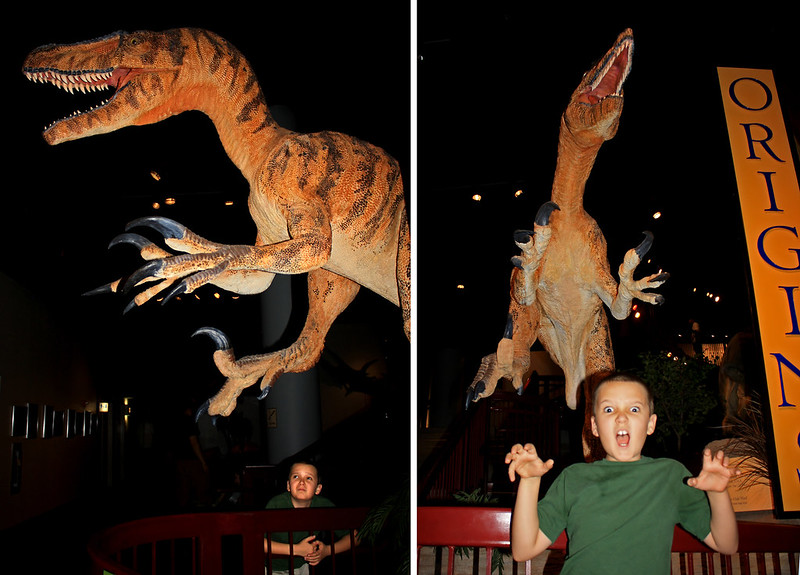
And also the "Play acting beneath big-ass dinosaur claws" museum. What; that's not what you call it?
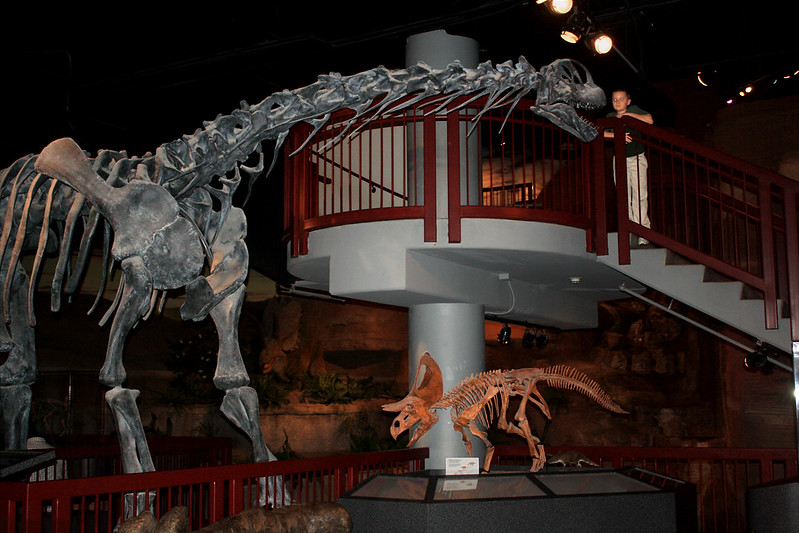
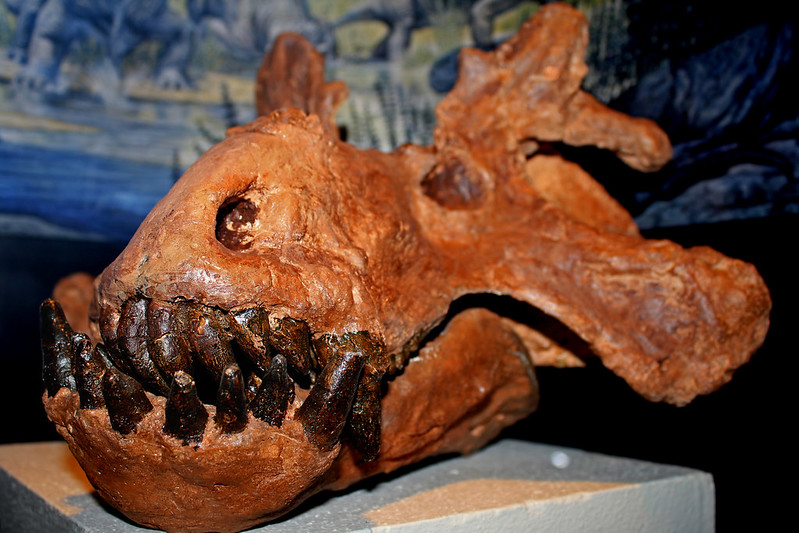
Some of my and my son’s favorites, however, weren’t the showstoppers like the towering camarasaurus, fearsome tyrannosaurus, or iconic triceratops (although, yes, those warranted several visits). We loved finding something new, something we didn’t know about before. The crazy, horned skull of a “crowned crocodile” that was actually part of a group of mammal-like reptiles that lived around 267 million years ago. The spiny, intricately detailed trilobite fossils, part of a group including over 10,000 species. There are dinosaur juveniles -- and nests! If all you want is to marvel at some giants, they’ve got you covered, but there is much more to paleontology, and the museum covers that, too.

But seriously, the giants are pretty cool.
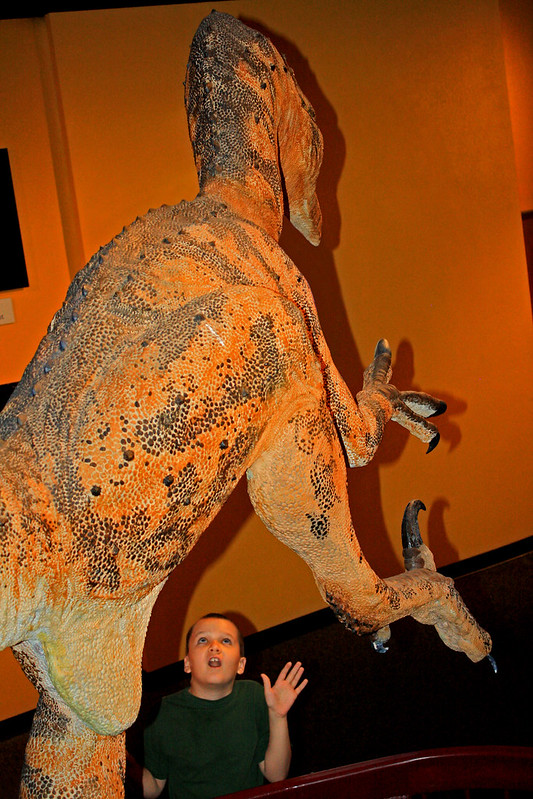
Also, more giant claws!
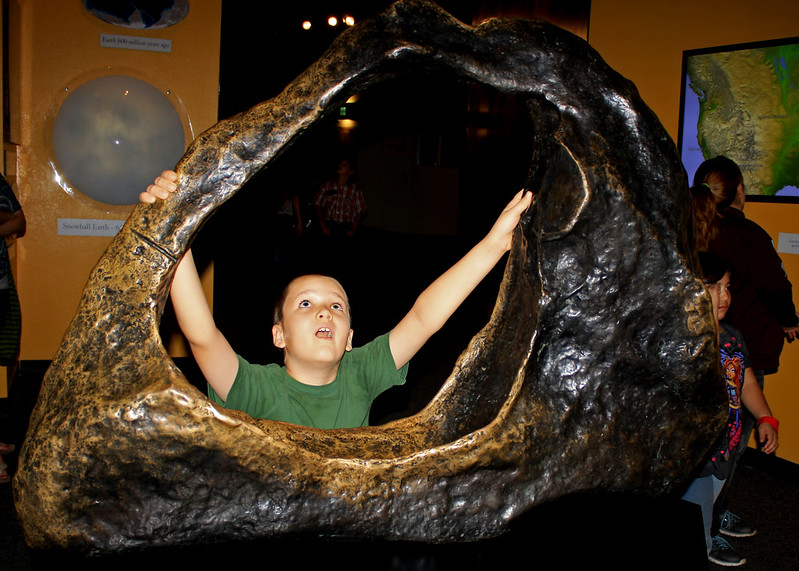
We were also captivated by “Origins,” a permanent exhibit that showcases astronomical events through images and displays and teaches visitors how to “look into the past” simply by examining the stars around them. From the formation of the moon 4.5 billion years ago, to life on Earth 370 million years in the past, to meteorites and minerals collected by people around Arizona, this gallery’s got the history of our world. My son (and each passing kid) gazed in wonder from the hole in the bizarrely shaped giant cast of the Tucson Meteorite, an immense iron meteorite that was discovered before 1850. Beside it, visitors are encouraged to touch a real meteorite, older than the solar system itself.

The real one was actually used as an anvil before they knew what they had. For my money, unabashed wonder is a better use.
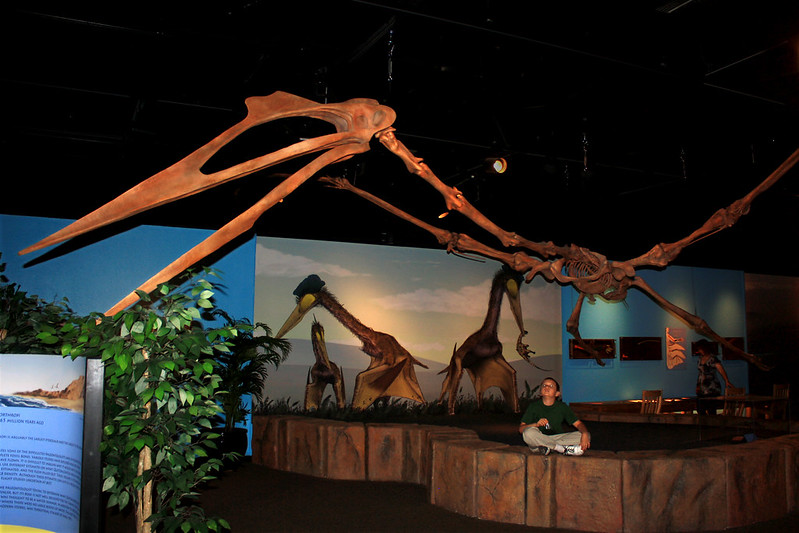
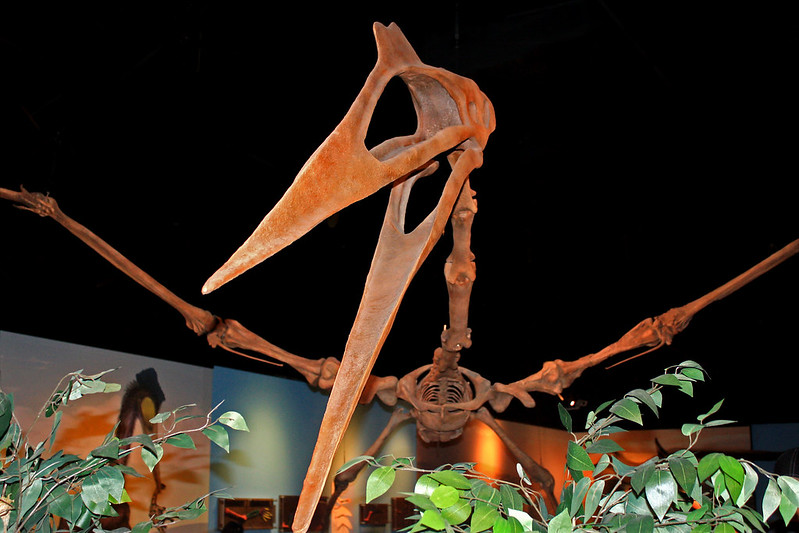
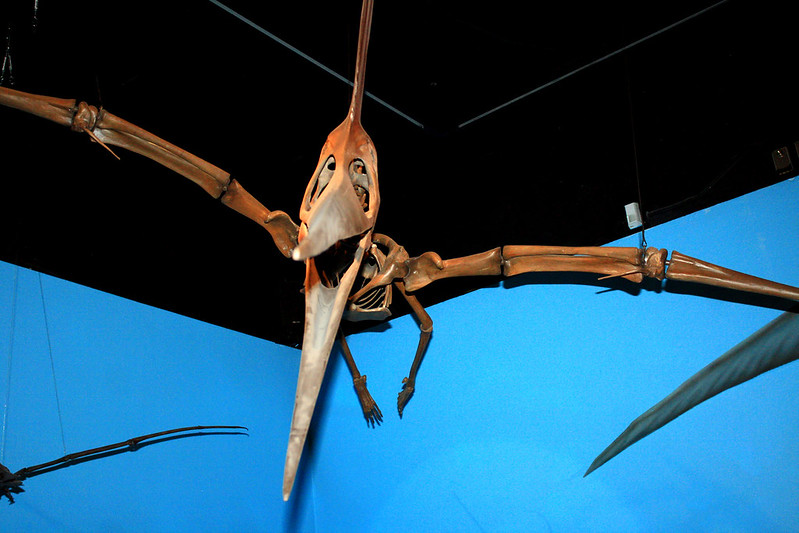
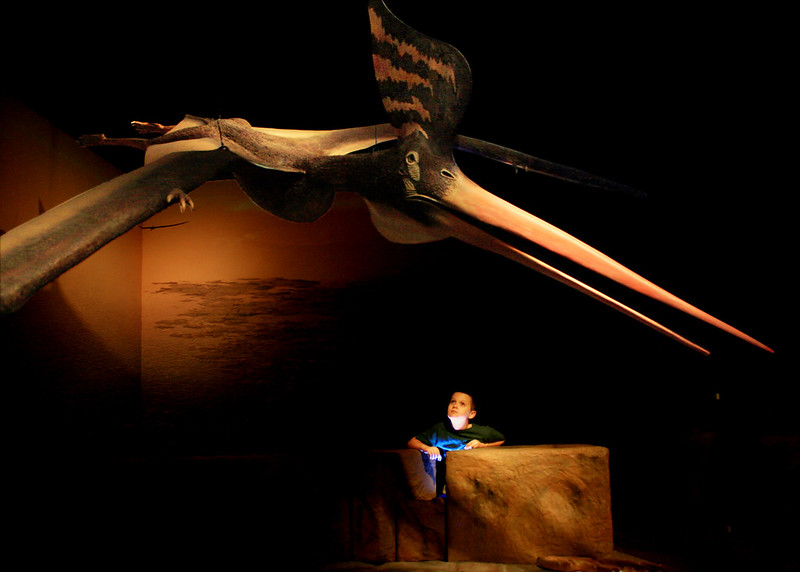
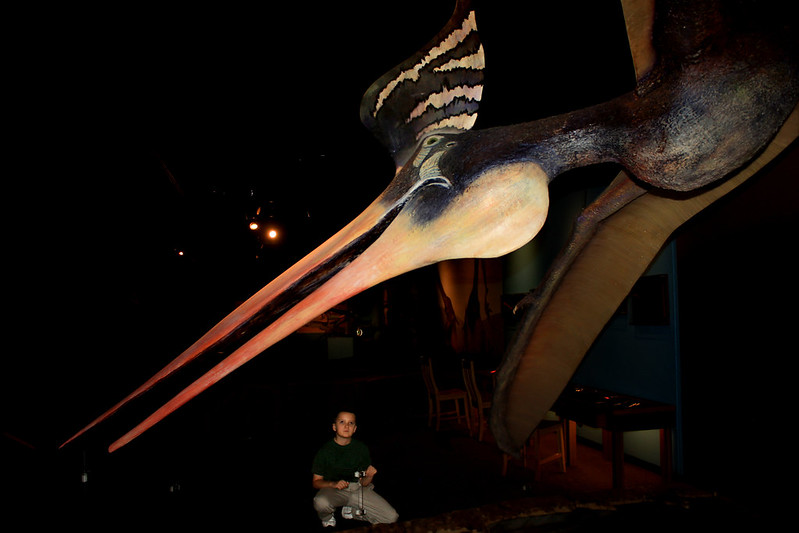
Happily, our visit coincided with the museum’s “Rulers of the Prehistoric Skies” exhibit, which is set to run through early 2013. This was lucky, because I have always -- oops; I mean my son has always -- dreamed of seeing pterosaurs (which are reptiles, but not dinosaurs) in person. This is about as close as you’ll get, so we were both thrilled. At the exhibit, we learned about everything from pterosaur anatomy and evolution to their dietary habits. There were even replicas of baby pterosaurs. Of course, the highlight is probably standing beneath Quetzalcoatlus northropi. Imagine a small glider plane. Now make it a giant flying, beaked reptile, and you’ve got a good handle on Quetzalcoatlus. It was one of the biggest flying animals of all time, with a wing span of up to 10 meters and a skull that topped 2 meters. I managed to let David take the first turn beneath the behemoth, but just barely.

Getting cool pictures only kind of makes up for it not being my turn yet.
If quetzalcoatlus "folded" and stood on its haunches (if pterosaurs had haunches), it was about the size of a giraffe. A giraffe that could fly for thousands of miles, and had a beak much bigger than you.

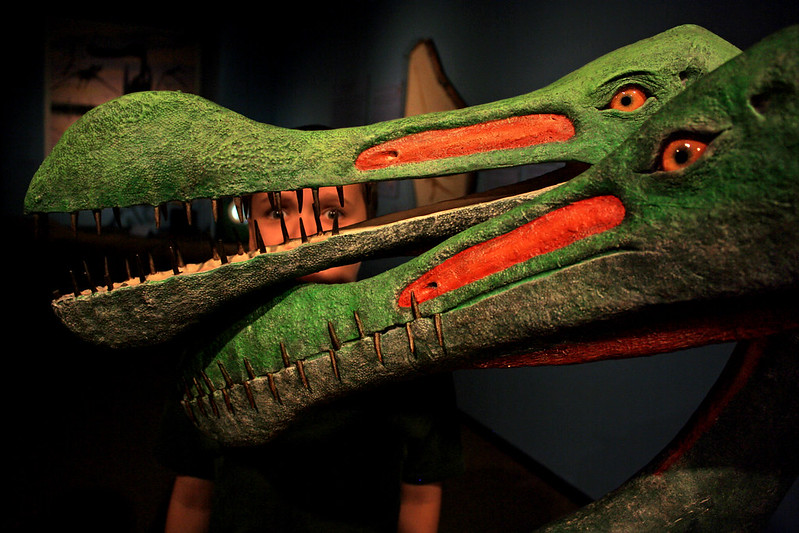
Pteranodon sternbergi and Kiddus amazeface. Priceless.
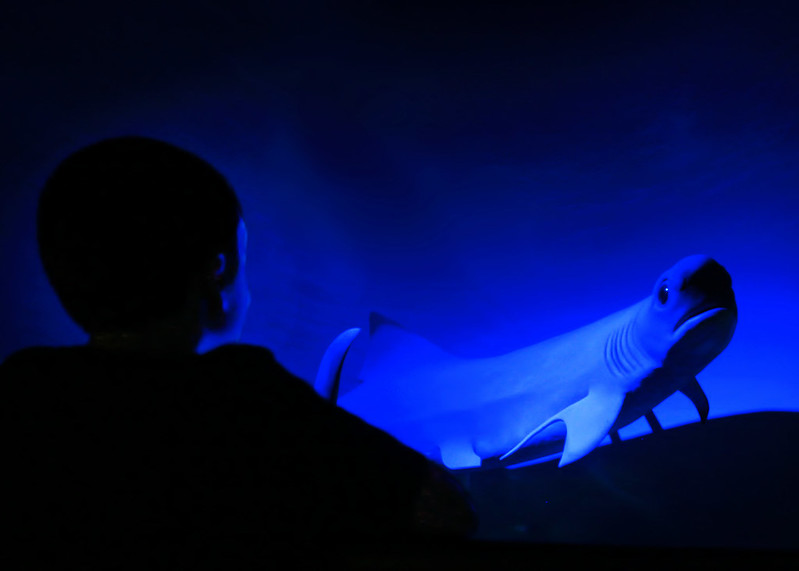
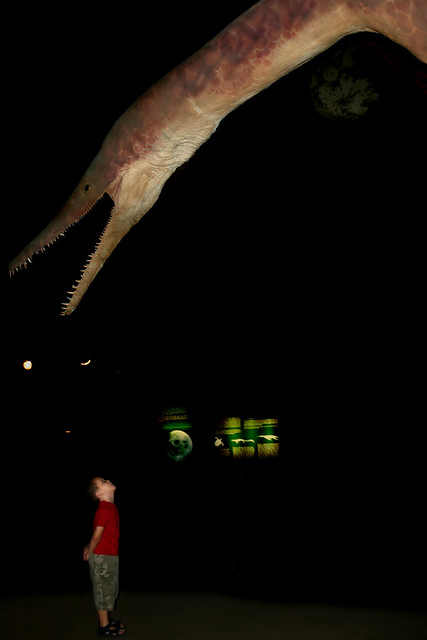
If top predators of sky and land aren't your speed, how about the sea? Prehistoric oceans were teeming with apex predators not topped in any blockbuster, and you can get your fill of sharks and marine reptiles here as well. The diorama of a six-gilled shark is always one of our favorites. And we love the pliosaur exhibit of the Black Mesa area of northeastern Arizona, circa 100 million years ago, which showcases short-necked but ridiculously large plesiosaurs, swimming reptiles that lived alongside dinosaurs in the Jurassic and Cretaceous Periods.

Shark and awe.
We're gonna need a bigger boat.
It wasn’t quite yet unveiled when we were there, but the museum is unwrapping a new exhibition just in time for Christmas -- “Destination Station,” open Dec. 20, 2012 through March 24, 2013. The exhibit focuses on the International Space Station, an internationally developed research facility, in Earth’s lower orbit. It's the largest space station ever constructed, and is a space-based research lab where astronauts from around the world conduct experiments. “Destination” is a sort of awareness campaign for the station, showcasing the cutting-edge research that takes place there, showing visitors how studies are conducted and what discoveries have been made, and highlighting its immense potential for future research. The museum plans to collaborate with the Arizona SciTech Festival, and may even call in visiting astronauts during the exhibit’s run.

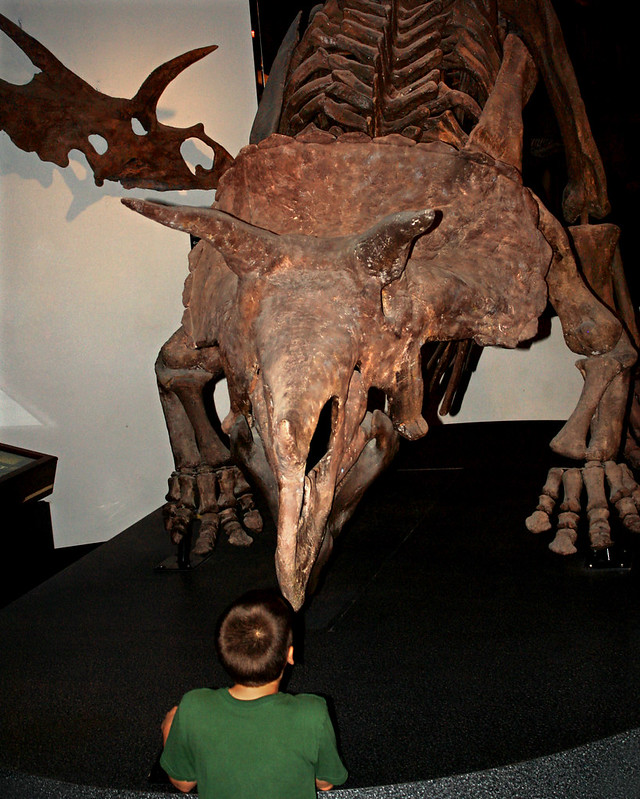
Triceratops appreciation, or the only time this vegetarian really enjoys a good set of ribs.
The exhibit should fit right in. One of the best things about the museum is that it encourages active participation, mentally and sometimes even physically. Plaques by the reconstructions and fossils not only identify the species, they tell how it was discovered. Some displays even tell about questions scientists still haven’t answered, which perfectly highlights the skeptical, ever-developing nature of science. If you went here as a kid, it won‘t be the same when you take your kids. If they take theirs in 20 years, it will be a whole new place again. This place not only shows the fruits of scientific discovery, it shows the process of discovery. You can crawl through a lava tube (if you’re a small- to medium-sized adult or a kid), touch several displays (signs will say “Please touch”), piece together skeleton puzzles, answer trivia questions, pan for gold (“fool’s gold,” anyway), and stay in a cell from a real territorial jail.

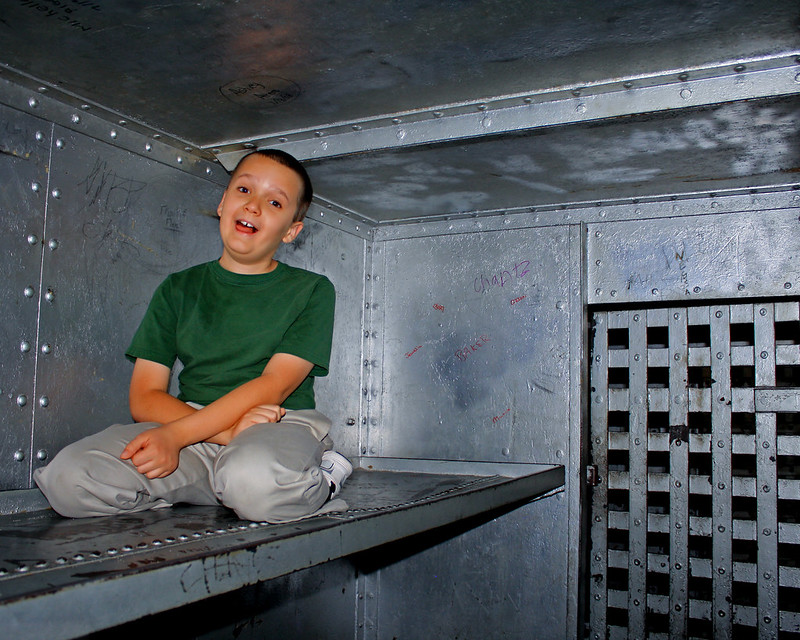
What? Forget something? Nope; just leaving the jail exhibit.
And, come on. Your kids might whine when you leave places, but it’s not often you hear “Mooom! I want to go back to jail!”

More photos:

Ornithocheirus mesembrinus, a particularly toothy pterosaur.

Jail is fun! (Disclaimer: Do not use the exhibit to teach your children that jail is fun.)

The skull of an Estemmenosuchus, also known as a crowned crocodile, also known as the coolest animal that I didn't know existed until visiting this museum.

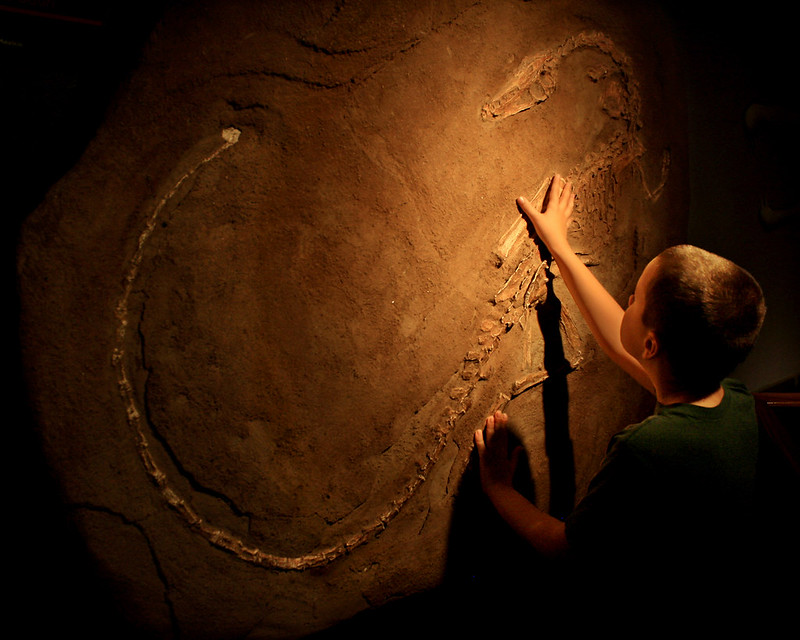
A paleontologist is born. Examining a Coelophysis fossil.

Quetzalcoatlus northropi in yo face.


Pteranodon sternbergi also all up in yo face.

The chase continues. I think-he-saurus.

The pterosaur gazing continues.


Touching a real fossil! A giant one!

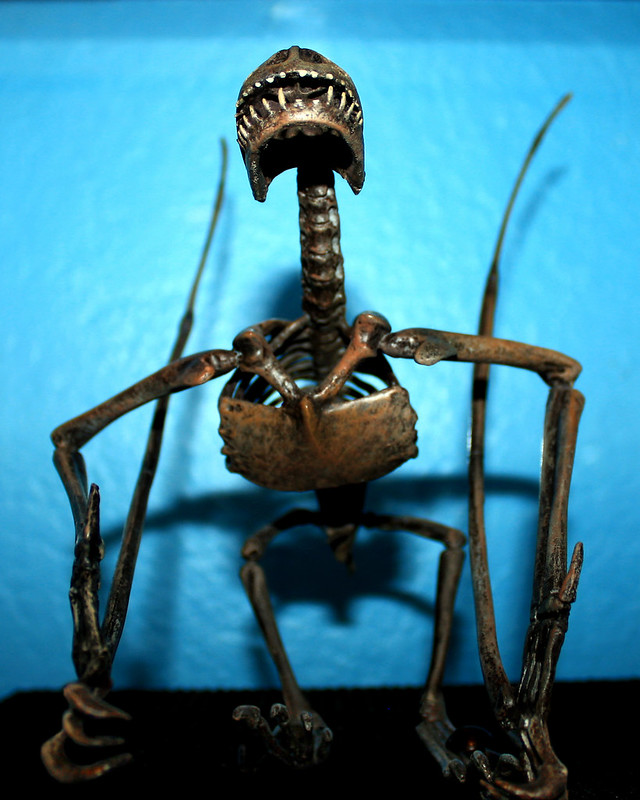
The creepy-cool Jeholopterus ninchengensis, a very small pterosaur.

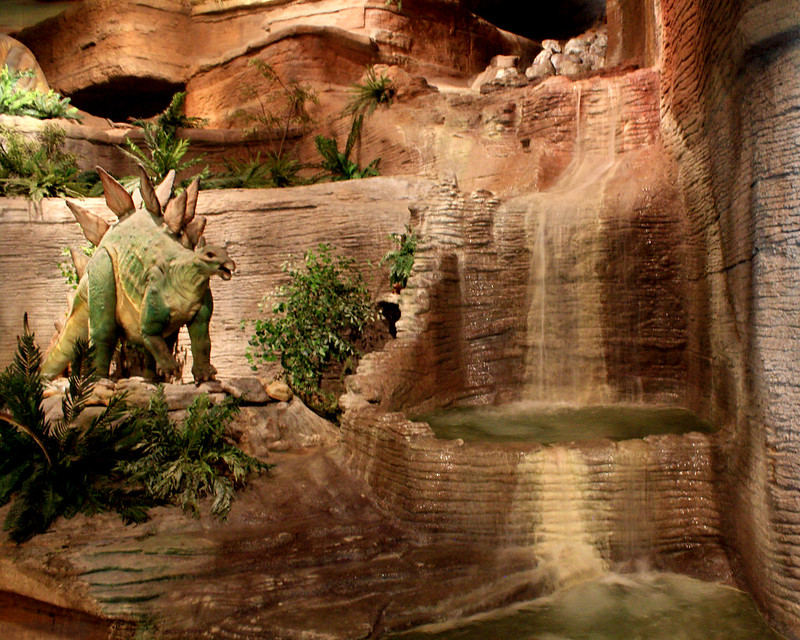
Dinosaur mountain, complete with waterfalls, periodic thunderstorms, and animatronic dinosaurs.

Triceratops again.

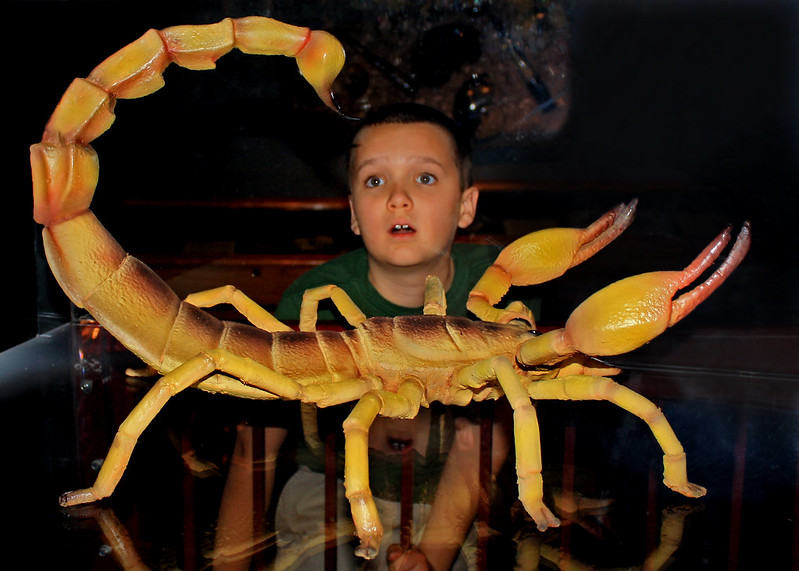
Even in Arizona, we don't grow them this big (anymore).

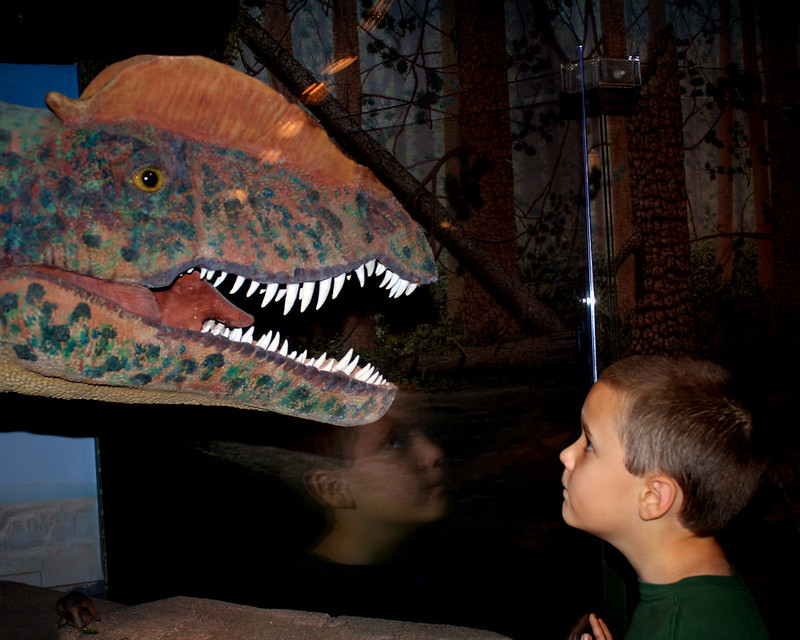
Dilophosaurus, with fossil evidence gathered from Arizona's Kayenta Formation

Quetzalcoatlus from the back. Tell me this isn't the coolest creature ever.
My kid shares a moment with Tyrannosaurus bataar, a close relative of T. rex. Rawr.

And yet another pteranodon, because I truly can't help myself
The Arizona Museum of Natural History is one block north of Main Street in downtown Mesa. For more information, call (480) 644-2230 or visit azmnh.org.

Tuesday, July 17, 2012

Travel Tuesday: Phoenix Herpetological Society

For this Travel Tuesday, please enjoy a writeup that on the Phoenix Herpetological Society, which appears in this month's issue of Times Publications. (I could have just summed it up with "We got to touch Galapagos tortoises, saw endangered crocodiles, and OMG so many cool snakes!" But I guess a full writeup is a little more informative.)

EDIT: I just discovered that PHS lost their beloved alligator Tuesday on July 15, 2012. She was an awesome ambassador (over 300,000 kids got to met her!) and will be missed. I'm so sorry for the loss. You can read tributes to Tuesday on her memorial page, and add your own if you have something to share.

*****

Have you ever wanted to see a snake disarticulate its jaw? Think you can figure out what a ball python weighs? Haven’t you ever wanted to see a crocodile up close? Get trampled by a bunch of hungry tortoises?

If you’re an adult like me (by which I mean an adult who is still mostly a child), the answer to all of  these questions is a resounding yes. The Phoenix Herpetological Society (PHS), located in Scottsdale, can provide all this and more. This is even better news if you have a few excuses to go -- I mean, if you have children of your own.

The PHS was founded in 2000 to rescue and rehabilitate native and non-native reptiles, displaying some for education and releasing or giving homes to reptiles when possible.. Since then it has expanded, and now houses over 1,400 reptiles; including the recent addition of some extremely rare crocodilians, an entire room devoted to venomous snakes, and a veritable stampede of African tortoises. And they give tours.

During a tour lasting about two hours, a worker at the sanctuary gives visitors -- kids and adults alike -- an overview of the facility’s reptilian residents. Quick: What's your favorite reptile? I all but guarantee you PHS has one, and knows more about it than you do.

After a brief introduction to the PHS’s mission, our small group visited the facility’s tortoises.

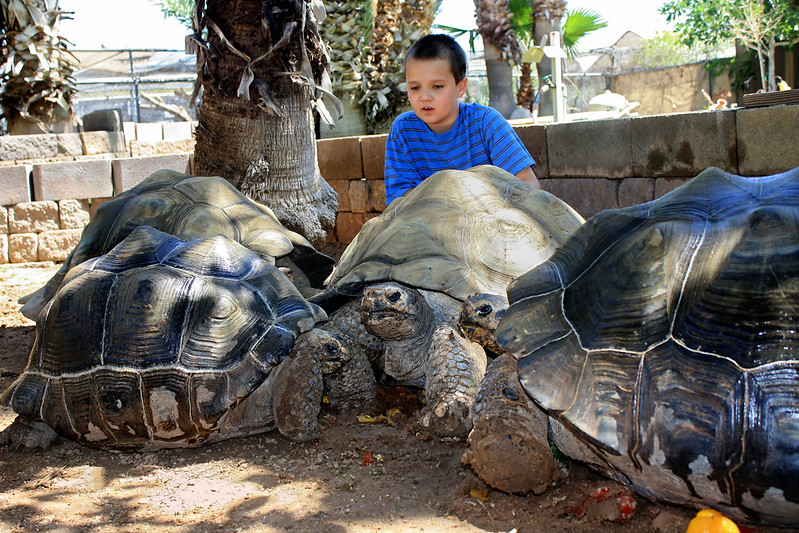
In a lowered, shaded area near the entrance, three Galapagos tortoises and some Aldabra giant tortoises (similarly-sized relatives from a different island) basked in cool mud. Kneeling beside the giants, outweighed by hundreds of pounds, my son was enthralled.

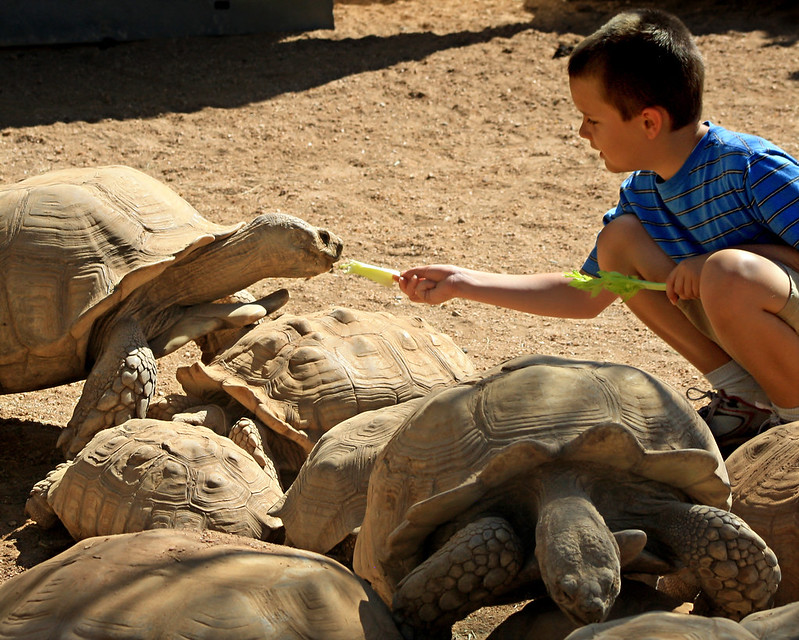
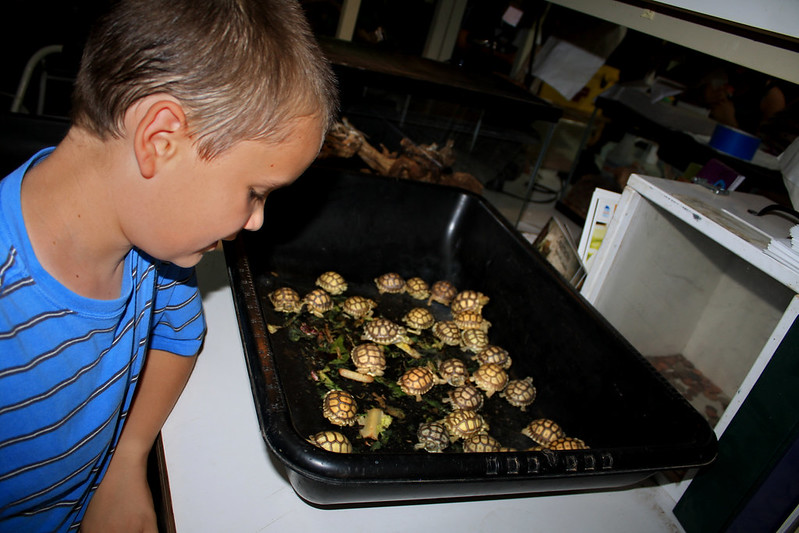
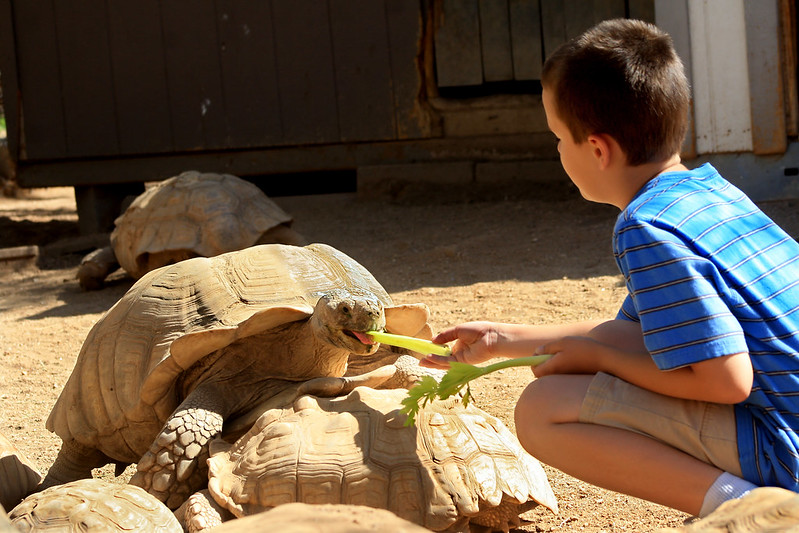
Next, we visited a pen with about sixty African spurred tortoises. It was feeding time, and we got to help. Turning over crates of fruits and vegetables, our guide, Daniel Marchand, invited visitors to climb in and help feed the tortoises. The large, eager tortoises moved surprisingly quickly, climbing over one another to follow anyone with a celery stalk.

From there we toured “lizard alley,” and got to watch the lizards (some rare and endangered) slurping up flowers or, in the case of an erstwhile Asian water monitor, attempt to mate.

At the iguanas, Daniel advised us why the lizards, while gorgeous, don’t make great pets.

“There comes a time where a male iguana is only looking for one thing. If you’re not a female iguana, he’s going to get unhappy and maybe aggressive,” he said. Many of PHS’s reptiles are rescues after previous owners couldn’t care for the exotic animals.

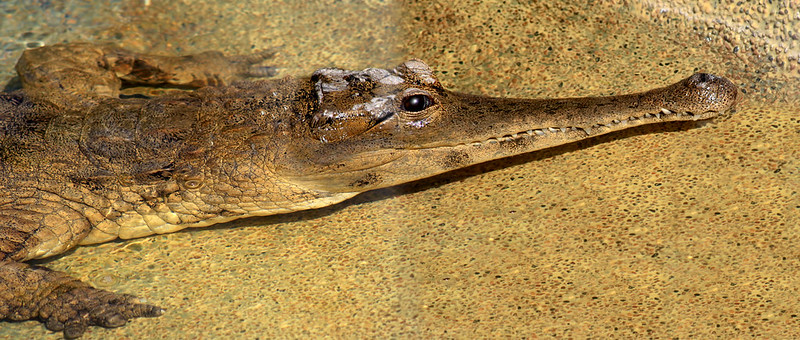
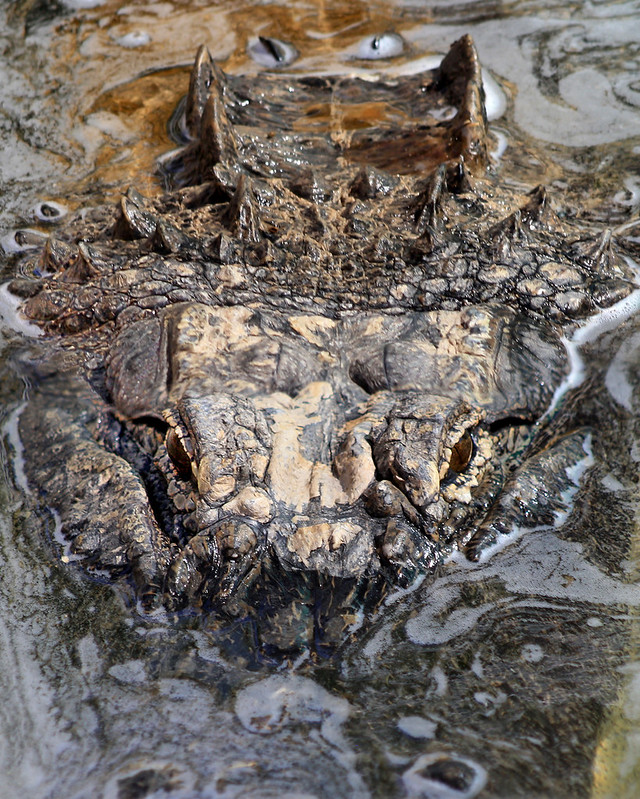
Next our group visited the crocodilian residents of PHS. Endangered and extremely rare species; including a New Guinea crocodile, Nile crocodile, Yacare caiman, and African slender-snouted crocodile, which PHS is helping to conserve; stared at us from cool pools.

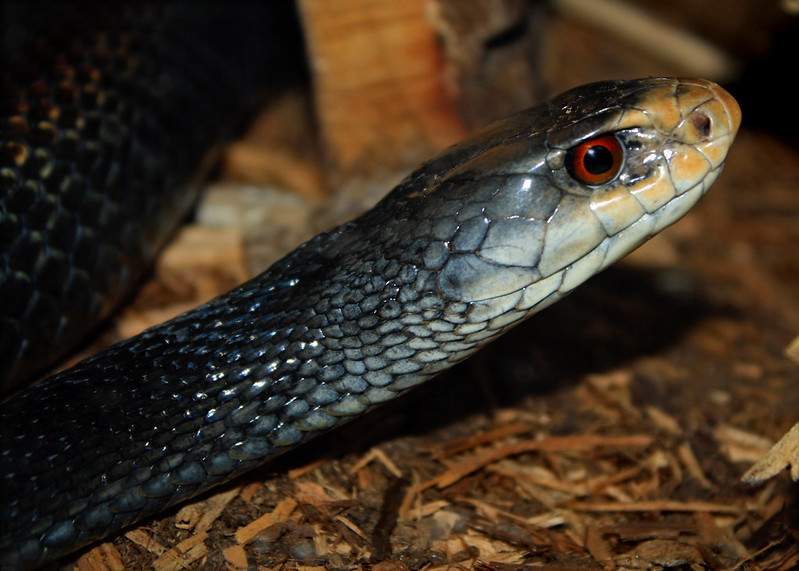
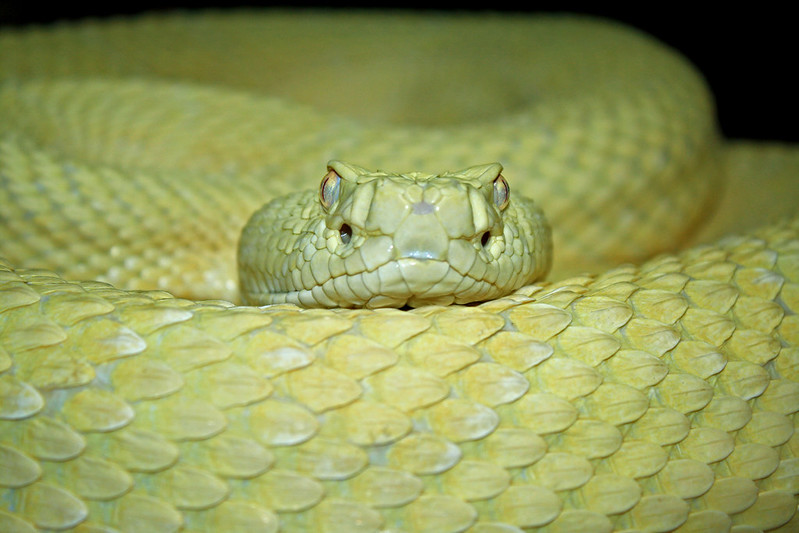
Next we toured the snakes of the “venom room,” the largest collection of venomous snakes in the state, and one of the largest in the western United States. It’s the best (and safest) up-close view you could hope for of an incredible variety of snakes, including several different rattlesnake species; spitting cobras; a black mamba; and the New Guinea taipan, which is, drop for drop, the most venomous terrestrial snake in the world. It uses a big dose of venom in each bite, sometimes enough to kill fifteen human adults. These were all facts enthusiastically repeated to my husband as soon as my son walked through the door.

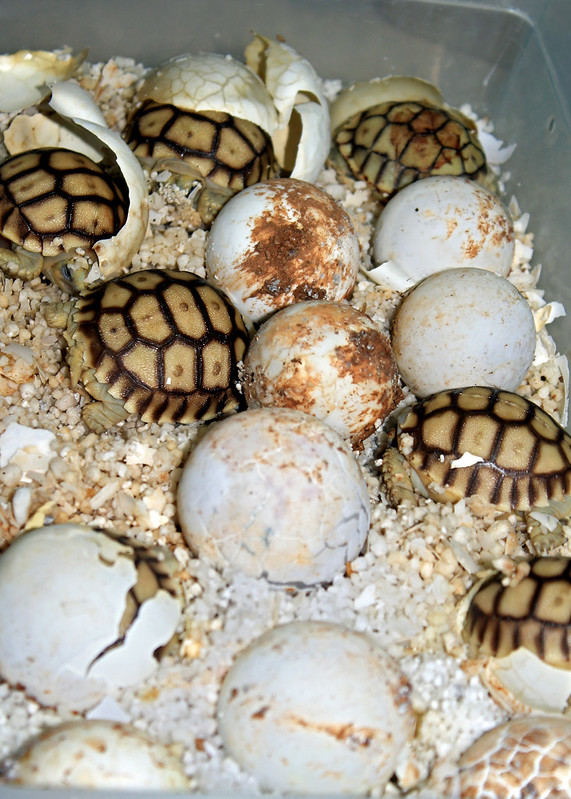
In the last room, Daniel showed us a photo of a rattlesnake bite, in case anyone needed the “snakes aren't toys” point driven home, and we toured enclosures of pythons, boas, and other non-venomous snakes and lizards, as well as some tiny hatchlings that I was surprised to discover were the same species as the huge African tortoises we’d fed earlier in the tour. The tortoises were just beginning to emerge from their eggs, some just barely peeking through cracks in the shells. Daniel explained that it’s important not to disturb the eggs (the tortoise inside can drown), and showed us the “belly buttons” the hatchlings still have until they’re a bit older. My son had to be dragged away.

The PHS focuses year-round on education, including special holiday-season tours, summer camps, and outreach efforts. Last year they reached more than 109,000 people, mostly kids, with their educational programs.

My family has always had an affinity for exotic animals. The creepier, crawlier, scalier, and weirder; the better.
The PHS is fantastic if you feel the same way, but it might be even better if you don’t. What better place to be exposed to these amazing creatures than a sanctuary devoted to preserving and respecting them?

My son and I were thrilled to see a sincere love for reptiles that surpassed even our enthusiasm. Crocodiles rock, and so does the Phoenix Herpetological Society.

Tours are $20 for adults, $15 for kids (ages 3 and under are free). Visit PHS at www.phoenixherp.com or call to book a tour at 480-513-4377 (HERP).

*****

And, because I have absolutely no self-control, please enjoy a bunch of additional images from the Phoenix Herpetological Society. Seriously, you should give them a call.

African spurred/sulcata tortoise (Geochelone sulcata) hatchlings

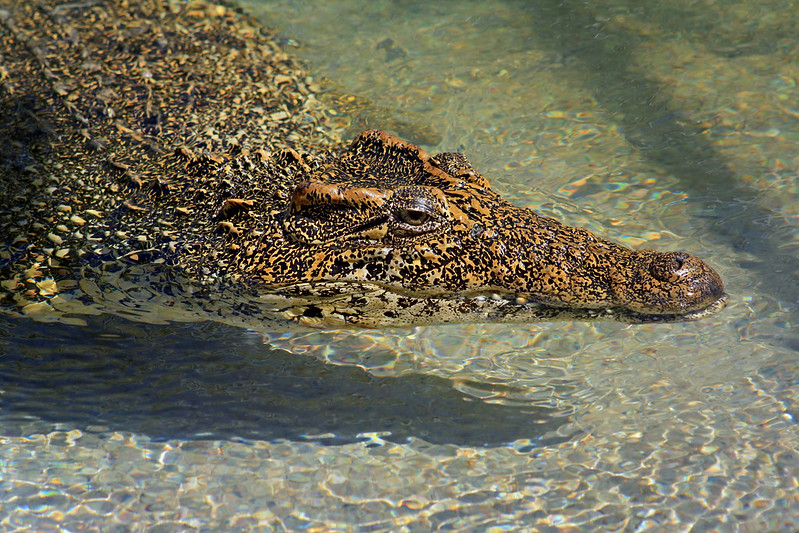
Jojo, a Cuban "jumping" crocodile, can jump 6 feet forward and 4 feet high with her long, strong legs. (Our guide helpfully put it: "They can get you at chest level from six feet away." Oh, and they've been observed to possibly hunt in packs. Like many of the crocodiles at PHS, its species is endangered.
Yes, another sulcata tortoise hatchling. Come on. You wouldn't have been able to resist either.

Last sulcata; promise. The grown-up version this time.

A Nile crocodile, a little over nine feet long. Seriously, look at those eyes.
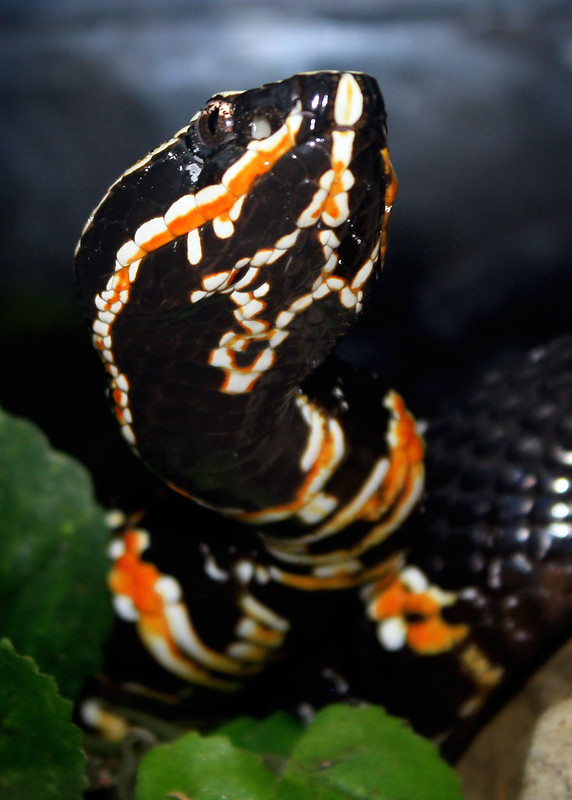
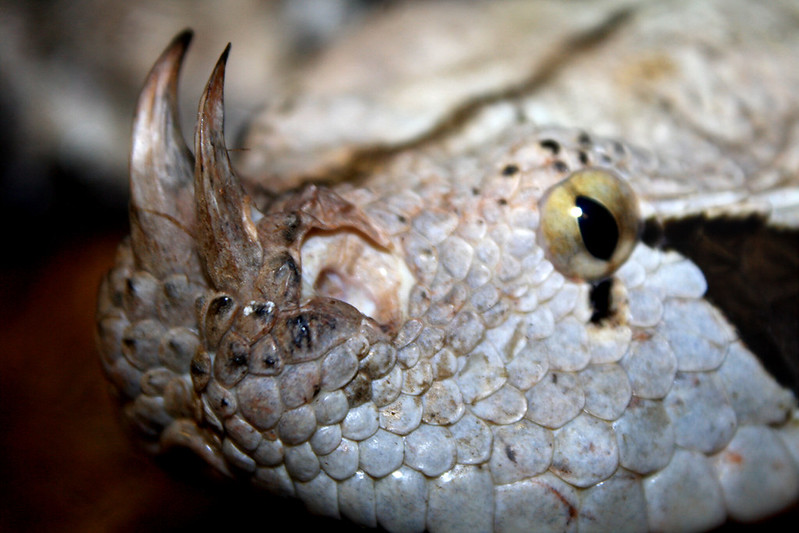
A West African gaboon viper. His name is Tank.

A Western diamondback rattlesnake in the venom room.

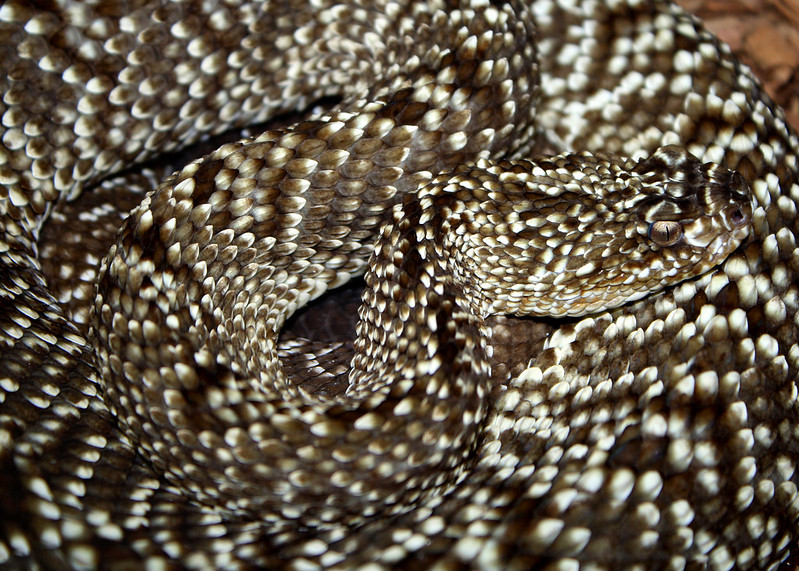
A Urocoan rattlesnake. I don't even know how I'd ever spot this snake in the wild. So gorgeous.

A prairie rattlesnake, showing off an impressive rattle.

OK, one more of the Western diamondback. Couldn't help myself here either.

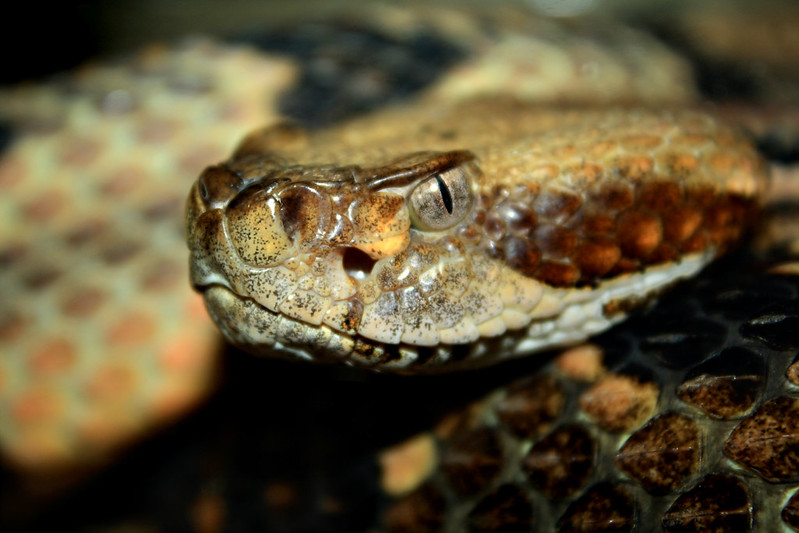
Last but not least, an insanely gorgeous canebrake rattlesnake. And there are about 200 more venomous snakes where these beauties came from.

Sunday, July 15, 2012

Spider Sunday 7-15-12

A few spidery links today:

Brown widows replacing my favorite spiders: A link to one of many stories. Here's another. As I said the other week, yes, I've heard the news. Incidentally, I think I may have been, um, using the facilities beneath some brown widow egg sacs the other day at the lake. For now, it's still black widows at home.

What really happens when a spider bites you: Sorry, Spider-Man. Radioactive or no, you're not getting superpowers. (You will notice that I spelled and hyphenated the name correctly, though! None of this "Spiderman" nonsense.) A brief rundown on a few notorious spiders and the effects of their bites. The upshot: Be careful, and you'll probably be fine. Bonus points for nerdy comic book/movie tie-in. Points off for use of "poisonous" instead of "venomous."

Man decides "kill it with fire" is a good idea; it goes about how you would expect: A man decided blasting cobwebs with fire was the best course of action. Some brush ignited and spread a fire to the attic. Firefighters responded promptly and no one was hurt (unless you count massive damage to the family's home), but suffice it to say, maybe you should reach for a broom instead of a blowtorch if you want to clear out cobwebs.

OMG FLYING SPIDERS!!: The words "flying spiders" appear in a few articles, and everyone panics. Sigh. The Hilton Magnificent Miles Suites hotel in Chicago provided free nightmare fuel with turn-down service warned guests to avoid the "annual influx of flying spiders spinning mini-masterpieces as high as 95 stories." The note did specify that it's natural behavior, and ballooning rather than soaring and diving, but I think all people saw was "flying" and spiders. Spiders balloon all the time. The air currents this time of year seem to make these particular spiders a local phenomenon (to some, anyway; several Chicagoans seem to never heard of it) -- but come on. Keep your windows shut tight "to avoid the annual migration of high rise flying spiders?" Surely the hotel was trolling folks. Remember those cute, gently floating spiders at the end of the animated Charlotte's Web? That's what they do. They're not attacking high rises.

Treating muscular dystrophy with spider venom: A story of a grandfather's love, the Internet's ability to connect people, some really interesting medical research, and spider venom. Scientists from University at Buffalo think that the complex molecules in the venom of Chilean rose tarantulas may help reinforce cellular structures in patients with muscular dystrophy. Stockbroker Jeff Harvey, whose son has the disease was looking for some way to support research. The scientists needed funding. A Google search later, everyone came together. It's not a cure, but it might be a treatment. And the tarantulas aren't even radioactive. More, and much better explained, at the link.

Sunday, June 10, 2012

Spider Sunday 6-10-12

Today, some beautiful videos.
World's Biggest Spider: A new video on the Goliath tarantula (Theraphosa blondi) describes its fierceness but is refreshingly un-scaremongery: "Perhaps knowing the facts about these ancient predators can help turn human fear into fascination." I hope so too, narrator. (P.S. Does that narrator sound like Terri Irwin to anyone else?)

Ogre-Faced Spider vs. Soldier Ant: A fairly recent "Monster Bug Wars" video from The Science Channel's channel on YouTube. Other awesome ones include their video on the redback spider (a relative of Arizona's black widows), the one on the green jumping spider, or most any on that channel. They're a little silly and a lot dramatic, but they're pretty darn cool. And if you really want to see a poor spider really get it, you can always watch this poor huntsman get taken down.

Here, a slightly happier huntsman on my patio. I fed it a cricket.

Spider mom: A cellar spider lays some eggs. Totally not new, but totally, amazingly beautiful. Freaking amazing videography.

A few more spider news items:

To study vampire spiders, build Frankenstein mosquitoes: The jumping spider Evarcha culicivora has a very specific diet -- it feeds on blood, but only by hunting mosquitoes that have recently filled their bellies with mammalian blood. But wait -- how do you check the guts of mosquitoes before attacking them? And what's more, only females feed on blood -- I remember my son and I putting our hands into nets filled with male mosquitoes, and getting covered in insects but not bites. (Which leads me to another question: How do you go about sexing that many mosquitoes? Entomologists are dedicated.) Do the spiders seek out blood-engorged bellies above all else, or do they know to look for females, which have less feathery and elaborate antennae than males? To see how the spiders make the distinction, scientists built Frankensquitoes. Naturally.

Can jumping spiders kill in space? Student's experiment set for orbit: A little bit of an update on the teenage winner of the YouTube Spacelab competition. It's a nice little profile on Amr Mohamed, who shares my spider love but definitely beats me in the initiative department.

Happy Spider Sunday! As always, check out the shots on Spider Sunday on Google+!

Thursday, May 17, 2012

My day in a few multitasking sentences

I found myself lecturing my son yesterday about the underpants-covered state of the entire house -- everywhere, in fact, except the laundry room.

Later, I found myself delivering the underpants lecture -- to my husband.

Sometimes I call my son the cats' names. Or call the cats "David!" at the top of my lungs.

I don't think I'm that scatter-brained. I think it's just that I have a handful of multitasking phrases that I recycle to get through each day. They might have different connotations depending on which person/animal I'm addressing, but these are most of the things I say in a day, in one form or another.

Husband/Son

  • I don't care. Just take off your clothes. Right now!
  • You don't understand the Marvel comic universe at all. You can't go by the freaking cartoons.
  • Put the $%#@ garbage in the $%#@ garbage can!
  • You know what? Fine! If you want to wear your holey underwear from three years ago that doesn't even fit you anymore, just keep putting your laundry wherever you want.
  • It's simple. If I'm on the couch with you, talk to me. If I'm writing, leave me alone.
  • Hey, can you hold up this thing over here so I can take a picture? No, like this. No, in the light! No; now you're in the light! Seriously, do you even WANT me to be able to take pictures? Fine. I'll do it myself. What? Why are you upset?
  • Trust me; you find your penis much more interesting than anyone else does.
  • Quit throwing a football in the house!
  • Quit throwing a Frisbee in the house!
  • Quit throwing a... what is that even? A giant branch? A small log?
  • No. I totally meant to turn the wrong way five times on my way to Phoenix. Now shut up.
  • Seriously? Did you come in here just to fart?
  • Fine. You can use the computer. Just leave my stuff alone.
  • No, as a matter of fact, I don't think Phantom Menace was better than Return of the Jedi. What are you; nuts?
  • I love you.

Son/Cats

  • Did you just barf on the rug?!
  • Your food is just fine. And I just filled your water. And stop crying.
  • I need to cut your nails, and squirming like this is only going to make it worse.
  • It's just a vacuum, not the end of the world.
  • We really don't need you to announce every time you go to poop.
  • Quit licking me.
  • Don't climb on the shelf.
  • I really don't understand your obsession with butts.

Husband/Cats

  • Honestly, are you snoring or starting a lawnmower in your throat?
  • Are you going to sleep all day?
  • Get you paw off my boob.
  • You're adorable.

Creditors/Bank/Editor/HOA

  • What a funny coincidence! That thing you called to check on, because it's so late? I was just doing it/sending it over!

Sunday, May 6, 2012

Spider Sunday 5-6-12

It's Sunday, so it must be time for spiders! Here are a few updates from the world of the coolest arthropods there are:

Just in case you thought your size protected you

Snake-eating spiders! A few weeks ago, we had the orb weaver in Cairns eating an unlucky brown tree snake, and now, here's a redback spider from Port Hedland in Western Australia enjoying a similar meal. It's not just in Australia, either! A while ago we had one locally, at Boyce Thompson Arboretum, where a black widow made a slow but gluttonous meal out of an unfortunate coral snake. And those are just the ones we know about. Snakes beware.

Speaking of black widows...

I did a Friday 5 post on the beauties, and why they're my favorite spiders. It's just my own measly blog, but it is my blog, so I can promote my own stuff if I want to. Go check it out if you're so inclined and tell me about your favorite spiders!

I, for one, welcome our new robot spider overlords

Don't worry, it's not really a spider. More like a giant ... robot ... arm ... thing. At an MIT Media Lab, scientists are teaching a robot to weave webs, based on preset structures. One day, they hope to make the process autonomous. I already said I welcome them, right?

Peter Parker's web shooters can't be far away

Scientists , including Jeffery Yarger from my alma mater, Arizona State University, are using high-energy X-rays to study spiders' dragline silk (the webbing they let out to dangle in front of your face). Ultimately, they'd like to produce artificial spider silk that makes use of the same amazing mechanical and elastic properties.

Friday, May 4, 2012

Friday 5: Black widows, the actual best spiders

I said some time ago that I was going to write a response to The Dragonfly Woman's post, Why Jumping Spiders Will Always Be My Favorite Spiders. Sure, they're cute. And hilarious dancers. And ridiculously photogenic. She picked a good family. However, my loyalties lie elsewhere. I'm sure you already know what's coming.

Five reasons black widows are actually the best spiders


You have to seek them out

Black widows won't come after you. This might be good news if you're, well, normal, but if you're a spider lover -- or just that rare breed of bug-loving, camera-toting nut that really isn't so rare in this crowd -- it might be vexing. Black widows aren't out during the day. They build webs in corners. They vanish into little hidey holes when they sense the slightest movement, and then they won't come out for hours, sometimes. (I know. I've waited.)

Somehow, this hard-to-get routine makes them that much more appealing. Like those CDs that used to be so hard to open, or a dish that takes a while to cook. (I assume. I spend more time with the spiders than in the kitchen.) I've spent more hours than I should probably admit, poised by the corner of our patio or next to the broken pipe that houses a big female every year. I genuinely get excited when those first legs tiptoe out of the gloom. 

You have to look closely

Gimme a kiss!
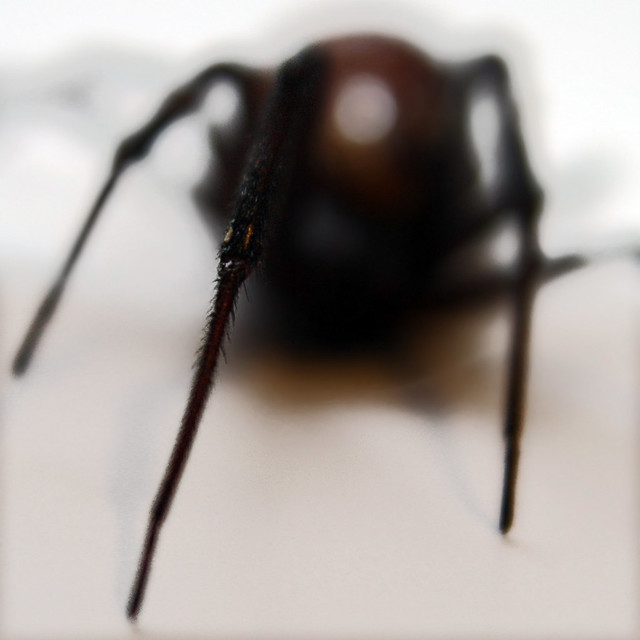
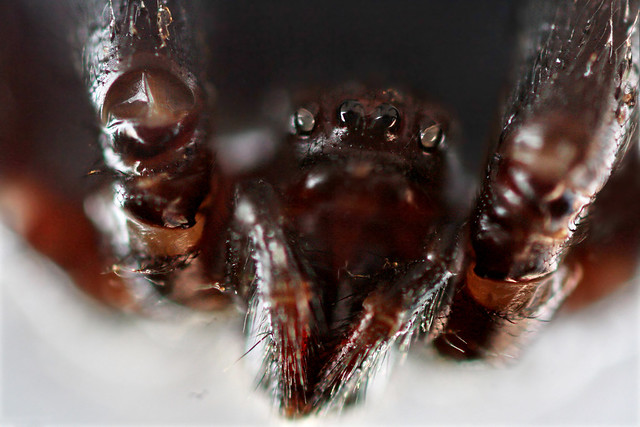
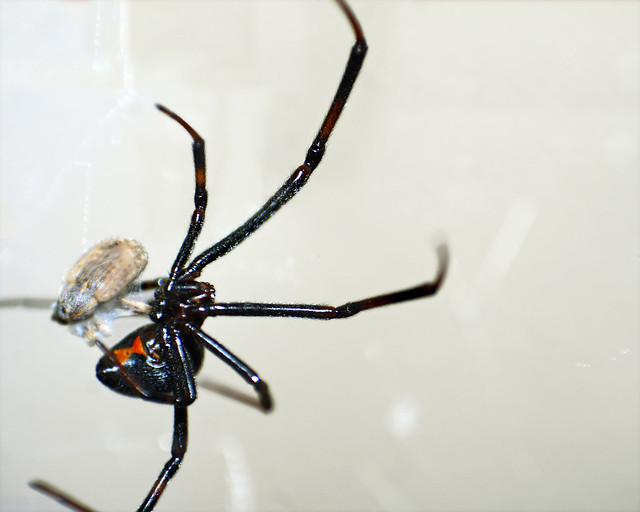
Not everyone I run into knows or has looked carefully enough to note the shape of the red or orange abdomen marking on a black widow (it's an hourglass, sometimes two disconnected triangles). But there's much more; and unlike some big-eyed, fancy-dancing, well-coiffed spiders who shall remain nameless; black widows play it a bit closer to the chest (or cephalothorax). Have you ever really seen a black widow's eyes? They're smaller than a jumping spider's, but kind of endearingly buggy. Do you know the exact sheen on an adult female's abdomen, and the dimples that invariably form? Have you ever caught the pinprick glisten on a widow's fangs as she eats a moth? Either most people are missing out, or I really need a life. OK, it's probably a little of both.

They're sexy

Come on. Even if you don't think the two terms belong within a mile of each other, think "spider" and "sexy." What's the general shape in your mind? It's a black widow, isn't it?

Apparently, Google agrees. Over the course of the past few years, I've had reason to search for "black widow" and "black widow female" several times. Here's what usually happens:


Now, there's plenty to be annoyed about -- the feminist in me and the "No, I meant the spider!" in me both take issue with the results. But you've got to admit, this is a spider with presence. A spider people want to be. Just imagine people trying to emulate any other spider. Try to imagine a Marvel hero named "Salticidae" or "Orb weaver." (OK, so there are a few "Tarantulas" in Marvel and DC, but they're all super lame.) The jet-black color, the curves, the long, slender legs. And yes, the venom and (mostly apocryphal) mate eating. The black widow spider is iconic. If jumping spiders are great ambassadors because they're adorable puppy-dog "gateway" spiders, then black widows are the conversation starters. They're the quintessential spider spiders.

Their webs are awesome

I know, there are prettier webs, larger webs, and a few stronger webs. But black widow webs remain my favorites. The thread is shockingly strong. And although the web looks like a disorganized mess, it functions like a three-dimensional pulley system and sensory grid. It's a machine. And it's fascinating to watch the operators at work. Black widows are a little like penguins or seals in one way -- on the ground, they're awkward and clumsy, toddling and wobbling about, but in their environment (their web, rather than water), they're full of sinuous, remarkable, swift grace. They run through the web instinctively, throwing silk loops around prey moments after it becomes entangled.

No one expects it

For black widows to be my favorite, that is. (Also, the Spanish Inquisition.)

They're venomous! I have pets and a kid! They traumatized me! And they're venomous! I know a friend of a friend of a friend of etc. that could have died once from what was almost kind of certainly maybe a black widow bite!

First, they're not as dangerous as all that. Yes, they have potent venom; but they bite people so rarely, and only when directly threatened, and even then the person is usually fine; as to make actively fearing them make about as much sense as fearing cars. (Actually, you're in much more danger around a car, probably.) Just be careful. And let the venom and danger prompt you to learn more. Also, I love adorable jumping spiders and their ability to bring more people into the spider loving fold. But if we can love these spiders too -- the most venomous spiders around, the ones who get such a bad rap for mate eating, the ones with freaking danger signs on their abdomens -- then maybe we can love them all. And by extension, all critters. Look closely. Be amazed.