Monday, April 18, 2011

Species a Day, Week 6

Rather than link back to all the weeks each time, I've got a separate page devoted to Species a Day posts. (You can see it up top now.) Go there to see previous weeks' posts. Each one has the animals listed, so you can see where to go at a glance.

More critters! Mostly birds. And one insect. Let me tell you 'bout the birds and the bees crane flies.

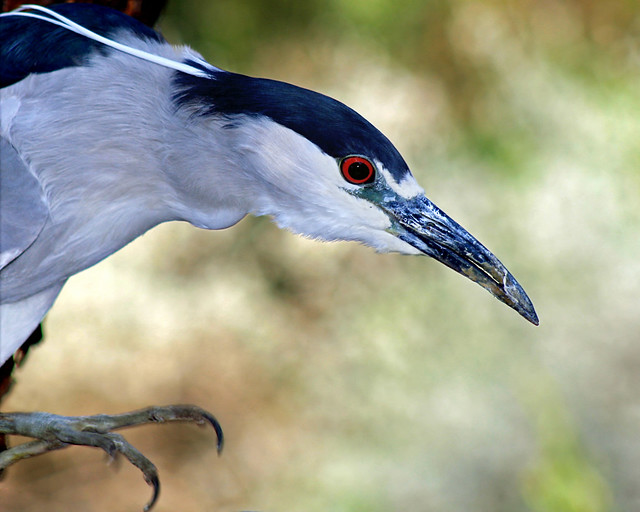
Day 36: Black-crowned night heron, Nycticorax nycticorax
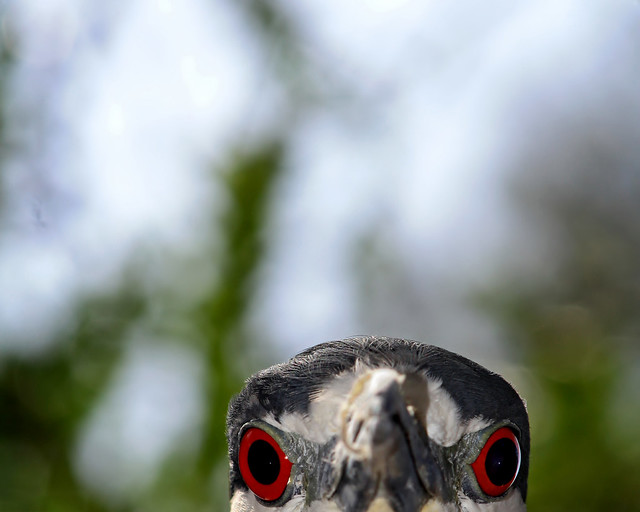

The scientific name for black-crowned night heron means "night raven," and it fits them well. Their call, like the namesake, is a bark. They rest during the day, hunched in an out-of-the-way cluster of branches, but you can catch them early in the morning or late in the evening, hunting at the water's edge. No, hunting's not quite right. They ambush. These guys employ the slow-mo stalk even more than the snowy egret I mentioned last week. They're all bold grays, blacks, and whites; their eyes are fire-engine red (juveniles are a warmer, streaked brown-gray with orange-red eyes), but they seem to think nothing will see them if they move really slowly. And it seems to work. If they feel their space is being invaded, say, by an eager photographer, they let out a harsh WAAAAK and fly away while the photographer is still recovering from her cardiac event.

Black-crowned night herons are fairly common throughout their range. Look in the trees during midday or along the water's edge when shadows are long. Their necks extend surprisingly far when they see a fish, but for the most part they hunch, aiming for inconspicuousness, the better to freak you out when you startle one. Look for a grouchy football with yellow legs, beady red eyes, and a black crown.


Day 37: American avocet, Recurvirostra americana

American avocets. I see them every time I visit the Gilbert Riparian Preserve, and I hardly ever capture good photos of them. That's because, as far as I can tell, they're always moving. I shouldn't feel too slighted, I suppose -- avocets are able to fool predators, not only with flight and speed but with their call. An avocet can make a series of calls that change pitch, simulating the Doppler effect and masking their true location as they approach or flee.
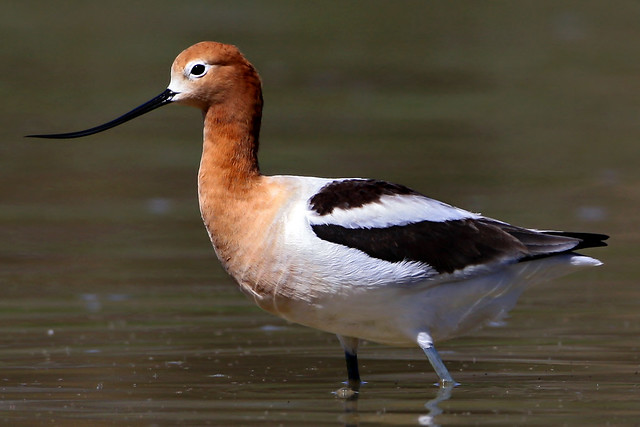
Avocets are in the same family as stilts, and they're often seen together. Their plumage is black and white on the back and wings and white on the belly, with rusty coloring on their head and chest in the spring and summer, when they're in breeding plumage. (The rusty feathers turn a cool gray in non-breeding winter plumage). Their legs, which trail behind them when they fly, are a gorgeous blue-gray. They are migratory, but we have some American avocets here in Arizona year-round.
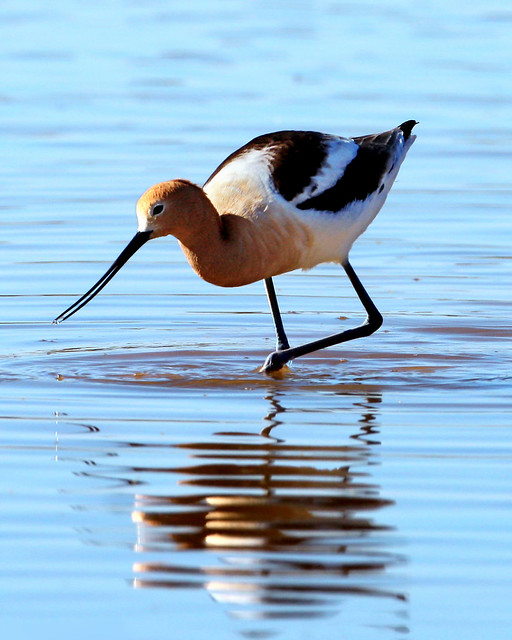
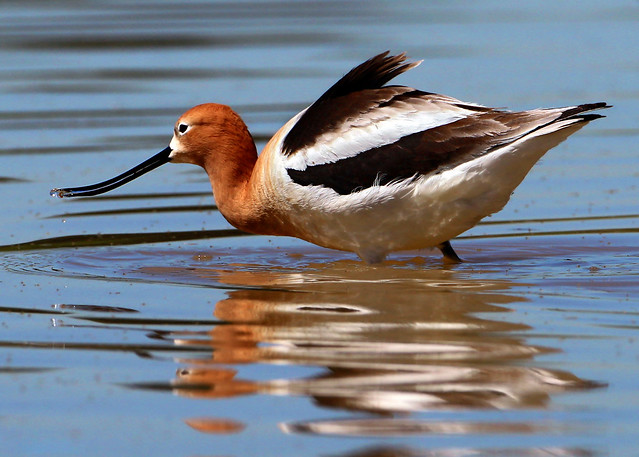
Avocets feed on small animals in the water by sweeping their thin, upturned bills (the female's is slightly more upturned) in a back-and-forth motion. I never noticed until doing this that each bird feeds in a slightly different fashion -- avocets by sweeping, black-necked stilts with plunging grabs, and long-billed dowitchers with that up-and-down, up-and-down sewing-machine motion. It's like watching my son and his friends' distinct eating habits, only with the birds, no one ends up blowing his nose on a napkin or wearing a pizza-sauce Glasgow smile.


Day 38: Crane fly, Tipulidae

People freak out about these gangly insects, though they're completely harmless. Sometimes called mosquito hawks, sometimes called just "big-ass mosquitoes," and sometimes called "AGHHHGetitawayfromme," crane flies feed hardly at all, and when/if they do, it's on nectar, not blood or actual mosquitoes.
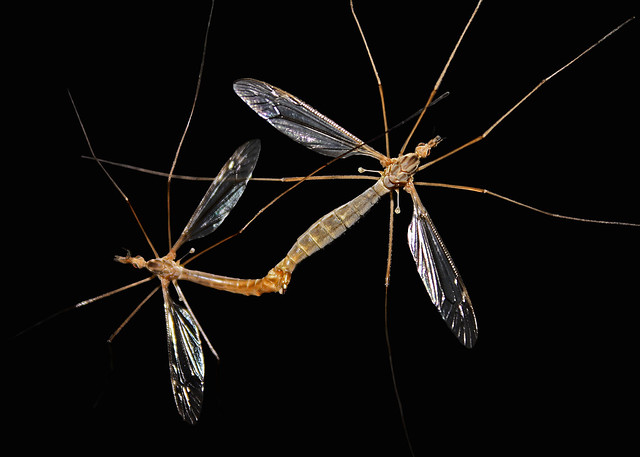
Over 4,200 species of crane flies have been described, mostly by American entomologist Charles Paul Alexander, which makes Tipulidae the largest family of Diptera (the order to which all flies belong), and makes Charles Paul Alexander someone who can make me feel either better or worse about my passion by comparison -- he described around 11,000 species and genera of flies, which works out to about one a day for his entire career. Suddenly this Species a Day thing doesn't seem nearly as ambitious.

Unfortunately, I don't have Chuck around to ask for the exact genus and species of this pair, which is just one of probably hundreds of pairs I've seen in the last few weeks. They're particularly fond of my back patio at night, particularly if a certain 9-year-old has left the patio light on even when he said it was off -- I went out this night and it was Club Crane Fly for the whole length of the house. My son, of course, responded in the most natural fashion: "Awww, cute! Look! They're all mating! They're making baby crane flies!"

(If ever I'm too worried that he'll feel pressured to conform, his entomological predilections alone should make him stand out from the crowd.)

Day 39: Ruddy duck, Oxyura jamaicensis
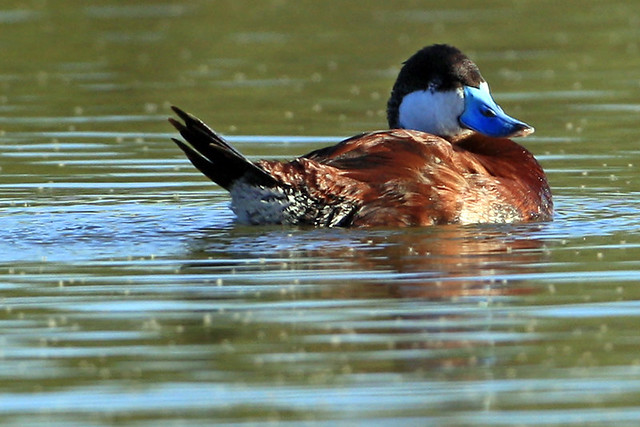
Ruddy ducks can be see year-round in some places in Arizona, but they tend to be shy, at least in my experience, and it's only when I spot a flash of powder blue in the distance that I take a second look. The breeding plumage of the males is quite striking, with rust-red bodies, broad blue bills, white faces, and black caps. Adult females have a gray-brown bodies and the bill is duller, but they are distinguished by lovely cheek stripes. Both species are more dull colored when they have their non-mating plumage, but I guess that's OK. I only dress up a few days out of the year, so at least they have me beat.

Ruddy ducks are so named for their long, stiff tail feathers, which can act as a rudder when the birds dive.

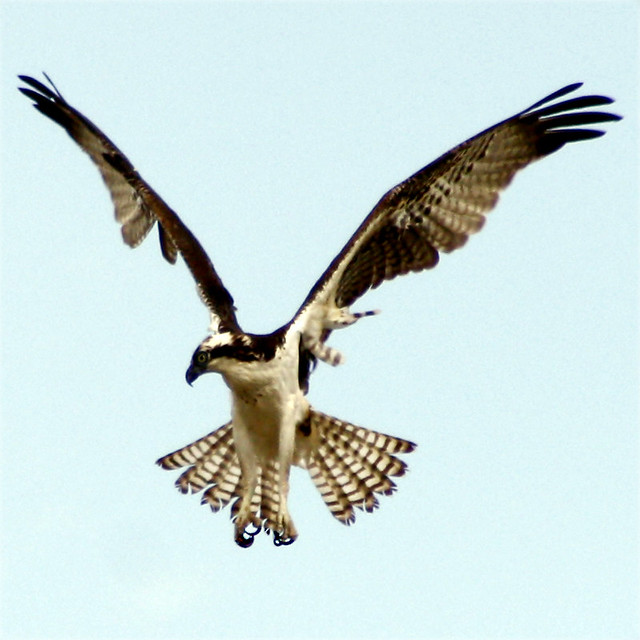
Day 40: Osprey, Pandion haliaetus
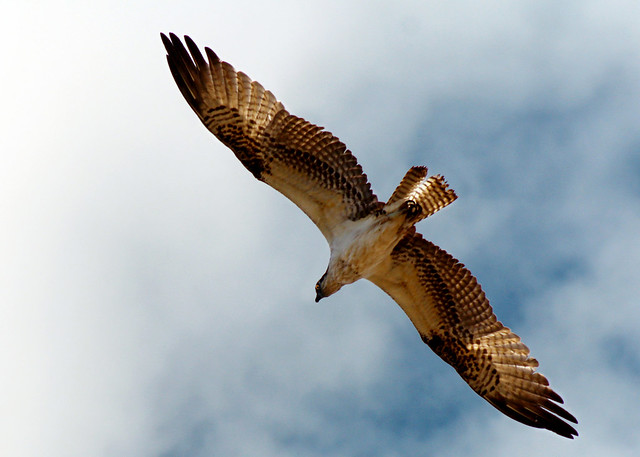
I've found some references where osprey are called "lesser eagles," though the more common, and more accurate, alternate reference is probably "fish hawk." These guys are expert fishers. Apparently rangers used to be instructed to shoot osprey on sight because they were so good at grabbing the fish from rivers and ponds.
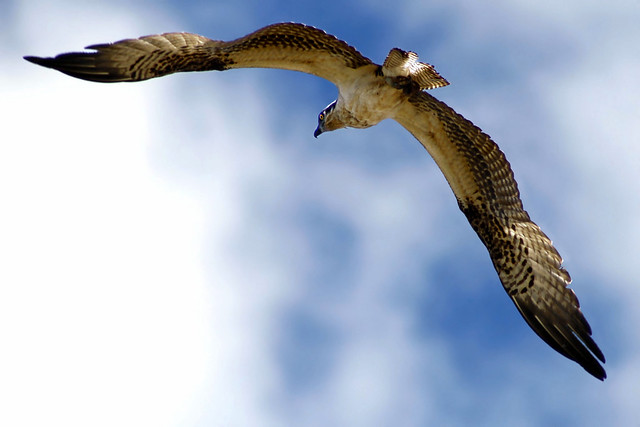
Hopefully, we just watch them now. Seriously, it's pretty amazing. With huge round eyes, snow-white underparts, and striking long wings that bend at a sharp angle at the wrist joint, they're unmistakable if you know what to look for. If you do spot one, just watch. It will swoop above until it sees a fish, and then it plummets. Long, rounded talons (also round in cross-section) and spiky skin on the underside of the feet help them snatch fish from the water. Just about the only time ospreys don't look elegant is when they float, wings spread, on the water, before getting a secure grip on their meal and taking off again. They may nest locally wherever there are fish, and especially (in Arizona) along streams below the Mogollon Rim. You can tell the female from the male by a thin, broken "necklace" of brown across the white chest.


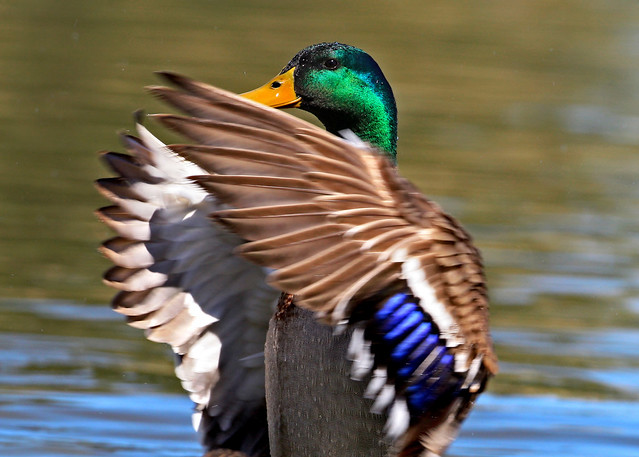
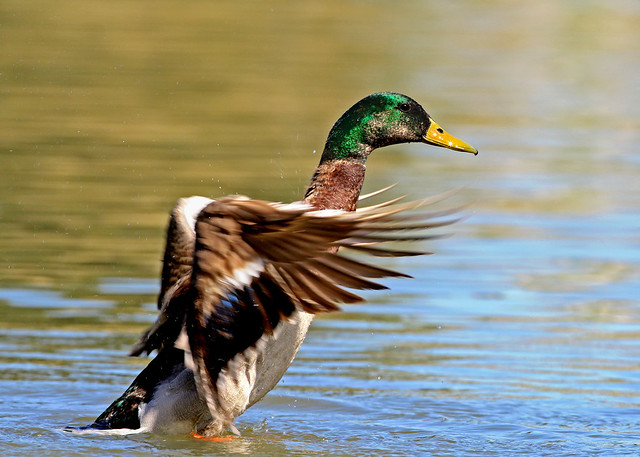
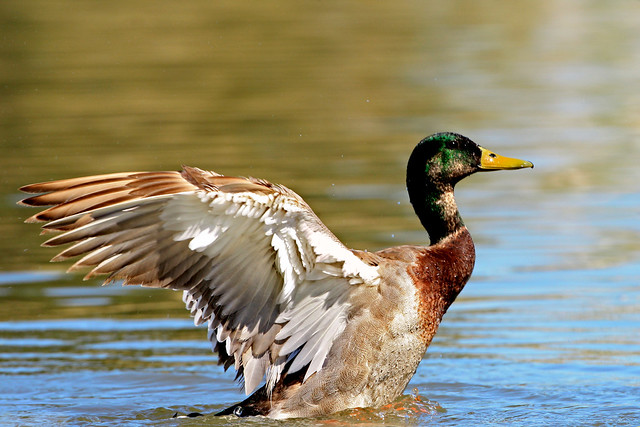
Day 41: Mallard, Anas platyrhynchos
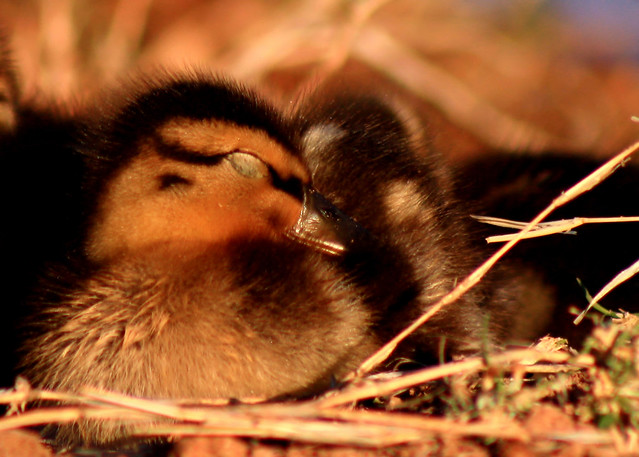
Mostly because this was too adorable to pass up. We all know what this one is. I know. Big deal. But what if someone told you there was a rare duck with striking white-and-brown plumage, deep blue wing patches, and an iridescent green head, that would come right up to you? Birders would lose their minds.

It's not rare. Still, it is gorgeous.

My son insists on visiting the ducks every time we go anywhere. He really doesn't care if there's a painted redstart or a something-or-other warbler in the trees. He doesn't care how common mallards are. He just wants to enjoy them. As with many children, mallards were his introduction to wildlife.
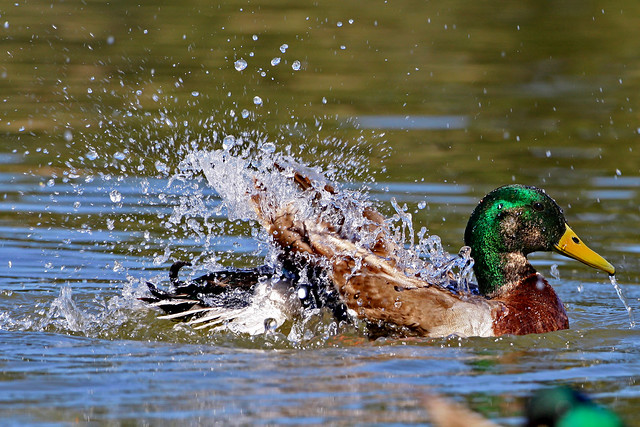
Kids love ducks. They're accessible, and rather big, and you can feed them. (If you're feeding ducks use corn, leafy veggies, or cat food/dog food with large amounts of cornmeal. Bread is bad for them, and they gobble this other stuff up.) I really have to hand it to ducks, putting up with so many kids and doing nothing more extreme when harassed than waddling away in an annoyed fashion. (My son has made many an enemy, and probably made me some parent enemies, by lecturing kids everywhere on proper duck treatment.)
Interestingly, a duck has been allegedly worshiped at least once ... as a demon. According to Pope Gregory IX in the thirteenth century, the demon Asmodi appeared to his followers as a duck. They danced around him, kissed him, and promptly fell into wild satanic orgies. Which probably looked something like the kids at the park.


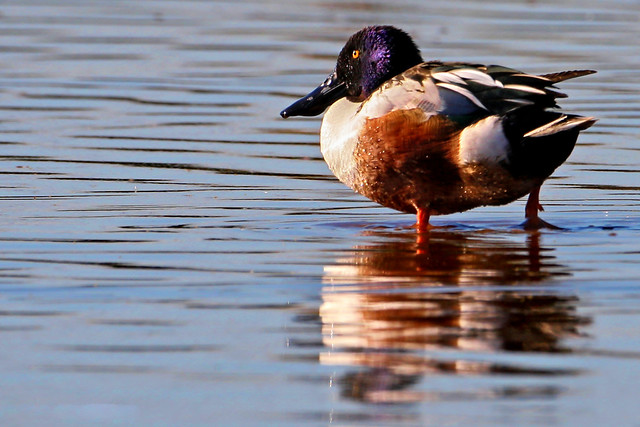
Day 42: Northern shoveler, Anas clypeata
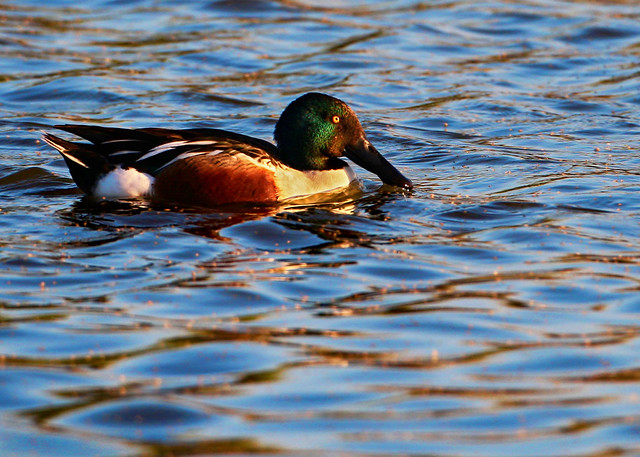
Yeah, another duck. These guys are awesome, with their improbably giant bills and vivid plumage. I guess I should include something nice about ducks after the demon story, so I can tell you that in many cultures, ducks are seen to represent connections between worlds, as they seem at home in the water, in the air, and on land. This is illustrated beautifully with shovelers, whose bills dabble up vast quantities of bugs and vegetation from the water as the sky's light hits them strikingly from any angle, highlighting the head to look forest green from one angle and deep indigo violet from another. There's even a duck creation myth in which the duck shoveled bits of mud to the top of the water to make land, and I've always imagined it to be a shoveler. The female looks similar in marking and color to a female mallard, but look for the giant bill.


That's it from me this week. What are some of your favorite recent sightings?

Friday, April 8, 2011

Species a Day, Week 5

See previous weeks:
Week 1
Week 2
Week 3
Week 4

Special thanks to Mary at Not an Activist for the shout-out! Go check out her blog.


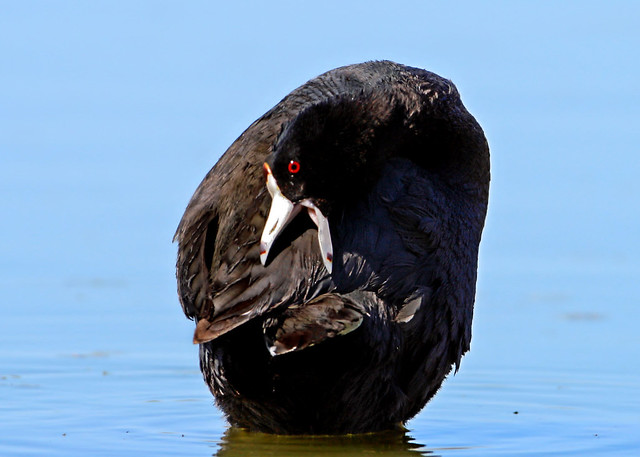
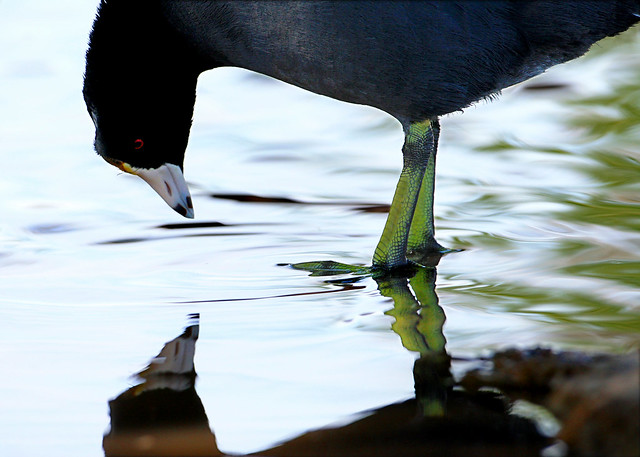
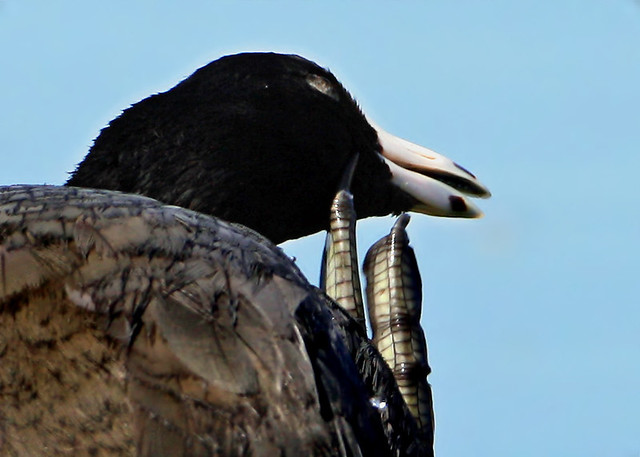
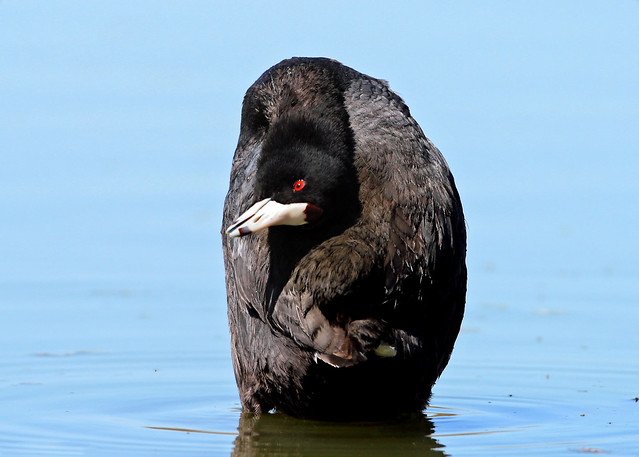
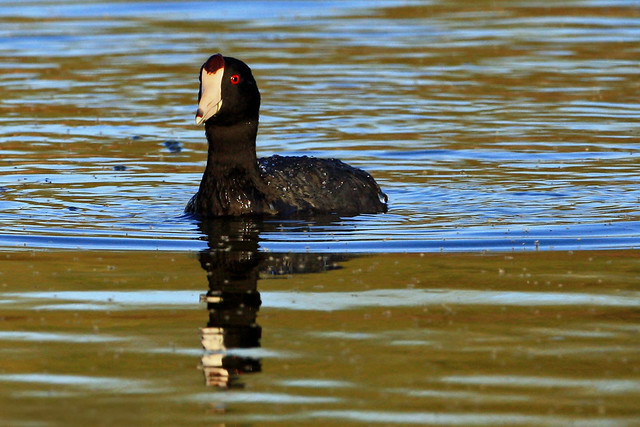
Day 29: American coot, Fulica americana


These guys don't get nearly enough credit. They're common, conspicuous, and not very glamorous, so they tend to be the also-rans of the pond. I never go somewhere looking for a coot. If I had to, though, if I didn't already get to see them, I might. Because they're fun.


Coots aren't ducks. They're actually members of the rail family, and have uniquely lobed toes, which make them great swimmers but also allow for land mobility. They're feisty and noisy, and if they don't feel like finding their own food (they're omnivorous), they're happy to steal it from other animals.


Coots won me over when my husband and I watched a family of them defending chicks from a hungry great egret. I never had known egrets to eat other birds. It was a shocker, but more than that, we were struck by the sheer tenacity of the two adult coots. One adult would herd the young into the reeds and try to keep them there, though the brightly colored chicks kept wandering, their bald, red heads like beacons to the hungry egret. The other adult coot would try to attack the many-times-larger egret. It wasn't working. Finally, the egret did snatch a chick, and the two adults launched an all-out, wings-flapping, squawking-grunting attack. The egret kept the baby, but decided the rest weren't worth the trouble, and left. The coots sat with their chicks in the reeds for long minutes afterward, watching the spot where the egret had settled with its small prize. It was sad, but a little amazing too. So coots -- not so boring. And fierce parents.


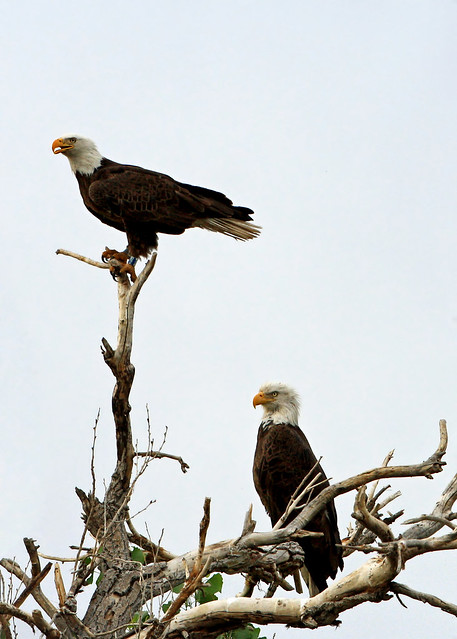
Day 30: Bald eagle, Haliaeetus leucocephalus

Another great bird parent, and an awesome find. Before the recent Internet sensation, I had already been keeping up on the several breeding pairs hatching their own eaglets throughout our state, and I took my camera and son to visit one nest last week.

We kept our distance, but the eagles saw us. Eagles have two separate centers of focus, so they can look to the side and forward at the same time, and have vision at least four times sharper than a person with perfect eyesight. And since they can spot prey over a miles-wide swath from a thousand feet up, I'm sure it wasn't too much of a feat to spot my son and me.

I was really struck by how the two eagles worked as a pair to first watch us and later protect and tend to the chicks. They picked their nest territory well. Two huge branchy trees made up the biggest part, and when we arrived, they were perched on one, scanning the surrounding land. Upon spotting us, they spent a few solid minutes glaring at us from various angles, and finally, one parent glided over to the other tree, where their massive nest sits. The remaining parent was quite content to take up the slack in glaring duty, and even opened its bill a number of times, though neither eagle made a sound. Finally that one, too, went to the nest. The nest itself was obscured unless we tried to get closer, and we didn't want to push it. We just watched. The eaglets were just barely visible, but we could see them moving in the huge bowl, and we could see these two ferocious raptors perched beside the rim of the nest, bobbing their heads in and out gently.

It was an amazing family moment, and I don't just mean the eagles. My son has been telling anyone who will listen ever since.


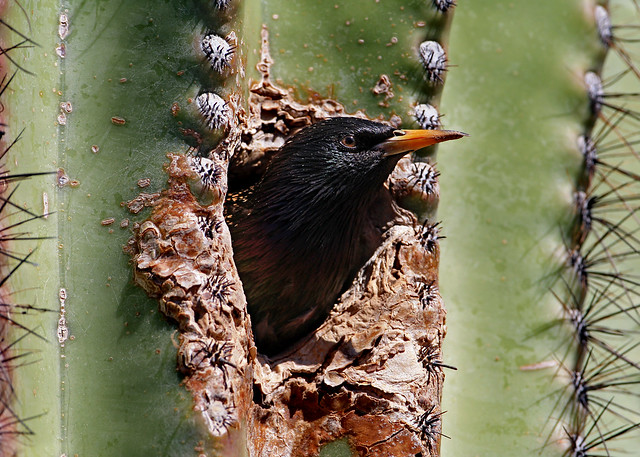
Day 31: European starling, Sturnus vulgaris


What makes a "good" bird? Beauty? Rarity?


Yes and yes, for many people. Still, just about any bird lover makes exceptions to both of these at one time or another. I love turkey vultures, absolutely love them, despite their not conforming to traditional (or, well, any) beauty standards. (I say they're beautiful, truly. But that's another post.) And I just talked about the coots. Not rare at all.

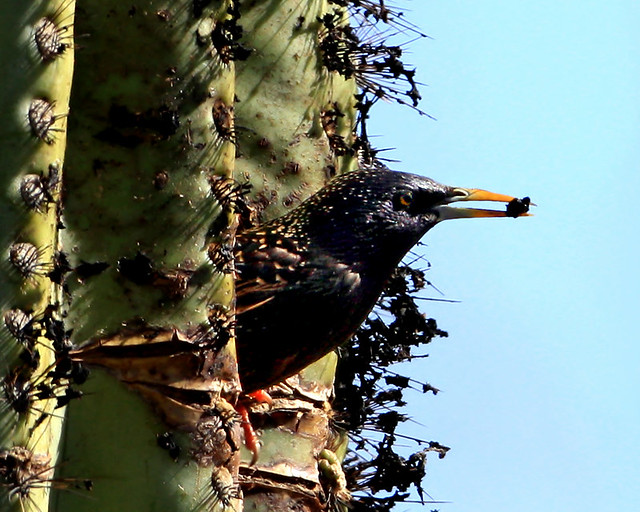
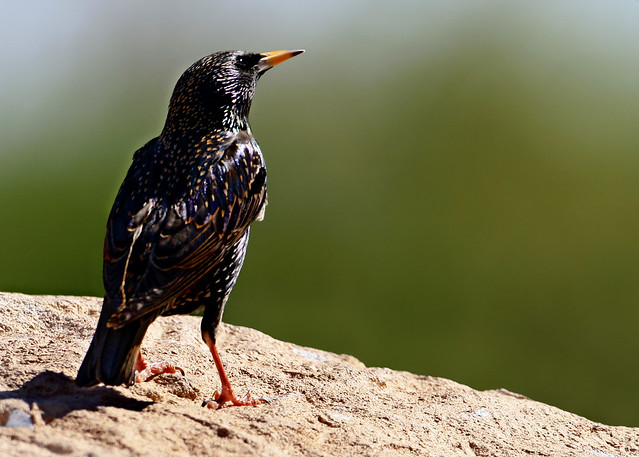
However, even birders who have their exceptions don't grant one to the European starling. Because they don't belong here. European starlings were introduced to North America in 1890, just 60 to 100 of them, and we now have around 200 million of them in North America. This is supposedly due in part to a brief mention of starlings in Shakespeare's Henry IV. Eugene Schieffelin, a member of the well-intentioned by ill-advised American Acclimatization Society. The society wanted to introduce all kinds of European species to the New World, ostensibly for cultural edification and nebulous economic reasons, but probably because humans tend to think that 1) we can manipulate our environment with impunity; and 2) whatever we've got in our backyards is necessarily the best and should be spread everywhere.

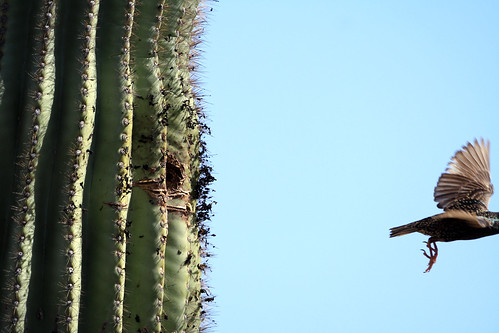
Starling populations exploded, threatening many native bird species. Starlings are hole nesters, and will nest just about anywhere they can -- engines, air conditioners, and grills have all hosted starling nests. But mostly, around here, they steal nest cavities carved in saguaro cacti.

Their excretions can rot damage plants and structures. They're kind of obnoxious. Starling flocks really shouldn't exist in America. Maybe poor Schieffelin wanted just us to feel connected. Since then, we've learned an awful lot about humans' influence on the planet, so in some sense, his lesson succeeded, though certainly not like he intended. We're responsible for what we do on Earth, and sometimes it's a pain. Still, it's not the animals' fault. On an individual level, who can say one animal is more worthy of saving than another?


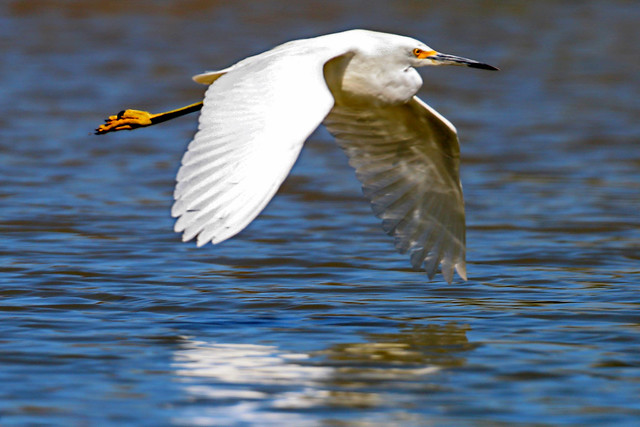
Day 32: Snowy egret, Egretta thula


It's amazing how such similar-looking birds -- I've heard more than a few people
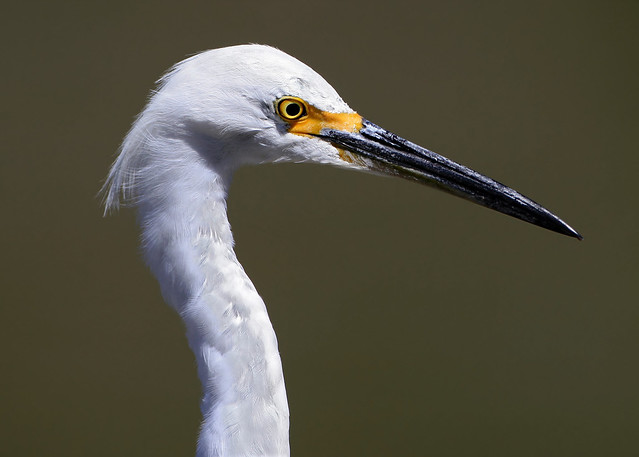
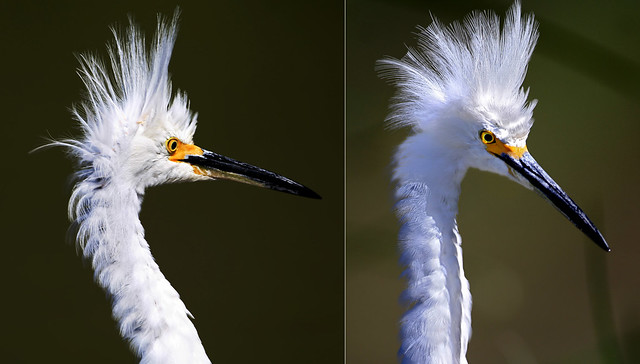
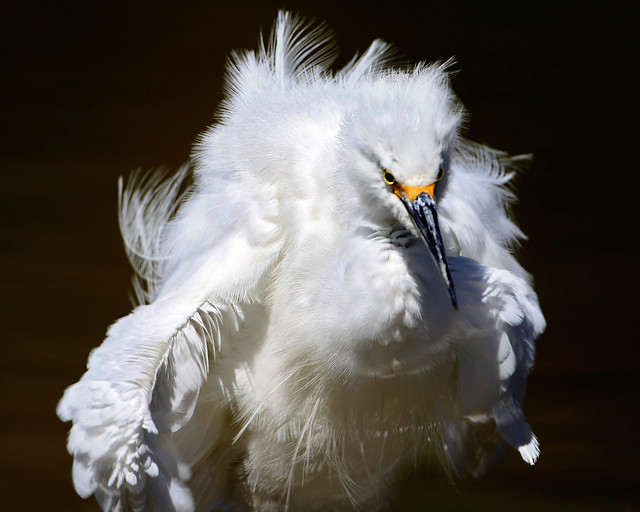
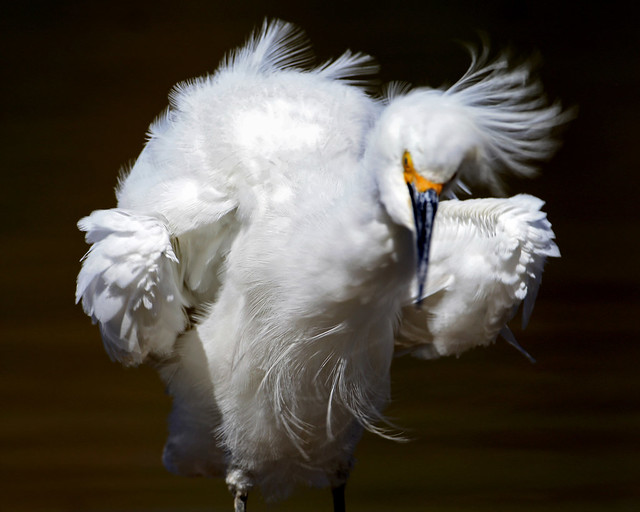
identifying these as "babies" of the great egrets, which are an entirely different species -- can act so totally differently. They both eat the same things -- fish, small crustaceans, frogs (though I haven't seen a snowy egret go after coot chicks) -- but the great whites strut. They bully. They're kind of jerks. Snowy egrets are much more cautious. Time after time I've been sitting by the pond photographing birds, and I feel the snowy egret before I see it. I'm sure I actually see the beady yellow eye at the periphery of my vision, but I feel the stare beaming into my head before I really notice the egret. Sure enough, when I look through the reeds, or around the bush, there's the snowy egret, eyeing me suspiciously. They walk with almost comical slow-motion strides and have head plumage seemingly designed for the sole purpose of displaying indignation if their proximity barrier is crossed. This one was very annoyed by a juvenile black-crowned night heron that had the audacity to walk beside it.

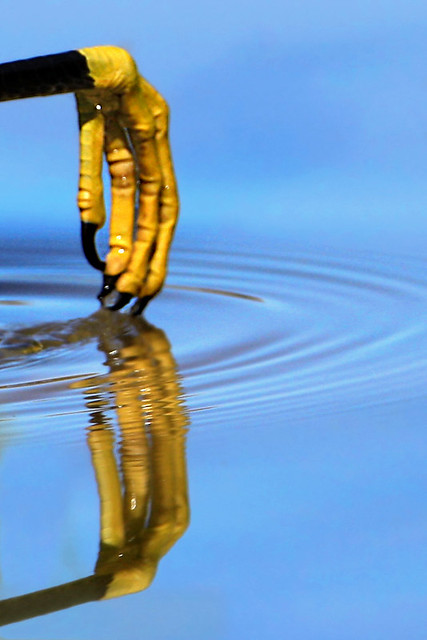
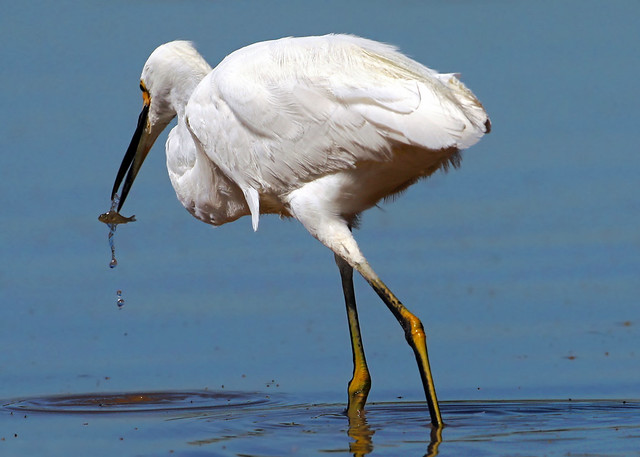
Watching them fish is really cool. They're opportunistic, like all herons and egrets -- if a fish swims by, or a frog doesn't notice them, then it's lights-out fish or frog. However, more than the others, snowies add a move to their foraging routine. They'll shuffle along in the shallows, place one foot in the water so it settles halfway into the sediment, and jiggle. And jiggle. After a few rounds of this, they stab up whatever they've agitated into movement. They're better fishers than most people I've seen, and they don't even need to be motivated with a Styrofoam cooler full of Bud Light.

I spent a almost an hour with this egret. Here it is in stare-down mode, which seems to be its primary way of observing the world. Seriously, if i perfected this look, I'm pretty sure my son would always listen to me:


Here it is expressing disapproval. My son would like to inform you that, plumage notwithstanding, I have mastered this expression (I'm not sure how I should take that):


Sometimes it didn't look quite so polished:


Finally, it tired of me, but I did get to stare back for quite a while.


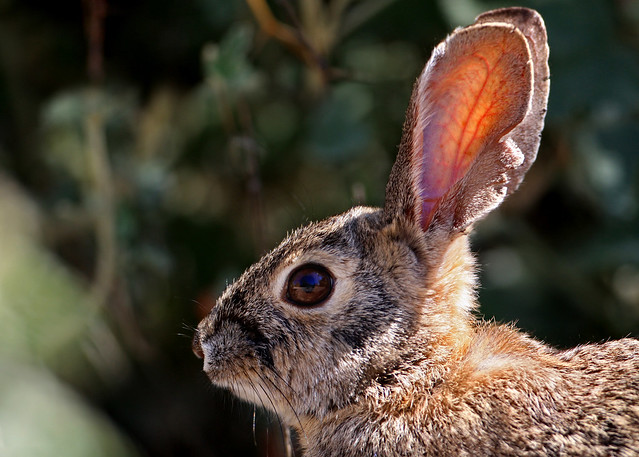
Day 33: Desert cottontail, Sylvilagus audubonii

Hey, look! A mammal! I was starting to think this was turning into "Bird a Day."

The desert cottontail, like other cottontails, has a little white puffball that is mainly visible as it flees, which is fine, since that's usually what it's doing. These guys are pretty regional, and are really common around grasslands and areas with lots of prickly pear cactus, which they love to eat. Growing up, we'd see tons of pictures of prickly pear cacti with nice round, full paddles, but ours always looked like mangled bits of Swiss cheese covered in spines. We never did much about it, though. The rabbits were too darn fun to watch. They love to play. Their favorite game seems to be to get two of them together, have one stand stock still and have the other one bolt at it. At the last second, the still rabbit will fly vertically, and the hopping rabbit dashes underneath. They never seem to tire of this game, though perhaps they're marveling at the ridiculous apes that never tire of watching them.


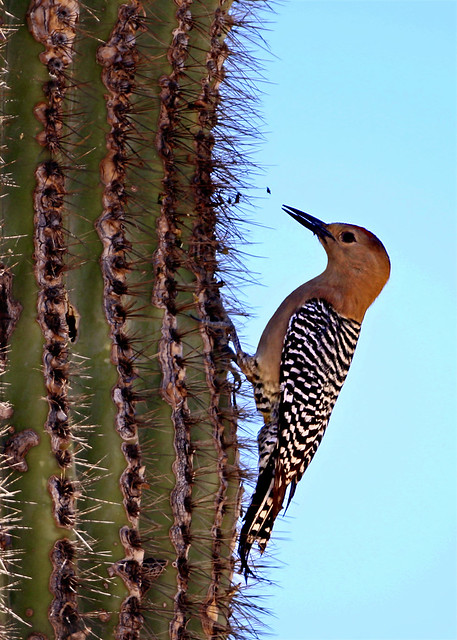
Day 34: Gila woodpecker Melanerpes uropygialis


The Gila woodpecker is very much a Sonoran Desert bird, and is well adapted to its region. It prefers to carve out nest cavities from saguaro cacti, though it will make homes in other structures. So, even though a few paragraphs ago I was all about Team Starling, I think here I'm edging over to Team Gila Woodpecker, though I hate that it has to be a choice. I'm so drawn to them. The red cap on the males. The striking black-and-white back. The rolling churrrr, cutting into rapid yips when they're alarmed or calling to one another. They're fabulous birds.

Curiously, research seems to indicate that Gila woodpeckers are uniquely threatened by nest cavity theft. Starlings seem to compete with them and drive their numbers down, but don't have the same effect on northern flickers, another Arizona woodpecker. I think it might have something to do with the preferred territories of the Gila and flickers -- saguaro-rich and ironwood-rich, respectively. Unfortunately for the Gila woodpeckers, starlings prefer their neighborhoods.


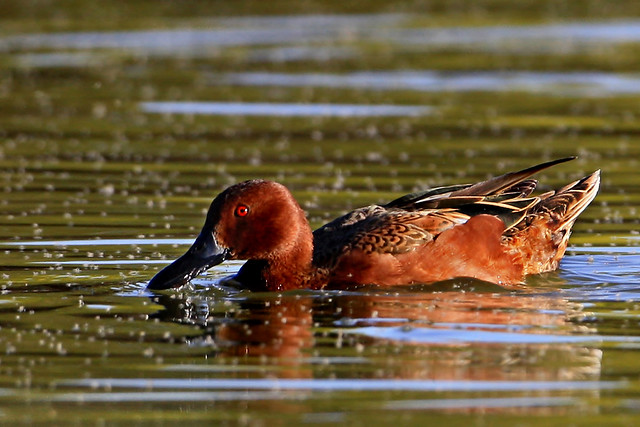
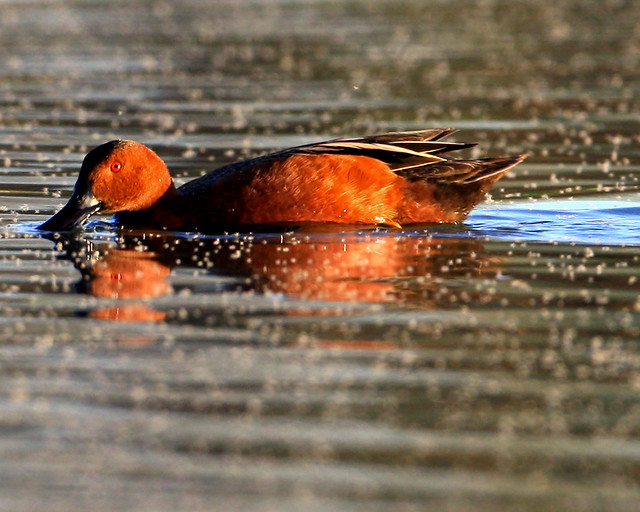
Day 35: Cinnamon teal: Anas cyanoptera


("Cinnamon teal? Is that a dessert?" --My husband)

Who said ducks are boring? These guys are radiant. Cinnamon teals winter and breed in Arizona occasionally, but are more often seen as migrants. We spotted these at the Gilbert Riparian Preserve. In the evenings, massive clouds of bugs cover everything. Like, everything everything. I was bent over taking pictures. My son called my name. In turning around, drawing a breath, and saying "What?" I inhaled a dozen bugs and swallowed a dozen more. (He was telling me that there were bugs around my head. Thanks, son.)

Well, these guys gobble the bugs up by the hundreds. All those specks on the water? Bugs. The teal? A bug vacuum. My hero.

They also eat plants, which I believe make up the majority of their diets. Perhaps this one saw me taking a crack at the bugs and figured he'd better eat them while he could.

That's it for this week. This paying attention to animals thing is seriously fun. Let me know what you're seeing in your neck of the woods (or desert, or pond, or backyard, or puddle) too!

Friday, April 1, 2011

Species a Day, Week 4

Previous weeks:
Week 1
Week 2
Week 3

No snappy intro. Just animals. I'm double-posting after a brief break in posting, though, so catch my attempt at photography tips right before this.

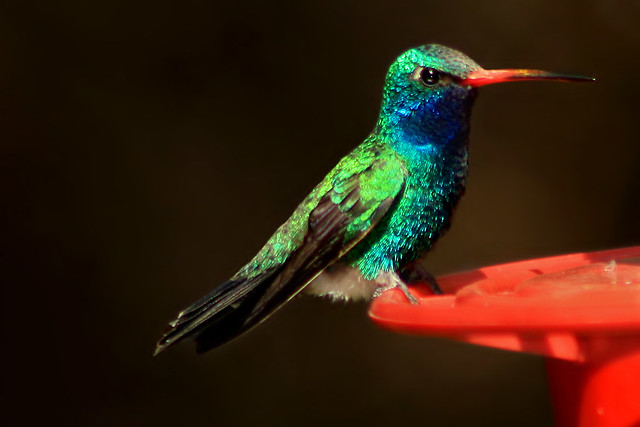
Day 22: Broad-billed hummingbird

Broad-billed hummingbirds, Cynanthus latirostris, are common summer residents in Arizona's riparian areas, and breed in parts of our state. They are readily seen at Boyce Thompson Arboretum, though not as readily photographed, as least successfully. The males are seriously, flamboyantly gorgeous. Metallic blue and green plumage, deep blue throat feathers, bright red bill. The females are duller in color -- poor female hummingbirds. They never get the spotlight.


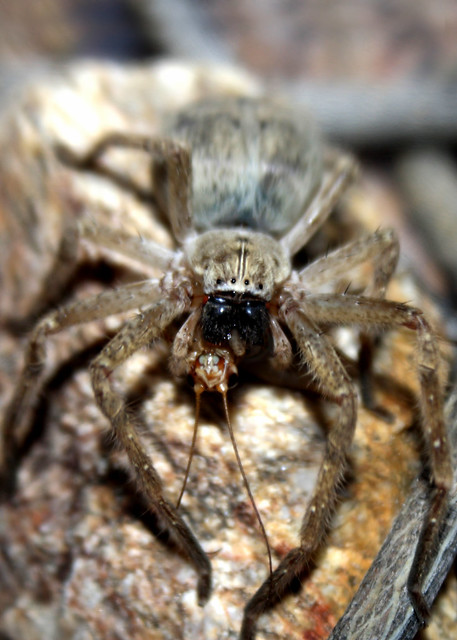
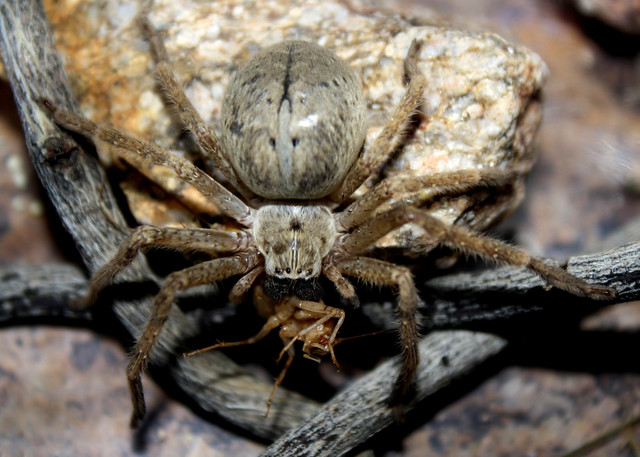
Day 23: Giant crab spider

The broad-billed started the week on a high note, but this one turned out to be my favorite, if only because of the story. I was avoiding work checking my e-mail, and noticed a message from my mom entitled "Spider question." She had "found a GIANT SPIDER" in her shed, and had questions.

Now, most people's questions would involve "Is it poisonous?" and "How do I get rid of it?" But it's my mom, and you probably figure I must get it from somewhere, so you should be unsurprised that: 1) she knows the difference between "venomous" and "poisonous" and would never ask such a ridiculous question (the reference material she sent me had "poisonous" incredulously highlighted); and 2) she didn't want to get rid of it. She made a habitat for it, complete with desert rocks and twigs, a tiny cap of water, and a supply of crickets and grasshoppers.

That weekend, I came over with my camera to photograph the beauty, which we'd by now tentatively identified as a giant crab spider, Olios giganteus. I knelt beside the spider. I scooted beneath her. My mom lifted the container up to the light. We discussed whether the dining room light was hitting the chelicerae sufficiently. The rest of my family looked at us as though we were crazy.

I took her home, intending to get some even better shots in my "spider studio" I've set up (which may or may not involve a pair of my husband's pants as a backdrop; shhh). I released her. Then, I lost the pictures. Figuring it was a lost cause, I went back to the field to check for her, and found her again, clinging to a rock. She allowed me to scoop her back into her "home." However, I still don't have pictures, because she went into hiding. Don't worry; I haven't lost her. She's now woven a cocoon around herself, which could mean she's going to lay eggs. I'm very happy about this.


In the meantime, Lynette from BugGuide.Net contacted me to ask me to contribute the above photo to their site, and also filled me in on the cloudy taxonomy of Olios spiders. Apparently, we have nine species of the genus in the United States, and according to this site, we have five of them in Arizona. She also passed on that the genus hasn't really ever been thoroughly studied since the species writeups 75 years ago. Taxonomy can be a contentious and confusing field, so I'll leave it at genus for now. Still. More adventures in spider raising. Hooray! (Thanks, Mom.)

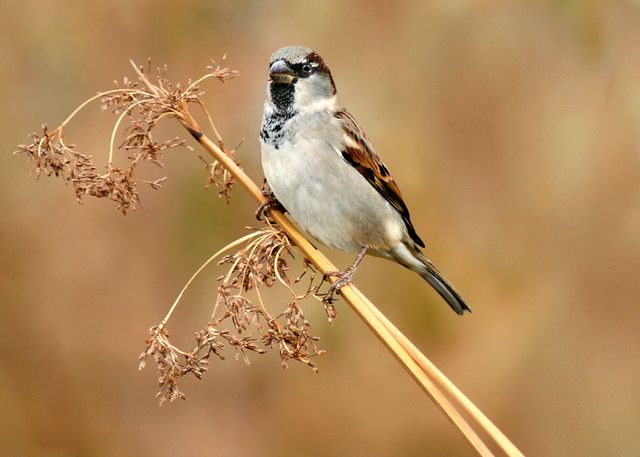
Day 24: House sparrow

The house sparrow (Passer domesticus) is not originally an Arizonan, but it's been here for a while. It can be destructive. It's boring. It's considered a "junk bird" by birders and photographers.

And sometimes, it's pretty gorgeous.


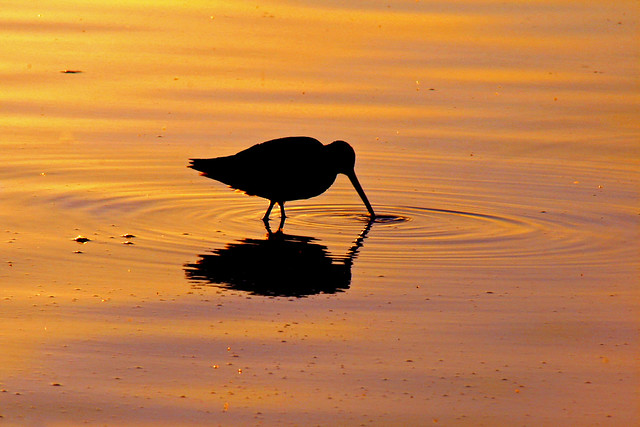
Day 25: Long-billed dowitcher

They're one of the "other birds" wading in the ponds at places like the Gilbert Riparian Preserve. Long-billed dowitchers (we don't usually have the short-billed kind), Limnodromus scolopaceus, wade through the shallows and pluck small creatures up like little avian sewing machines. I usually overlook them in favor of the herons, egrets, and stilts. Maybe I'll make an effort to capture more of them.


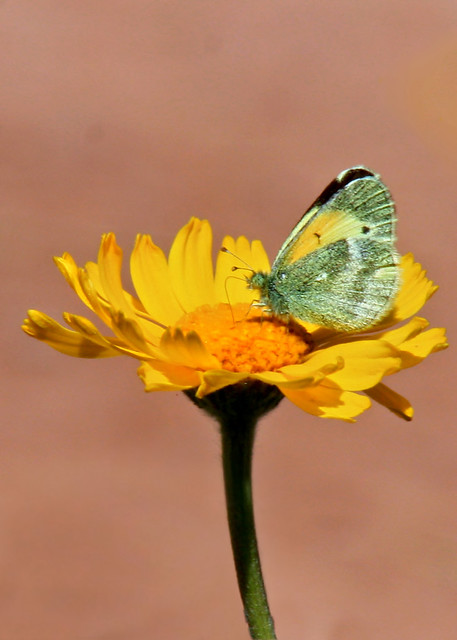
Day 26: Dainty sulphur


The dainty sulphur (Nathalis iole) is the smallest butterfly in its family, and these guys are hard to capture. They flit from one flower to the next, and nearly all my shots are of an empty flower. But they really are gorgeous when you stop to look at them. The males flutter inches above the ground in search of females, and if the lady seems reluctant, they prominently display their dorsal bars and their androconial spots. Ooh, baby.


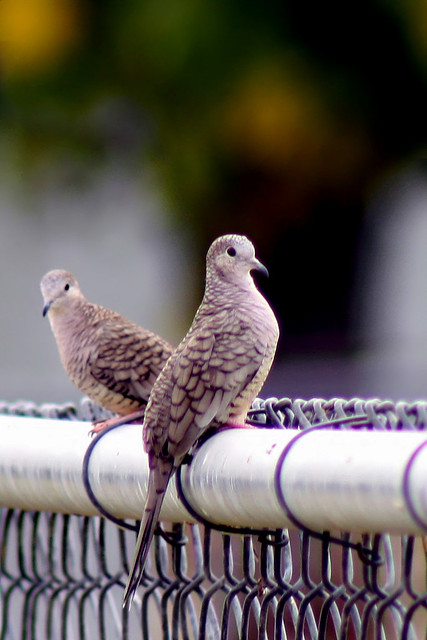
Day 27: Inca dove

Smaller than mourning and white-winged doves, Inca doves (Scardafella inca, though the genus has been debated) are also a little more timid. You can tell them by the scaled pattern on their wings and bodies -- my son says they look like pine cones. I almost never see one alone. They're always in pairs or groups. Incas range through the Southwest into Mexico and Central America, and don't live anywhere that the Inca empire ever occupied. Go figure.


Day 28: Black Saddlebags

This is what I love about the Internet. I had missed a detail on my own photo and couldn't ID this dragonfly. Because I'm contacts with so many expert IDers, I posted it, and within a day, I had it. Credit goes to Jeff (vai_boy) from Flickr for the ID. It is, of course, a black saddlebags (you can see the "saddlebags" on the wings below its body, though they don't show up really well in this shot).

Black saddlebags, or Tramea lacerata, are skimmer dragonflies found throughout the continent, especially near ponds or bodies of still water. They especially like to eat mosquito larvae, so these are good guys to have around.

They also have an interesting reproductive adaptation. Because the female only mates once, storing the sperm for fertilization, another male who mates with her will remove the previous sperm with a special sperm-removal brush. See? And you thought you wouldn't learn anything new here.


More next week. I've already got four birds, so I'll try and mix it up with an insect or mammal. Or spider, of course.

Nature photography tips from a complete nonexpert

Feeling a case of the I-stare-at-a-screen-all-day-long doldrums coming on, I decided this week to sneak out with my camera, BY MYSELF. (I know! I'm an awful mom/wife. The world will surely cease to revolve on its axis if every irrelevant triviality is not closely observed by me. Just ask my son.) This wasn't so great for my writing, which is why you're getting two posts tonight, but maybe, in a way, it was. I walked. And walked, and walked. I sweat. I lugged my camera around. I got branches in my hair. I sat in the mud, watching egrets. I saw a few rarities, even if I didn't photograph them. I got covered in ants. OK. That part wasn't so great. But I feel recentered, much more focused. It was good for the soul, if not for the hair or laundry.

Another thing I realized is that when my camera is my most prominent companion (as opposed to a more loquacious, hyperactive 9-year-old companion), people make certain assumptions. If the camera's aimed at a certain subject -- birds, say -- they assume you're an expert on that subject. Thankfully, I'm able to hold my own when a group of excited birders accosts me to ask OMG was that a green-winged teal just now, and how many wigeons are in this pond?
But mostly, they assume I know all about photography. They ask questions: "How do you freeze the water?" "How do you capture the bird in flight without blurring it?" "Why do my pictures all look so much more boring than yours? Here. Look at my first 300 instead of taking your own shots and tell me what I'm doing wrong." And so on.
I was even asked recently if I'd like to teach a photography workshop. I joked on Facebook that I'd call it "Nature Photography: How to do something a million bazillion times and gradually suck less and less."

I'm no expert. I'm average, when it comes to the mechanics of camera operation. I've never taken a class or even a workshop. I'm self-taught, and I'm not always the best teacher, on account of getting mad at my student and wanting to kick her ass. What I am good at, sometimes, is capturing animals doing stuff, and I think that's what a lot of you mean. I'm not goint to talk technical. That's been done before, and much better and by much more knowledgeable people. I'll only speak to what I know, which is getting close to animals, and capturing them using less-than-top-of-the-line equipment. So here are my few humble tips/opinions about how to fool everyone into thinking you're a kick-ass nature photographer.

It's (mostly) up to you, not the camera

First, know this: It's not the equipment. At least, it's mostly not the equipment. Good equipment gives you the options you need to capture some really great stuff, but you have to know how to do it. An inexpensive DSLR (I'd go with Canon or Nikon), especially if you're first starting, is more than enough. (You'll never get award-winning shots on your phone, so if it's really important, at least make a small investment.)

The biggest thing is to make your equipment work for you. Learn how to use it. Learn how to frame shots. (Don't center subjects, use leading lines, use the Rule of Thirds ... you can find this all online. I still mess up compositions by not leaving enough room.) Take advantage of the trial-and-error digital photography allows. The shot below, for example, was taken with a DSC-H2 (an old optical zoom camera from Sony, sort of a super point-and-shoot). The H2 is a training-wheels camera. It had many limitations that my current camera doesn't have. But clearly, it could take a good shot.


When I got my first DSLR, I brought this camera along anyway because I hadn't yet learned my way around the new one, and without experience, any camera takes boring shots. (Like I said, look somewhere like here, for starters, to find plenty of photography tips.)

Be opportunistic

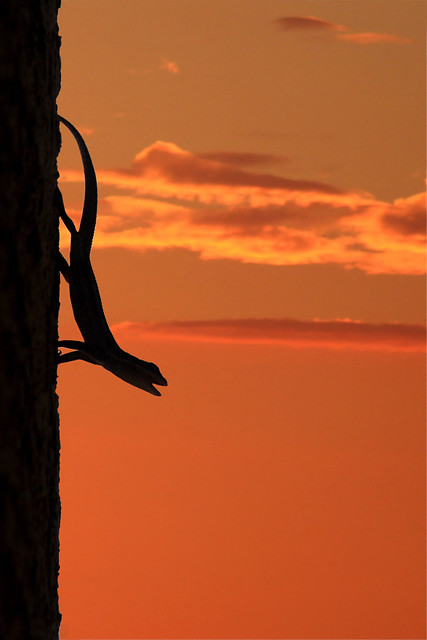
If I find a spider, I scoop it up. (I'm housing two right now, and also a cockroach and a few lady beetles.) If it's twilight, the crickets are coming out and the crane flies are mating, so that means fun insect photos. If I'm doing something else and I see a mantis or a lizard, the something else gets forgotten. Think visually. I glanced out the window while cleaning the living room and saw the image at right. I took it, then went back to vacuuming. It doesn't have to be exotic. Work with what you have, in terms of subjects as well as equipment. You probably have more than you realize.


Shoot the light


The most technical I'm going to get, and it's not really technical at all, is to say be aware of the light, and shoot at the beginning and end of the day. Do you want the rich, golden light that makes everything look prettier? Aim to shoot at sunrise, to an hour or so afterward; or start an hour or two before sunset and shoot until sunset. That side lighting is almost universally more flattering.
For some things, this doesn't really matter. Most macro photography and certain bird-in-flight shots look fine during ugly midday light, for example. If you're shooting all day, take a break or do these shots then. Otherwise, you will be disappointed.

Which looks better? This:


Or this:


It's a different subject, but it's mostly the lighting. It makes all the difference. (Caveat: Clearly, mom pride allows me to keep the crappy picture too.)

Wait. And then wait. And wait some more.

Seriously. When anyone at all asks me for quick tips, I tell them three things. The first is shoot the light. This is the second. Why?

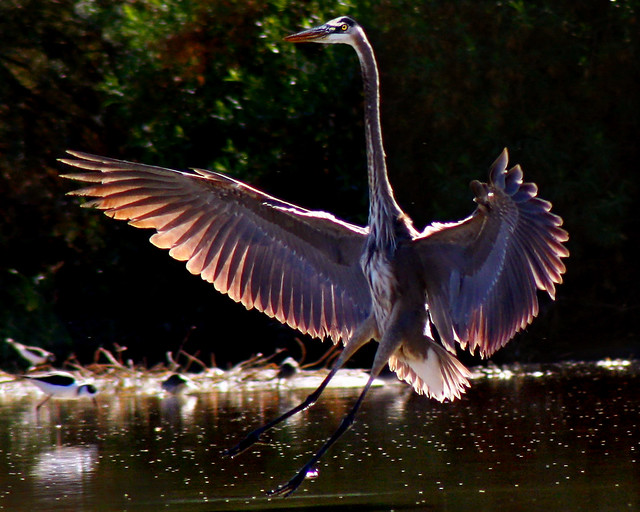
For every time a bird does this:


...it has most likely spent an hour doing this first:


Get to know the animals. Canada geese honk before they pass overhead. Egrets and herons extend their necks and cock their heads before striking the water for a fish. Dragonflies and hummingbirds like to return again and again to the same perches. You probably won't catch it the first time, so learn. And then wait for it to happen again.

Professional nature photographers set up blinds and spend hours, weeks, MONTHS sitting in them waiting for the perfect moment. We're not magical or lucky. We're just patient and abnormally fixated on our subject (and sometimes lucky). If you don't have months (or even an hour), spend a consecutive ten minutes watching your subject. Any animal doing something is likely to be more interesting than that same animal just standing there. There are exceptions -- there are phenomenal straightforward animal portraits out there, and it's rather difficult to catch "character" in a lot of insects -- but even in these cases, it's all about capturing the right moment. Wait until the portrait subject turns its head for a great eye catch light. Wait until the insect lifts one leg, or turns to the perfect angle. Be ready, and when it's time to jump on it:

Take lots and lots and lots of shots

My last main tip. Complicated, right? My photography friends (Hi there!) definitely all know this, but I've been surprised to discover that the majority of digital camera owners don't take advantage of one of the coolest things about digital photography. A lady the other day asked me how many shots I display from the ones I take, and while shooting my 200-somethingth shot, I estimated maybe five percent or fewer. She was shocked.

If you have a few memory cards, you can pretty much take an infinite number of shots. Is the heron about to plunge? Wait until the split second before and press the shutter release for a quick burst of several shots. One will catch the splash. Is it now about to gulp down the fish? Same thing.

But the rule is about more than my love for continuous-shooting mode. Be purposeful, but liberal. Shoot often and readily, but don't be afraid to envision and take intentional shots. (They won't always work out.) Don't be afraid to shoot everything, and to look stupid doing it. I lie on the ground, sit in mud, take pictures in my driveway (my neighbors are quite sure I'm nuts), scoop up roaches and spiders, and stand on a ladder in my backyard for an hour straight, causing said neighbors to walk by repeatedly to get a look at the weirdo with her head poking up over the wall.

I'm completely serious. I take thousands of shots. Sometimes thousands a month. Which I guess should lead to my last tip:

Quit showing your crappy stuff

This isn't so much a how-to-take-pictures tip as a what-to-do-with-them tip, and obviously it's subjective. If you just want to store all your photos, or if you want to document a party, then sure, dump them all in. But if you want everyone to think your insect shot is really cool, go back to the shots you took (What did I say about taking a bunch of them?), and delete at least a third of them. Then go back through and delete half again. Then examine the remaining ones, find your favorite one to half-dozen, and go with those.

About three quarters of the time, I only keep shots that are as close to perfect as I think I can get with that particular subject. The rest of the time, the shot is really darn good, or I just really like it, but even then, I've been known to get one all ready for sharing and decide it's just not up to snuff. THAT'S really why you all think I only take good shots. I only show good shots. Usually.

And even when you think you've done everything right, even when you have, you still don't get the shot at least half the time.

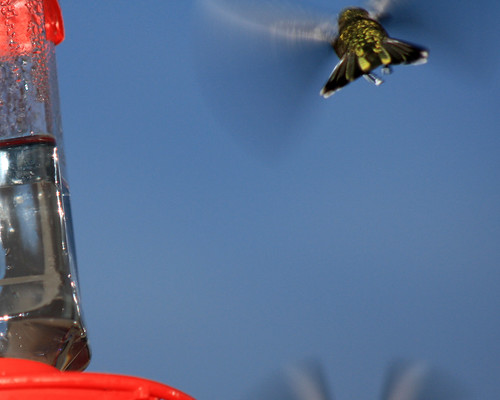
For real. If it makes you feel better, this is what my usual hummingbird shots look like:


And most of my dragonfly-perching-on-a-twig shots:


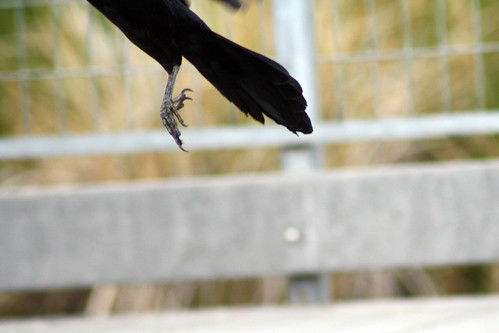
And here are a few bird-in-flight masterpieces:


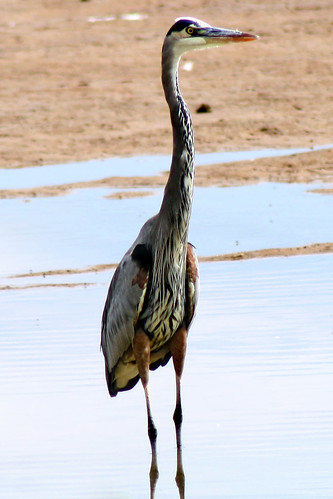
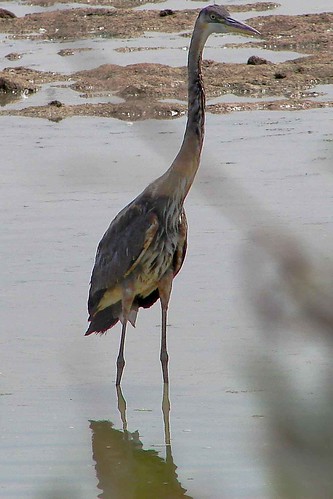
You keep learning. What's "good" constantly improves. This is really pretty embarrassing, but here's what I thought constituted a "good heron shot" a few years ago:


But at the time, it made me happy and proud. And that's the biggest rule. Be brutal on yourself. Know when your shots suck, and when they're good, and start to notice what makes them each way. Have enough humility to learn from others and have a sense of humor even when (especially when) you miss the shot for the fiftieth time in a row. But if it's a rare animal, your first time capturing an animal, has a great story, or just makes you happy, keep the photo. That's what it should be about.

Agh, no. It's too painful. I can't end with that horrible shot. Have a prettier heron.


So what did I leave out? Photog friends, what are your tips? And non-photographers, what else do you want to know? If I don't know it, I usually know who to pester. Happy shooting! (With cameras, of course.)